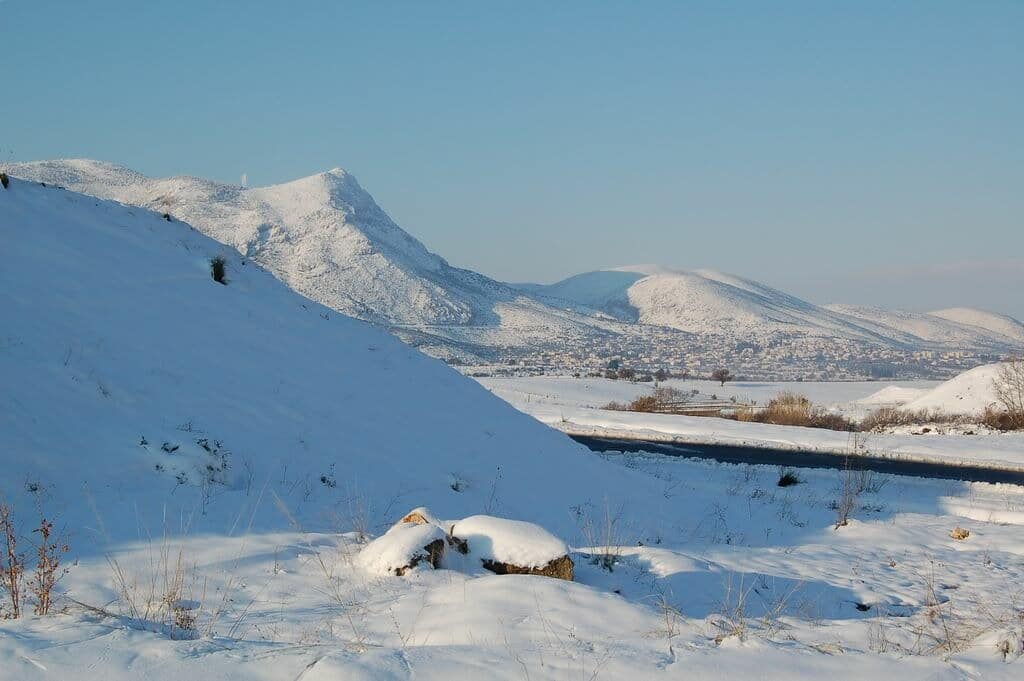
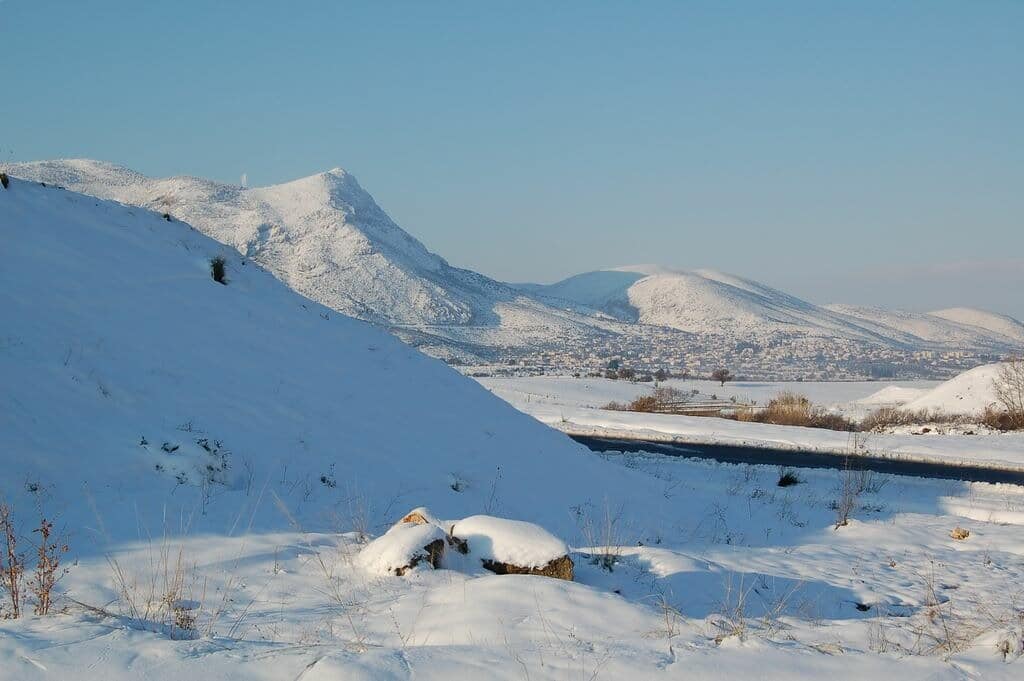
Greece’s mountain snow cover, a critical source of water for communities, agriculture, and natural ecosystems during the dry summer months, has dropped by 58% over the past four decades, according to a new study.
An international team of researchers, led by the University of Cambridge, analyzed how rising temperatures in the Mediterranean are reshaping snow conditions in some of Greece’s highest mountain regions. The study combined satellite imagery, climate data, terrain maps, and artificial intelligence to track long-term changes in snow cover.
Using a tool called SnowMapper, the researchers found that snow cover has declined sharply over the last forty years, with the pace of loss accelerating since the beginning of the 21st century. The findings also show that Greece’s snow season now begins later and ends earlier.
That shift matters because mountain snow acts as a natural water reserve. Snow that accumulates during winter gradually melts in spring and early summer, helping sustain rivers, farmland, and ecosystems during Greece’s hot and dry summer months.
The research team utilized satellite images from NASA and European Space Agency missions to study snow cover from 1984 to 2025. However, clouds and shadows often block clear satellite observations, especially in mountainous areas.
To overcome those gaps, the scientists used machine learning to reconstruct missing data. This allowed them to create daily snow cover maps at 100-meter resolution for ten of Greece’s highest mountain formations. The result is a detailed long-term record showing how snow cover has changed across the country’s mountain landscapes over more than four decades.
According to the researchers, Greece is losing winter snow cover faster than many other mountain ranges. The trend could have serious consequences for local communities, agriculture, and natural habitats that depend on snowmelt as a seasonal water source.
The findings add to growing evidence that climate change is placing increasing pressure on mountain environments.