An archaeological excavation in the Muharram Bek district of central Alexandria in Egypt has uncovered significant architectural remains dating from the Hellenistic (Greek/Ptolemaic), Roman, and Byzantine periods, the Ministry of Antiquities of Egypt has announced.
The discovery offers new details into the urban evolution of the city of Alexandria right after its establishment by Alexander the Great.
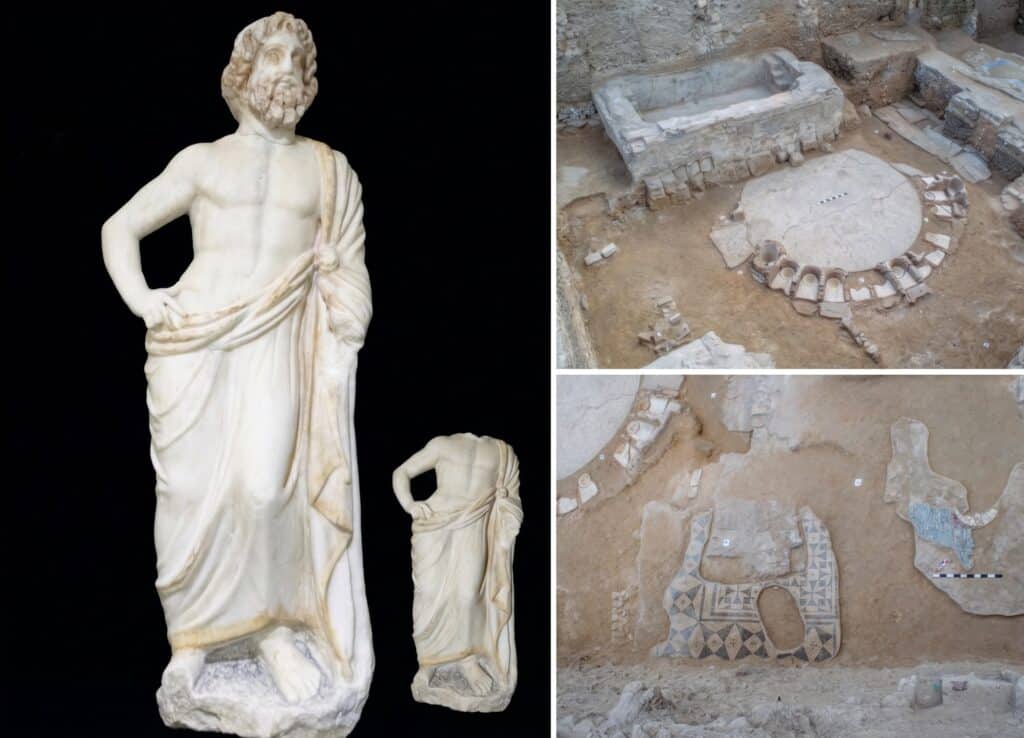
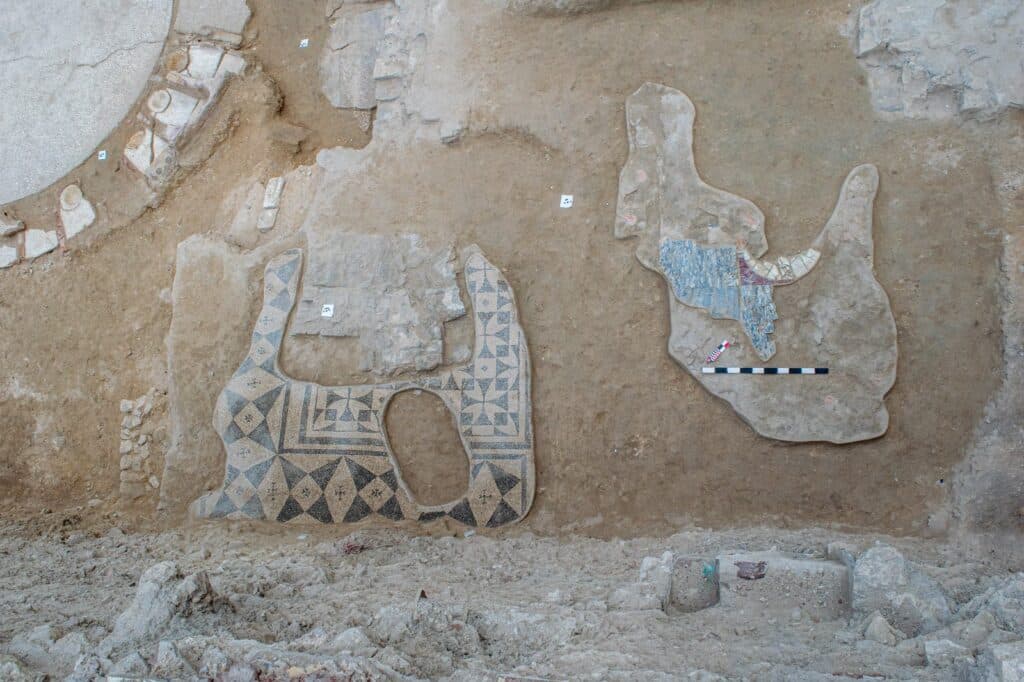
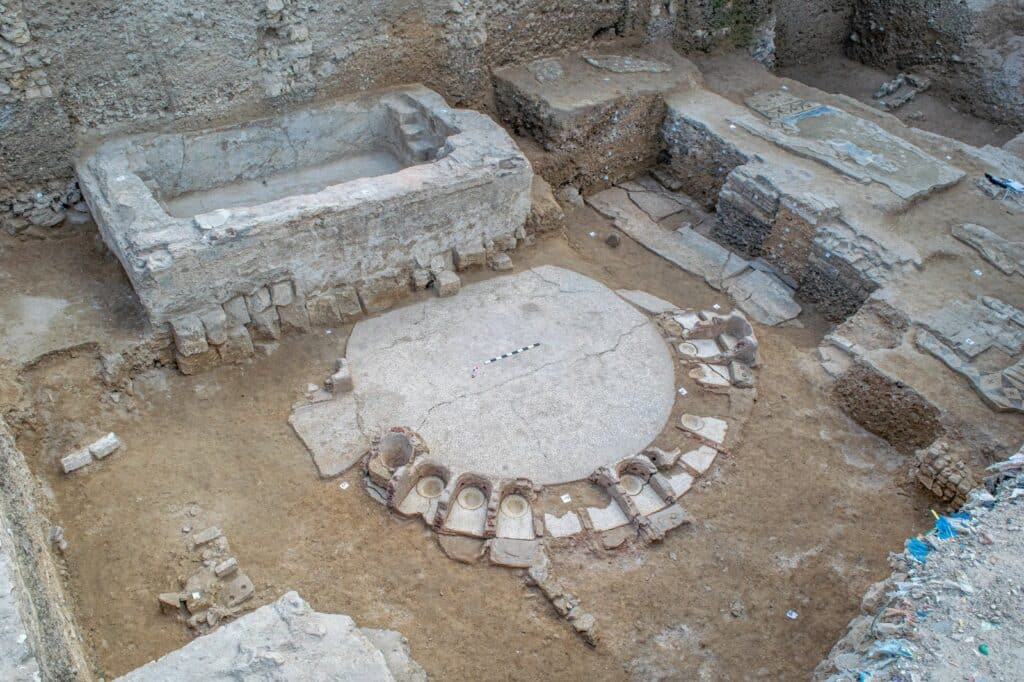
The Supreme Council of Antiquities team in Egypt unearthed an integrated sequence of settlement layers. Among the most notable structures are a circular public bathhouse, known as a tholos (Greek for dome), dating to the late Ptolemaic period, and the ruins of a Roman-era residential villa. The villa features intricate mosaic floors utilizing both Opus Tessellatum and Opus Sectile techniques, demonstrating the advanced craftsmanship present in Alexandria’s art schools during classical antiquity.
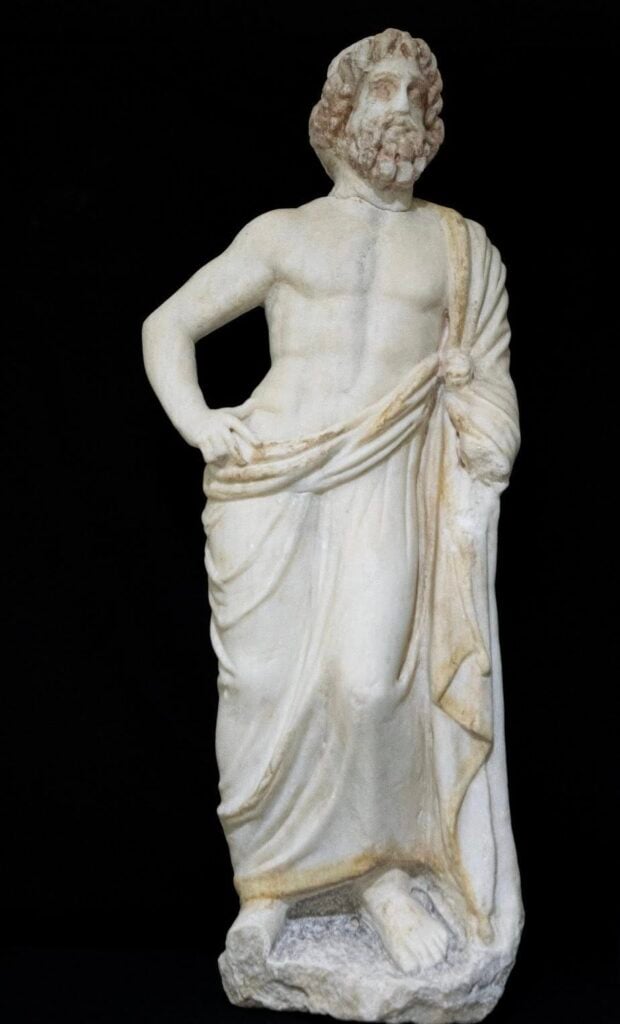
Alongside the architectural foundations, archaeologists recovered a diverse collection of artifacts closely tied to the city’s Greco-Roman heritage. The finds include marble statues depicting deities such as Asclepius, the Greek god of medicine, and Bacchus. A headless statue, believed to represent the goddess Athena or her Roman equivalent Minerva, was also discovered. The presence of coins, pottery, and sealed amphorae shows that Alexandria posessed thriving maritime trade networks connecting the city with the broader Mediterranean world.
Sherif Fathy, Egypt’s Minister of Tourism and Antiquities, noted that the site underscores Alexandria’s status as a major cultural center of the ancient world. The excavations were initiated as part of a salvage operation linked to local development projects, balancing modern infrastructure needs with archaeological preservation.
Dr. Hisham El-Leithy, Secretary-General of the Supreme Council of Antiquities of Egypt, emphasized the continuous habitation of the site across multiple historical eras. The residential architecture includes sophisticated water management systems. Mohamed Abdel-Badii, head of the Egyptian Antiquities Sector, pointed to a small pool connected to the Roman villa, which was equipped with a comprehensive water network.
The findings are also prompting a reevaluation of Alexandria’s historical topography. Dr. Hisham Hussein, head of the Central Department for Maritime Antiquities, stated that the excavation fills a critical gap in the city’s southeastern sector. The results refine the 19th-century maps created by astronomer Mahmoud Bey El-Falaki, who pioneered the urban mapping of ancient Alexandria using topographical measurements. The Muharram Bek site remained within the ancient city walls until the Byzantine era, after which shifting urban layouts led to a decline in its prominence.
Ibrahim Mustafa, director of the central district and head of the excavation mission, confirmed that initial restoration work on the artifacts has already begun. Officials are evaluating the most significant pieces for potential display at the Greco-Roman Museum in Alexandria. Excavations at the site are ongoing, with researchers anticipating further structural discoveries in the coming months.