Greece is preparing one of the most significant overhauls of its planning system in decades, with sweeping changes set to reshape building rights, land values, and tourism development, particularly across the islands.
According to reports, Greece’s new urban planning framework, expected to start receiving formal approval in 2027, points to a much tighter regime for construction in island areas. It also introduces a new approach to undeveloped pockets within settlements of fewer than two thousand residents and marks a major reversal of long-standing rules on off-plan building.
At the center of the shift lies the clear policy that development outside approved town plans will become harder, more selective, and more closely tied to formal spatial planning.
The recognition of public roads stands out as one of the most decisive factors in the new system. Thousands of landowners could see their plots lose development potential if their properties do not have frontage on a road officially recognized under the new criteria.
This issue sits at the core of the future of off-plan construction. Until now, owners could often develop land on the basis of existing or commonly used access roads, sometimes certified by municipalities. In earlier decades, the system even allowed construction through rights of passage across neighboring land.
That approach has gradually changed. Since the legislative changes introduced in 2003 and through the case law of the Council of State, access roads must now have a formal planning basis. In practice, the physical existence or everyday use of a road is no longer sufficient. Instead, it must be formally recognized as such.
Authorities have now launched a nationwide process to map and assess roads, starting with island regions in the Ionian, North Aegean, and South Aegean. The evaluation focuses on historical and technical documentation, while road width is also expected to play a major role.
Initial technical benchmarks under discussion set minimum widths at around 3.5 meters (11.5 ft) for residential use and 5.5 meters (18 ft) for professional uses. However, the Ministry of Environment and Energy has not yet finalized the specifications, which will be set through a presidential decree.
Under the new planning model, a property’s development potential will depend on two conditions. First, the intended land use must comply with the applicable urban planning framework. Secondly, the plot must have frontage on an officially recognized public road. If the property fails to meet either condition, it will not qualify as worthy of development.
This change could have major consequences for the land market, especially in tourist areas where many plots rely on narrow rural roads that may not meet the new requirements. According to reports, if the authorities maintain strict criteria, only a limited share of island roads may ultimately receive official recognition.
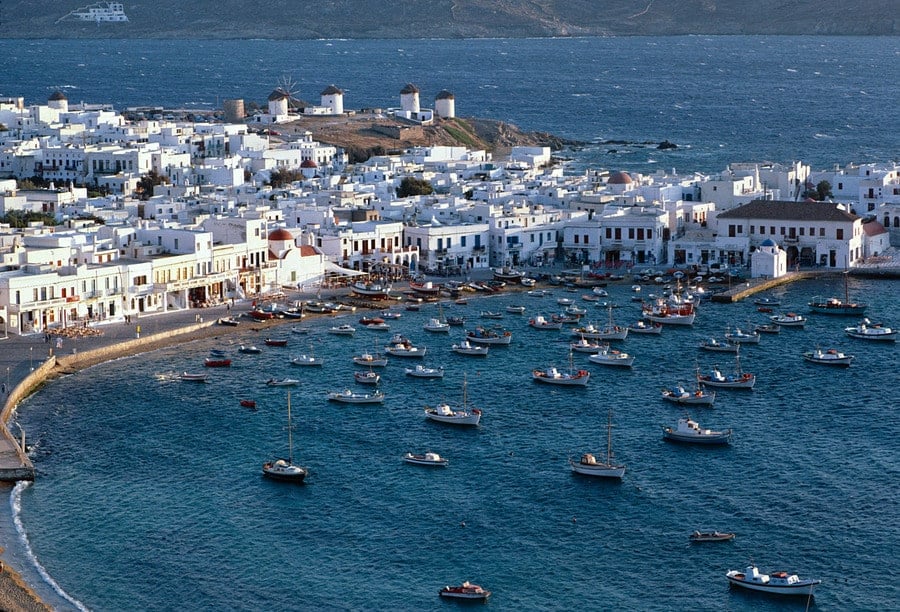
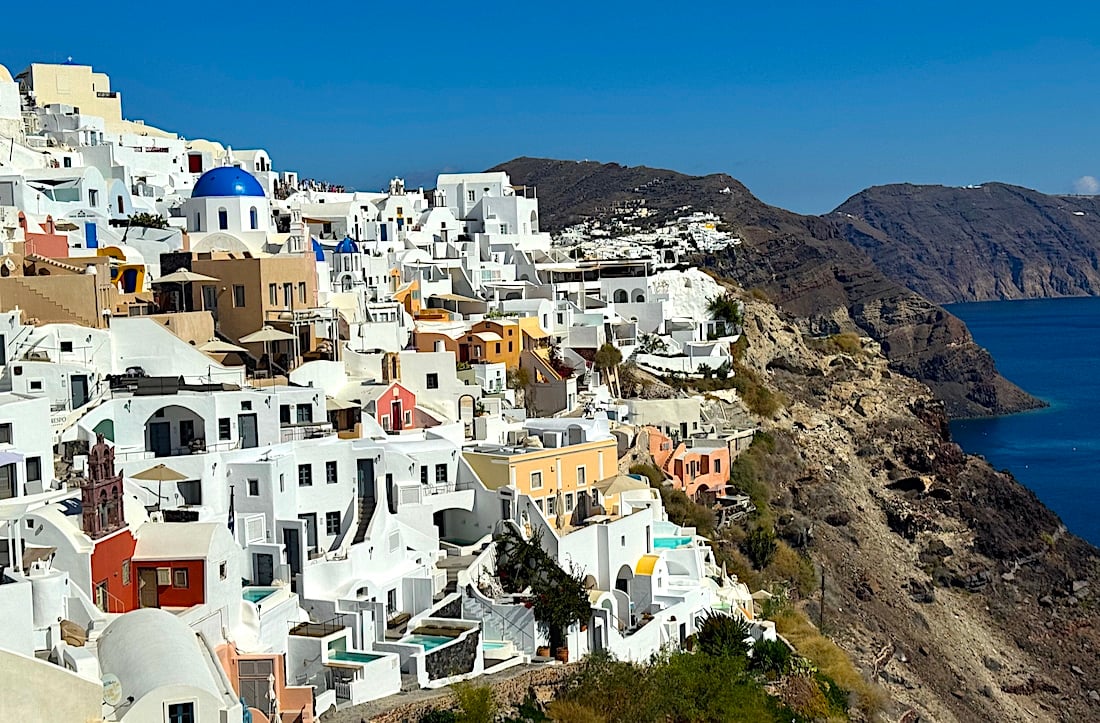
The new restrictions are expected to hit high-pressure tourist destinations particularly hard. On islands such as Santorini and Mykonos, minimum plot sizes for tourism-related development are set to increase significantly.
On Santorini, the minimum threshold for tourist projects may reach up to 40 stremmas (9.8 acres), while on Mykonos, it may reach up to 30 stremmas (7.4 acres). For residential development, and subject to possible revisions during the next consultation phase, the thresholds are expected to range between 6 (1.4 acres) and 8 stremmas (1.97 acres).
The main exception appears to concern primary residences, where the minimum plot size is expected to remain at 4 stremmas (0.9 acres).
As a result, the new rules would substantially limit the development potential of smaller properties, especially in areas where land fragmentation is common and demand for tourism investment remains high.
The new restrictions also extend to Natura-protected areas in the South Aegean. The Ministry of Environment recently approved Special Environmental Studies for the Southern Cyclades, introducing a stricter framework for off-plan tourism development.
Among the proposed limits, the studies set a maximum capacity of 150 beds per tourist facility in off-plan areas, always in line with the planning rules of each location. On smaller tourism islands, such as Antiparos, Schinoussa, and Paxoi, capacity is expected to range between thirty and fifty beds.
At the same time, a recent legislative provision passed by Parliament allows, under specific conditions, urbanization of up to 20% of protected Natura 2000 areas. The measure seeks to balance environmental protection with development needs in a country where Natura areas cover around 28% of the mainland territory.
The transition to the new planning regime will likely prove slow and procedurally demanding. Each urban planning study must pass through at least eleven approval stages before authorities can issue a presidential decree.
The process begins with submission to the Urban Planning Directorate of the Greek Ministry of Environment and an initial completeness check. The file then goes to the Environmental Licensing Directorate for another review. After that, competent bodies such as archaeological authorities and the Ministry of Tourism take part in consultation before the file moves on to the relevant region.
The procedure also requires an opinion from the municipal council, a decision by the regional council, and approval and consultation on the Strategic Environmental Impact Assessment. Review by the General Secretariat for Spatial Planning and the Central Council for Urban Planning Issues and Disputes is also required as are legal drafting control by the ministry, submission of the draft Presidential Decree to the Council of State and, finally, the Council of State’s opinion prior to formal issuance.
The complexity of the system is clear. The planning studies for Mykonos and Santorini, among the first assigned under the process, show the scale of the pending work. In many cases, delays appear early, as studies have not even reached the Environmental Licensing Directorate, a crucial link in the approval chain.