Amphipolis: The Grandeur of Kasta Tomb Revealed
Categories:


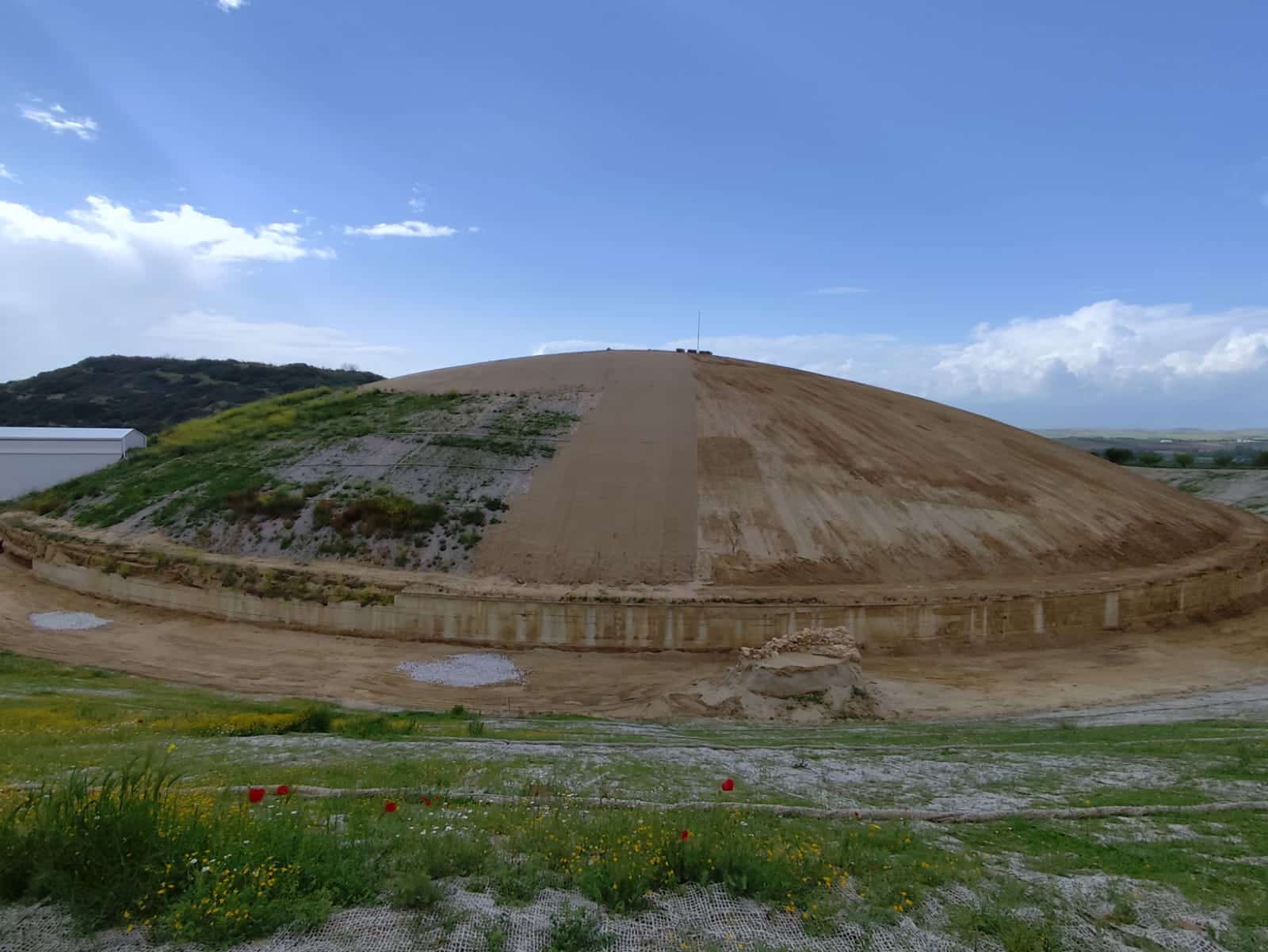
For the first time since its discovery, the entire Kasta Tomb in Amphipolis is visible, revealing a site of unprecedented scale and historical importance.
The tomb’s perimeter wall (the peribolos) extends to 497 meters, enclosing an area of more than 20 acres (8 hectares). When including the surrounding landscape, the total site managed by the Ministry exceeds 50 acres.
The Enclosure: The ancient enclosure has been fully unearthed. Restoration of the southern side is largely complete, spanning 105 meters. This work utilizes authentic ancient marble members found scattered at the site, supplemented sparingly by artificial stone to ensure structural integrity.
Structural Stabilization: Technical teams are currently stabilizing the western section of the enclosure. Simultaneously, an extensive hydraulic drainage network is being installed to protect the mound from rainwater erosion.
The Burial Chamber: Following the stabilization of the burial chamber’s vault and the installation of a metal support frame within the burial pit, all legacy scaffolding has been removed. For the first time, the interior of the monument is fully visible to researchers.
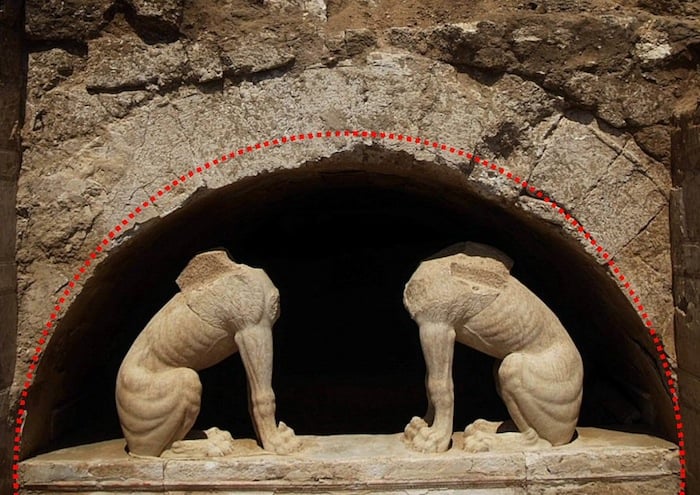
Minister of Culture Lina Mendoni announced that the next phase of work will focus on restoring the monument’s symbolic grandeur. This includes:
During her statement, Minister Mendoni emphasized the site’s unique place in Macedonian history.
“The Kasta Tomb is a unique and magnificent Macedonian monument. With its diameter exceeding 140 meters—surpassing even the 110-meter Great Tumulus at Aigai—it is the largest burial mound ever discovered in Macedonia,” Mendoni said.
Current scientific data and archaeological evidence confirm the monument dates back to the last quarter of the 4th century BC. The “exceedingly high quality and luxury” of the construction directly link the site to the era of Alexander the Great.
The Ministry aims to complete the necessary visitor infrastructure—including a dedicated museum space on the eastern side—to fully and safely open the monument to the public by early 2028.