China launched the world’s first experiment involving human artificial embryos in space this month, marking a significant step in research on whether people can reproduce beyond Earth. The structures, built from human stem cells, arrived at the Tiangong space station on May 11 aboard the Tianzhou-10 cargo spacecraft.
The craft lifted off from the Wenchang Space Launch Site on the evening of May 10 and docked with the station hours later. It carried around 7 metric tons of supplies, including food, fuel, spacesuits, and 41 scientific experiment projects.
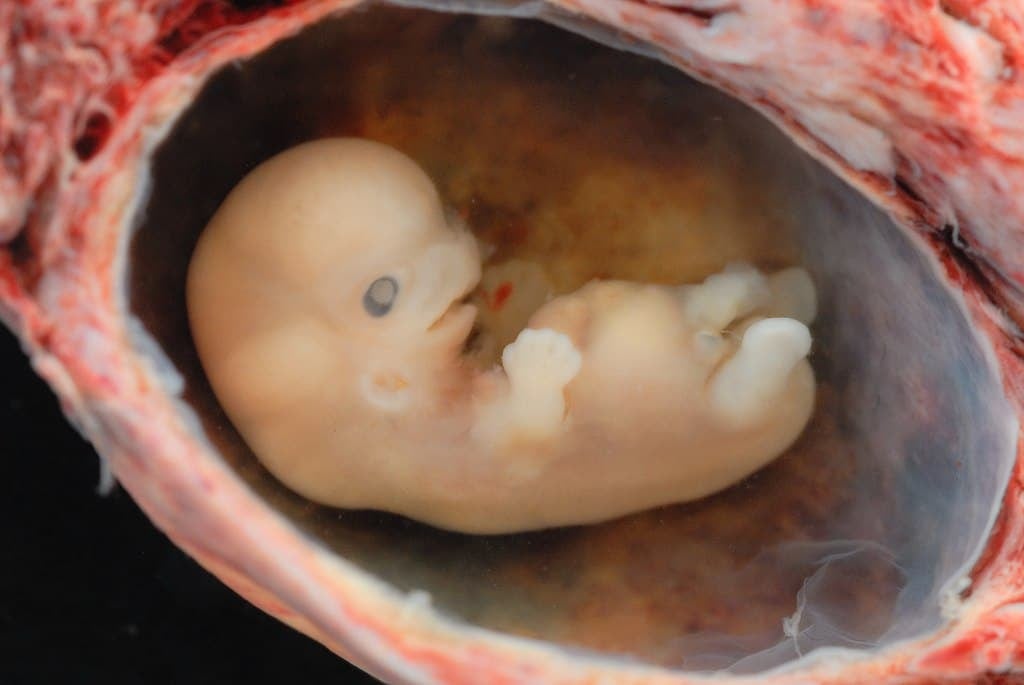
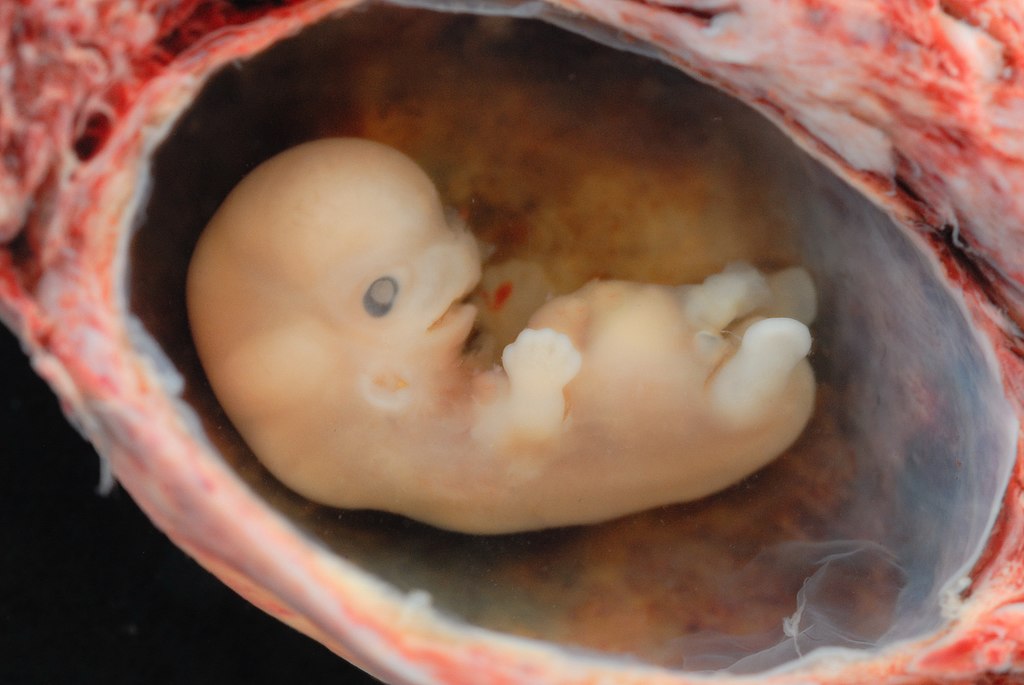
Yu Leqian, the project leader at the Chinese Academy of Sciences’ Institute of Zoology, said that the structures cannot develop into a fetus or a living person. They serve only as a model for studying the earliest stages of human biological development.
Two types of models were included. The first replicates the stage when an embryo attaches to the uterine wall.
The second represents a phase between 14 and 21 days after fertilization, when a single layer of cells begins reorganizing into distinct layers that will eventually form different tissues and organs. This is also when the body axis, which determines head and tail orientation, is first established.
China Makes History: World’s First Artificial Embryo Experiment Launched into Space.
China has achieved a groundbreaking milestone in space life science, launching the world’s first experiment on artificial embryos aboard the Tianzhou-10 cargo spacecraft on May 11, 2026.
The… pic.twitter.com/rtiIcrvWdL
— JAS (@JasADRxquisites) May 13, 2026
Aboard the station, astronauts installed the samples in the experimental module. An automated system handles daily care by replacing the nutrient solution around the cells every 24 hours.
One set is cultured on uterine cells while another is placed inside a microfluidic chip. The embryos will develop for five days before being frozen in orbit and later returned to Earth for analysis.
Identical samples are being grown simultaneously in ground-based laboratories. Scientists plan to compare both sets to determine how the space environment alters early embryonic development. Yu said that the goal is to identify biological risks that could affect humans during long-term space habitation.
Researchers say understanding how space conditions affect human embryos is central to China’s broader ambitions in deep space exploration. Existing studies show microgravity can disorient sperm cells and reduce fertilization rates.
Radiation levels in orbit may damage developing embryos, and research has found that stem cells break down more quickly in the space environment than they do on Earth.
Some scientists and private companies are already exploring in vitro fertilization as a solution for off-world reproduction. Researchers have also pointed out that the growth of space tourism raises the likelihood of conception attempts in orbit, adding further urgency to the study.
Zebrafish and mouse embryos were also part of the Tianzhou-10 science payload.