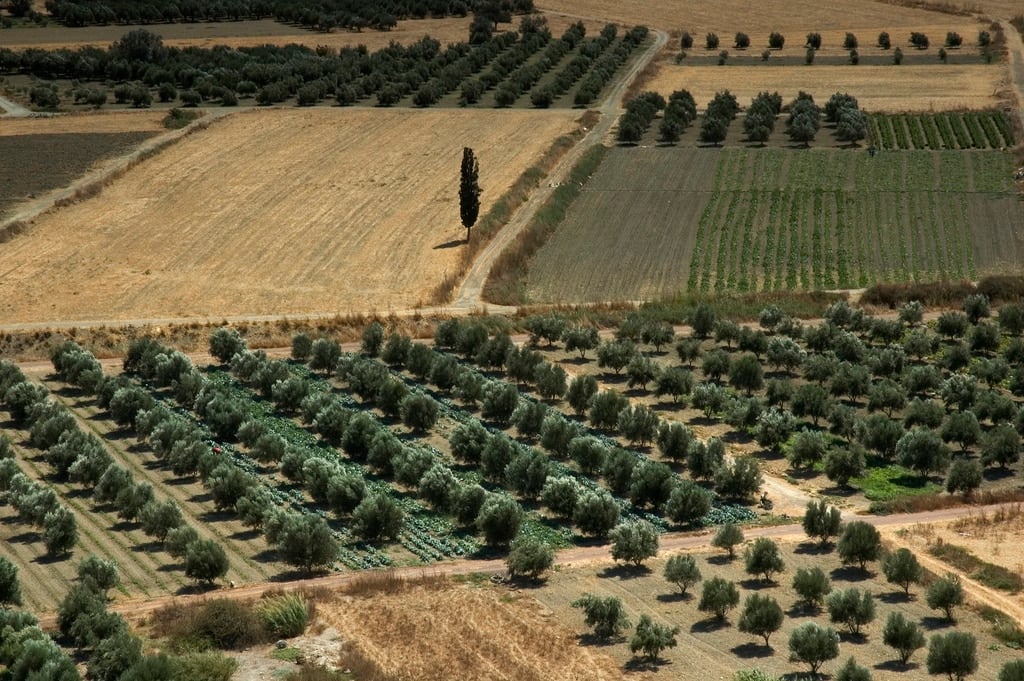
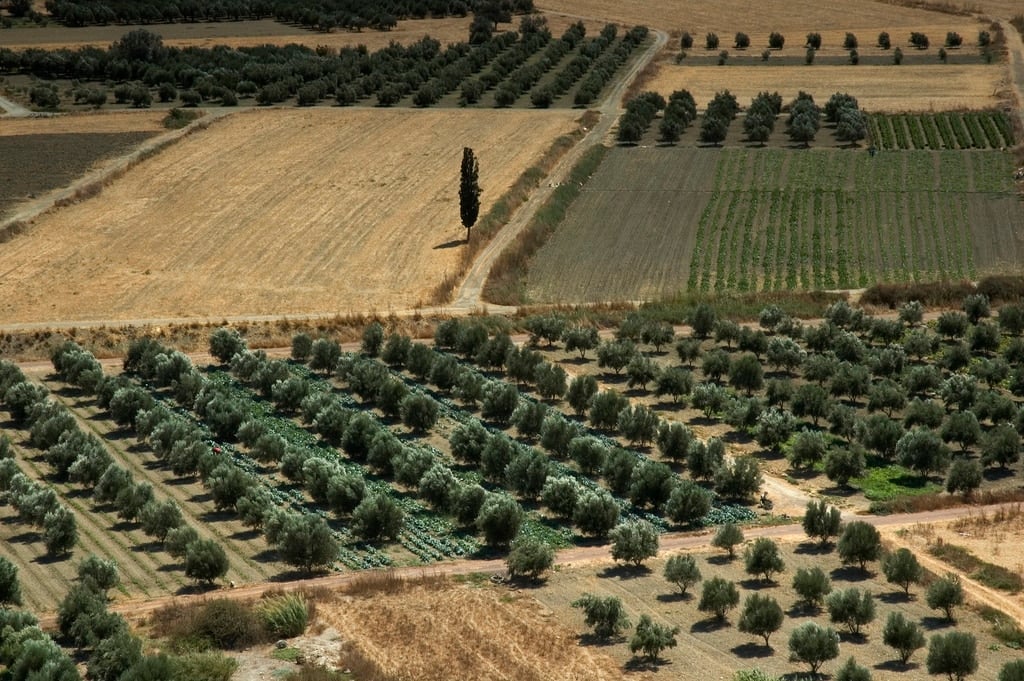
Greek agriculture could cut emissions sharply over the next 25 years by increasing productivity and adopting precision farming technologies, according to a new study that examined how the country can lower pollution while reducing production costs and supporting rural jobs.
Researchers found that modern farming methods, including precision agriculture tools such as sensors, drones, and data-based irrigation systems, could help Greece cut agricultural emissions by up to 62% by 2050 under broader national reform plans.
The study said the changes would also reduce production costs for farmers and improve the long-term sustainability of the country’s food system.
The research focused on Greece’s agricultural sector, which contributes about 4% of the country’s economy and supports thousands of jobs in rural areas. Researchers noted that the sector faces growing pressure from climate change, rising costs, water shortages, and aging farming populations.
Researchers used the FABLE Calculator, a modeling tool designed to examine food systems, land use, and climate impacts under different future scenarios. The analysis tested what would happen if Greece increased crop and livestock productivity while introducing environmental reforms and healthier dietary patterns.
The study found that even under a “business as usual” scenario, improving productivity alone could cut agricultural greenhouse gas emissions by 29% by mid-century compared to 2020 levels. Emissions linked to livestock farming showed the largest decline.
New research suggests Greek agriculture could cut emissions by up to 62% by 2050 through higher productivity, precision farming and sustainable reforms.
The study used the FABLE Calculator to model how advanced farming technologies could lower costs, improving sustainability. pic.twitter.com/xZNlCeLeWF
— Tom Marvolo Riddle (@tom_riddle2025) May 26, 2026
Researchers said higher productivity would allow farmers to produce more food using less land and fewer resources. Pastureland demand could fall by more than half by 2050 because fewer animals would be needed to maintain the same level of production.
The findings also showed that precision agriculture technologies could reduce fertilizer and pesticide use. Researchers cited previous studies showing digital farming systems can lower nitrogen fertilizer application by more than one-third, helping reduce harmful nitrous oxide emissions.
The largest environmental gains appeared in scenarios where productivity increases were combined with broader national reforms. These included healthier diets, stronger environmental protections, organic farming expansion, and afforestation targets.
Under that pathway, agricultural emissions in Greece could drop by 62% by 2050, researchers said. Methane emissions from livestock farming would see the sharpest fall as meat consumption declines and farming becomes more efficient.
The study also projected major financial benefits for farmers. Production costs could fall by nearly half by 2050, largely because of lower spending on pesticides, fertilizers, and machinery. Researchers said precision technologies would help farmers use resources more efficiently while improving yields.
The study stressed that Greece will need major policy support to achieve these goals. Researchers called for stronger farmer training programs, investment in digital infrastructure, and better links between research institutions and agricultural producers.
The report also recommended expanding regional digital farming hubs and creating national support systems to help farmers adopt precision agriculture tools.
Researchers concluded that improving productivity is central to building a more climate-resilient agricultural system in Greece. They said advanced farming technologies could help reduce emissions, lower costs, and strengthen food security at the same time.