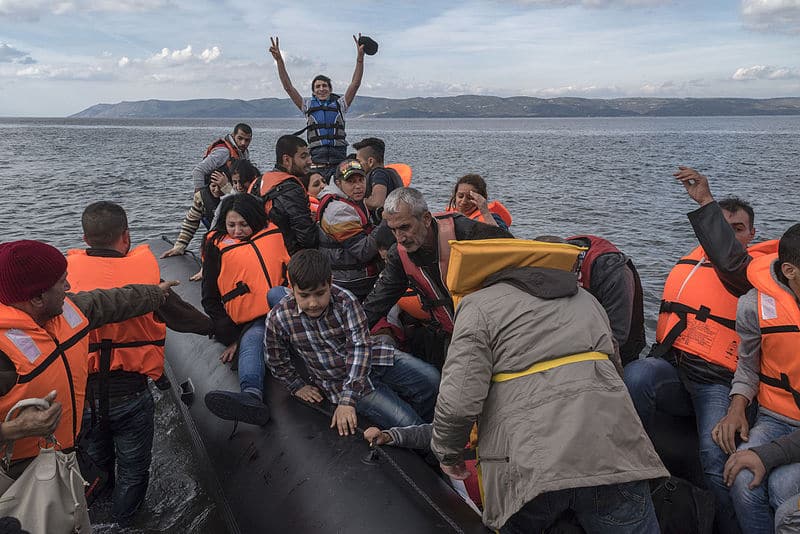

A fierce debate erupted in the Greek Parliament following the arrival of more than 600 undocumented migrants on the shores of Crete within a single 24-hour window. Addressing parliament, Migration and Asylum Minister Thanos Plevris issued a stern warning, stating that Greece is prepared to implement unprecedentedly harsh measures if this sudden influx of migrants, as was the case on Crete, becomes the new normal.
“If there is an attempt to continue what happened yesterday (Thursday), we will take extremely tough measures that have already been discussed with the Prime Minister—measures far stricter than the temporary suspension of asylum applications implemented in the past,” Plevris underscored. “We will not allow a repeat of the 2015–2016 crisis when a million people crossed into the country. Greece has borders, and they will be guarded.”
The Ministry of Migration defended the establishment of new processing facilities in the Cretan regional units of Chania and Heraklion, emphasizing that they will operate strictly as closed detention centers to protect local communities.
Under the framework of the new EU Pact on Migration and Asylum, which officially goes into effect on June 12, Greece will divide arrivals into distinct tracks based on their probability of receiving protection:
While a temporary closed space has already been secured in Chania in cooperation with local authorities, the government is currently looking to secure a temporary screening facility in Malades, Heraklion, to manage the 40% of recent arrivals that landed in that specific prefecture.
The government’s plans faced sharp criticism from Communist Party (KKE) MP Manolis Syntychakis, who argued that the surge in arrivals is a direct consequence of escalating geopolitical conflicts and imperialist rivalries in which Greece is entangled, pointing specifically to the prominent role of the US-NATO naval base at Souda Bay on Crete.
Syntychakis condemned the proposed facilities in Heraklion and Chania, labeling them “prison-camps” and “hotspots of misery.” He specifically highlighted the anger of residents in Malades, an area already burdened by urban and environmental issues, where the government plans to convert an Agricultural Cooperatives Union building into a facility without prior community consultation.
“The reactionary and dead-end policies of the government and the EU do not stop the flow of displaced people; instead, they turn our seas into graveyards and our country into a warehouse of souls,” Syntychakis argued. He called on the government to cancel the closed camps, establish humane, open hospitality zones, and provide immediate healthcare, legal aid, and travel documents so migrants can reach their actual destinations in Europe.
Minister Plevris dismissed the KKE’s arguments as hypocritical, highlighting the contradiction in demanding pristine living conditions while simultaneously opposing the establishment of local centers to keep migrants off the streets.
“If we made the Malades facility an open camp with perfect conditions, would you prefer that?” Plevris countered. “Because if it is open, people will be free to roam the local community. We need to speak the truth here. To manage this safely, initial screening is non-negotiable.”
Plevris concluded by noting that while cooperation with the Turkish Coast Guard has successfully reduced migrant flows in the Eastern Aegean by 70%, managing the southern route to Greece’s largest island of Crete from Eastern Libya remains highly complex due to the presence of a Libyan administration unrecognized by the European Union. Nevertheless, the minister reiterated that deterrence remains the cornerstone of Greek policy.