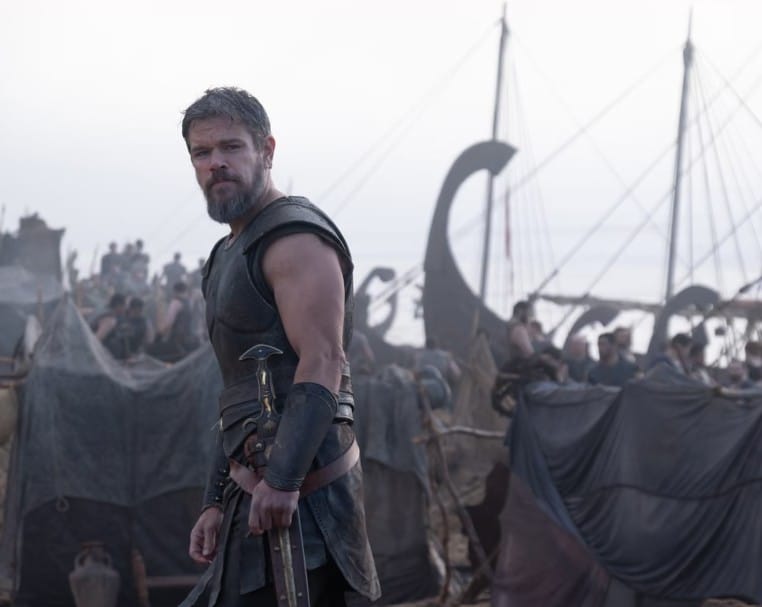
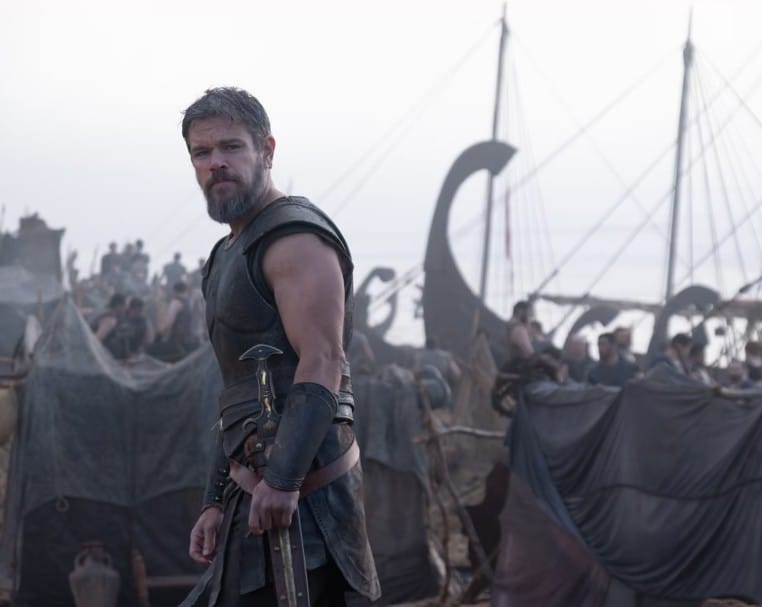
In an insightful opinion piece published in The Guardian on June 3, 2026, titled “What the Hellenic! Why is Christopher Nolan’s new Greek epic entirely devoid of Greeks?”, author Chris Cotonou critiques the conspicuous lack of Greek actors in the director’s highly anticipated blockbuster, The Odyssey.
With an all-star ensemble featuring Matt Damon as Odysseus, alongside Zendaya, Charlize Theron, and Tom Holland, the film’s production team has repeatedly championed the cast as being meticulously chosen to “represent the world.” However, Cotonou points out a glaring irony: in the race to achieve universal global representation, the very country from which the story originates has been entirely unrepresented.
Cotonou highlights that while far-right culture warriors—including Elon Musk—have leveled bad-faith attacks against the casting of Black actor Lupita Nyong’o as Helen of Troy on the grounds of “authenticity,” they are focusing on the wrong target.
For the Greek community, both domestically and across the global diaspora, the frustration stems from a deeper cultural erasure. Cotonou notes that dinner-table debates from Patras to London have been flooded with alternative, Greek-inclusive casting ideas, with many left wondering why beloved diaspora stars like Billy Zane were bypassed entirely.
To contextualize this frustration, Cotonou references Greece’s leading film critic, Thodoris Koutsogiannopoulos, who laments that Hollywood continues to perpetuate a “lazy cliché” that views Greekness through the simplistic lens of “Zorba rather than Achilles.”
More significantly, Cotonou argues that this complete omission carries a troubling broader implication. It suggests that ancient Hellenic stories are viewed by Hollywood as part of a generic “shared Western inheritance,” rendering the actual Greek people incidental or secondary to their own history.
Cotonou draws a poignant parallel to the enduring geopolitical battle over the Parthenon Marbles, noting that the erasure feels as though modern Greeks are no longer viewed as worthy custodians of their ancestral mythology.
While acknowledging that international audiences might dismiss the controversy under the guise that The Odyssey is merely fiction, Cotonou emphasizes how intimately interwoven these Homeric epics are with the modern Greek subconscious, identity, and sense of self.
He argues that excluding Greeks from The Odyssey is culturally equivalent to shutting out Hindus from an adaptation of the Mahabharata or stripping Polynesians from a film like Moana.
Ultimately, Cotonou connects the casting dispute back to the timeless, central theme of Homer’s poem: nostos, the deeply human yearning for homecoming after surviving grueling trials. In a Hollywood landscape that increasingly values diversity, Cotonou elegantly concludes that the Greek people are simply asking not to be written out of the journey.