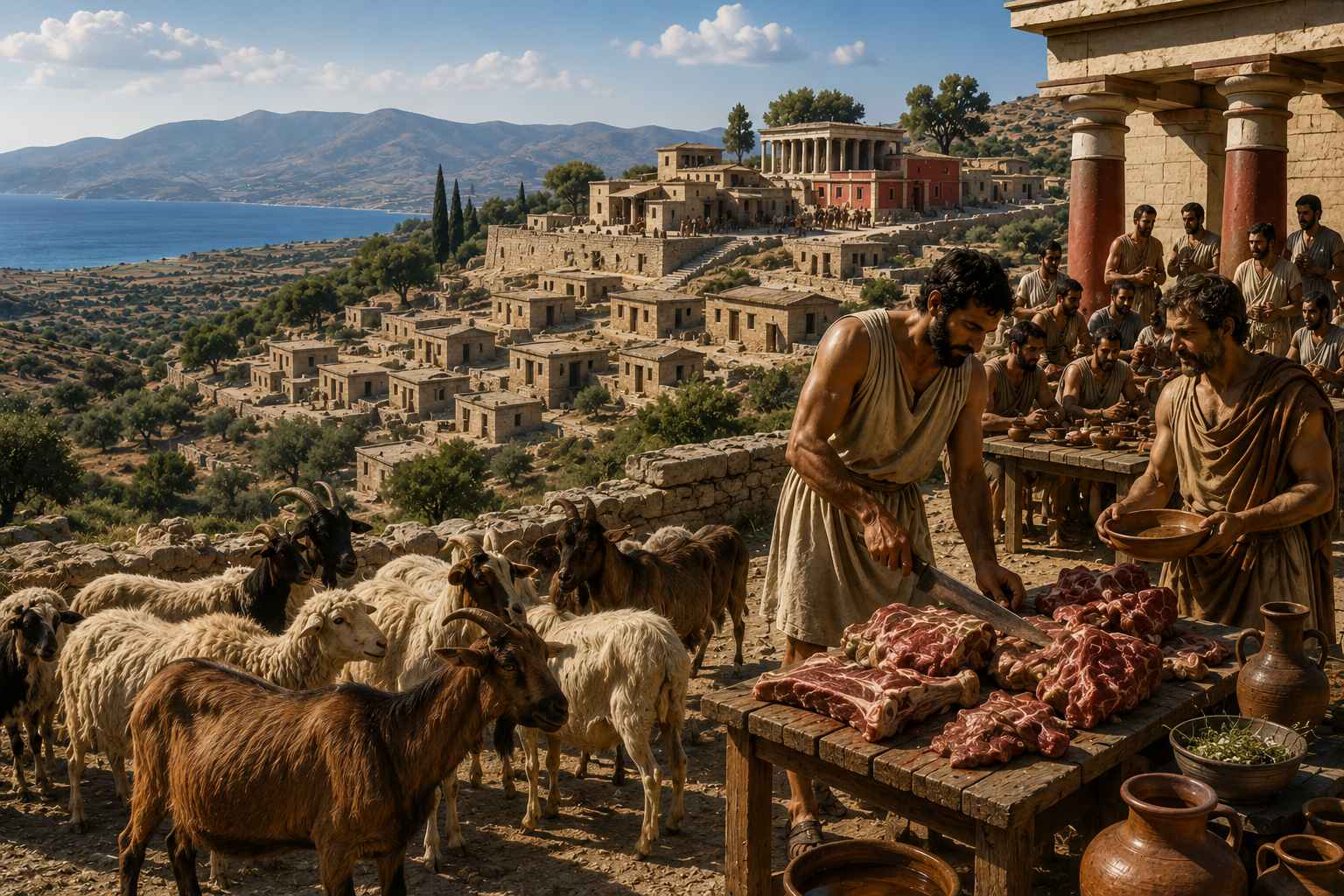
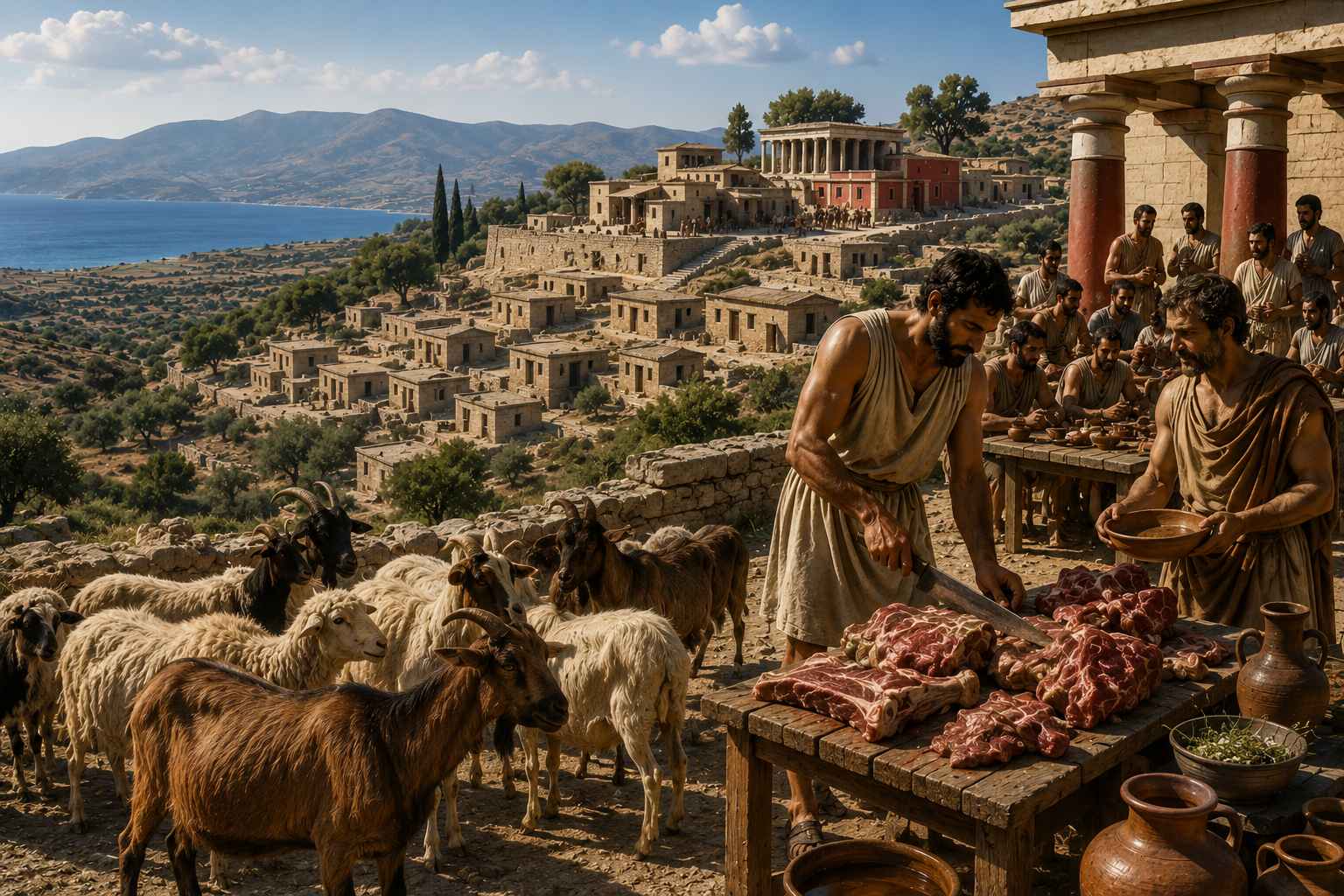
Ancient Greek farming was the foundation of the economy. It shaped religious rituals and brought communities together at public feasts. One famous example appears in The Odyssey, where Odysseus’s son attends a feast featuring the sacrifice of 100 cattle.
Researchers have long known that agriculture drove the ancient Greek economy. However, one question has remained unresolved: How did Greek communities raise the animals that supplied everyday meals and large public gatherings?
A new study of animal remains from the ancient settlement of Azoria on the island of Crete suggests the answer is more complex than previously thought. Rather than relying on a single farming system, ancient Greeks appear to have combined local livestock farming with larger seasonal herds.
For nearly a century, scholars have debated whether livestock were kept in large flocks that moved between mountain and lowland pastures with the seasons or in smaller herds raised alongside crops on individual farms. The new research is the first to directly test both ideas using one of the largest collections of animal remains from the ancient Greek world.
Researchers analyzed more than 200,000 animal bones recovered from Azoria, a settlement abandoned suddenly in the early fifth century B.C. The site preserved homes, public buildings, pottery, and food remains, providing an unusually detailed record of daily life.
The preserved buildings allowed archaeologists to identify homes, public structures, and communal dining spaces where citizens gathered for feasts and civic discussions. Researchers examined animal remains from both household and public settings to compare how livestock supported everyday life and ceremonial events.
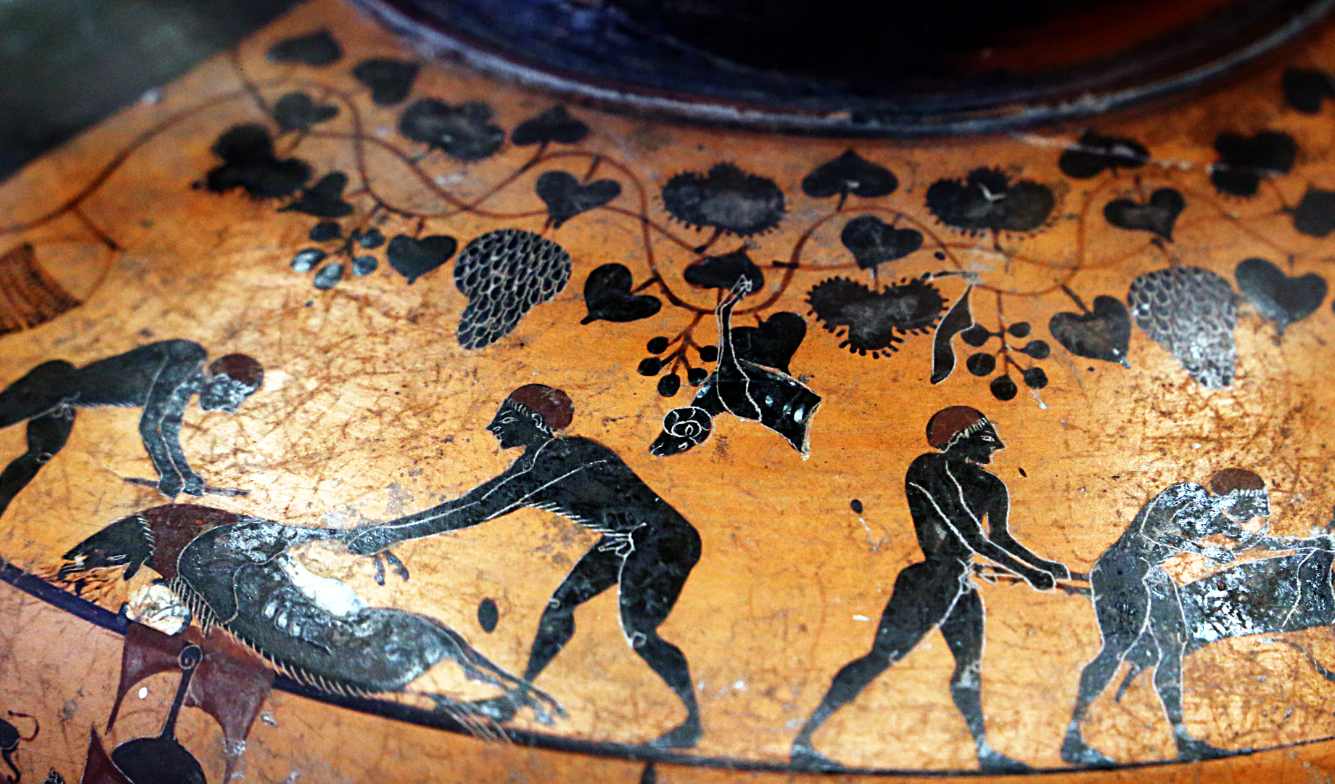
The team used stable isotope analysis, a technique that examines chemical signatures preserved in bones and teeth. Carbon and nitrogen isotopes reveal the types of food animals consumed, while oxygen isotopes record seasonal changes during tooth growth. Together, the data can show how animals were fed and whether they moved between different grazing areas.
Researchers examined isotope data from 50 sheep and goats and compared it with evidence from homes and public dining spaces.
Goats were the most common animals eaten at Azoria, followed by sheep, pigs, and cattle. The same species, and animals of similar ages, appeared in both households and communal feasts. However, the way they were prepared differed.
Bones from public dining halls showed heavy chopping by large cleavers, suggesting trained butchers, possibly priests involved in religious sacrifices, prepared the meat. Household remains carried cut marks made by ordinary knives.
The isotope evidence revealed an even greater difference. Animals consumed in homes showed chemical signatures consistent with grazing on nearby farms throughout the year. In contrast, many animals used in public feasts displayed patterns linked to seasonal movement between mountain and lowland pastures. Others appeared to have been fed cultivated fodder year-round.
The findings suggest ancient Greek communities relied on more than one livestock system. Small mixed farms likely supplied everyday food, while larger managed herds supported public sacrifices and communal feasts. Researchers say that the combination helped sustain the agricultural economy while reinforcing the civic and religious traditions that united early Greek city-states.