
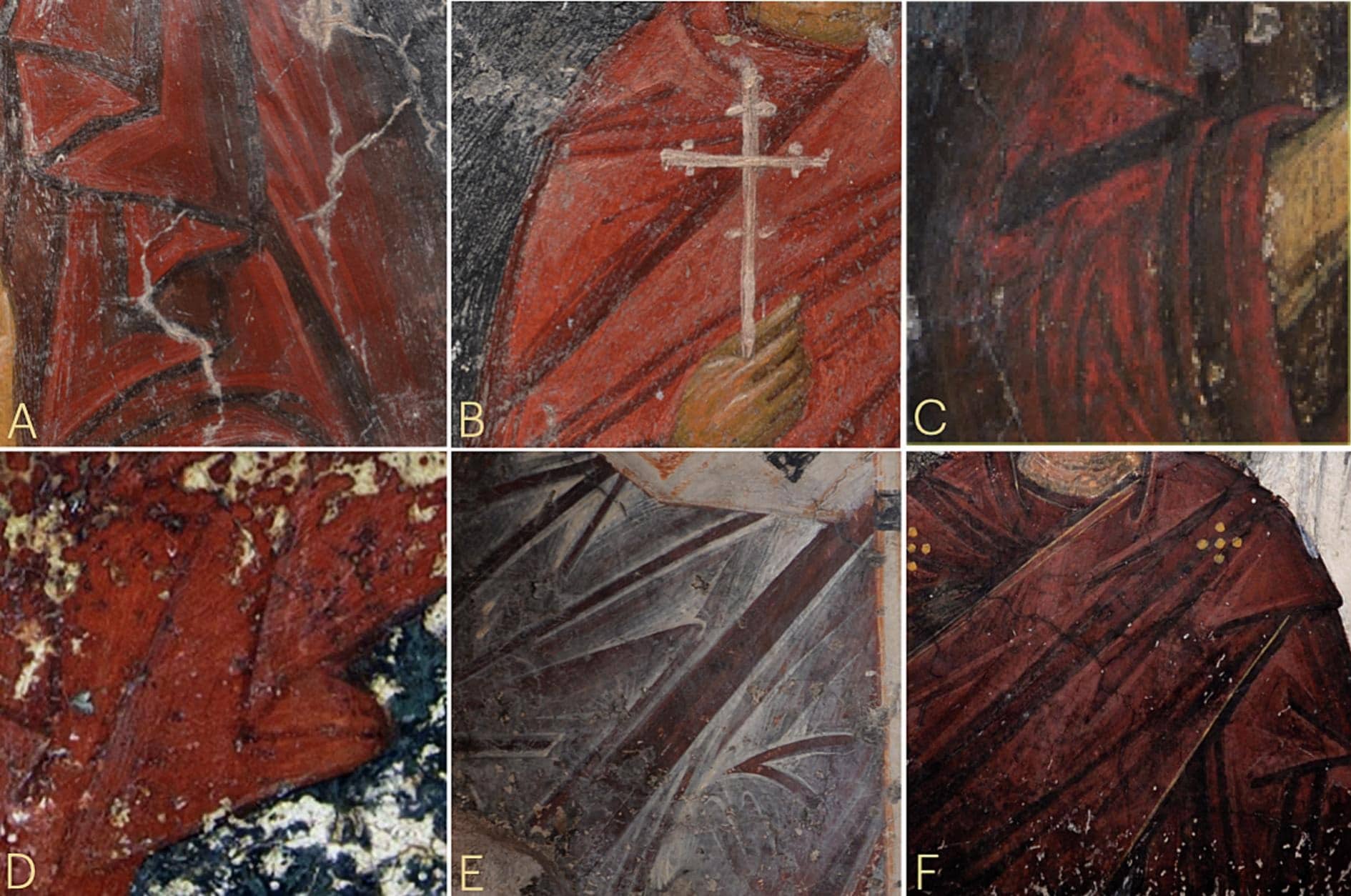
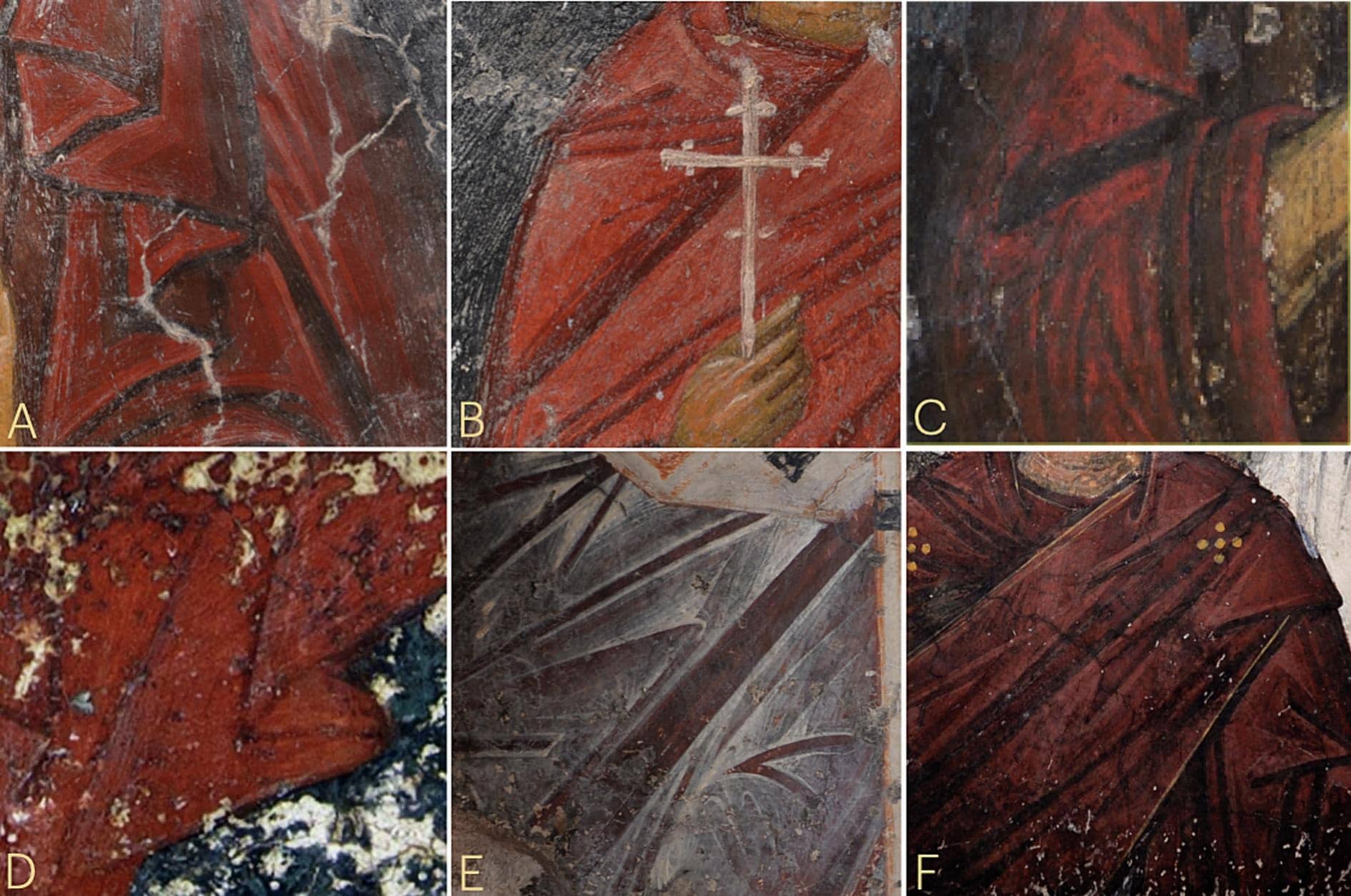
Researchers have uncovered new details about how medieval painters created the vivid reds seen in Byzantine church murals across Crete, offering the first scientific look at pigments used in the island’s eastern region.
The study, published in the Journal of Archaeological Science: Reports, examined mural paintings from eleven churches in the Lassithi area, spanning the 8th to 16th centuries.
The research team included Klio Zervaki of the Ephorate of Lassithi Antiquities at the Archaeological Museum of Agios Nikolaos. Her team used several testing methods, including portable X-ray fluorescence, microscopy, and X-ray diffraction, to study tiny paint samples taken from the church walls.
The results show that red ochre, a natural iron-based pigment, was the most common color used by the painters. It appeared in almost every church studied, in different shades and grain sizes.
Vermilion, a more expensive pigment made from mercury sulfide, also turned up more often than experts had expected. Painters used it not just for important figures, but also for borders and background layers.
A third pigment, red lead, showed up mainly as a mix with the other two reds. Researchers said painters often blended it with vermilion or ochre rather than using it alone.
The study also found that painters mixed lime with their pigments as a binder, and many used a technique called secco, where paint is applied to dry plaster rather than wet plaster.

This method, along with the ochre and vermilion, gave artists a way to build up the traditional Byzantine three-tone shading style, layering light, medium, and dark reds to model faces, clothing, and other details.
Researchers also documented how age and environment changed the paintings over time. In several churches, heat from candles turned yellow pigment into red in small, isolated spots, likely from centuries of flame exposure near the walls.
Humidity also darkened areas painted with vermilion and red lead, turning some bright highlights into dull gray or black patches.
The findings offer new evidence that painters working across the region shared common materials and methods over centuries, even as pigment quality and vermilion use gradually improved after the 14th century.
Researchers said the data could help guide future conservation work on the murals, many of which show signs of aging from heat and humidity exposure over the centuries.
The study adds Lassithi to a small but growing list of regions in Crete studied for the material history of Byzantine church murals, filling a gap in research on the island’s eastern churches.

