The Ancient Greek Myth That Gave Europe Its Name
Categories:

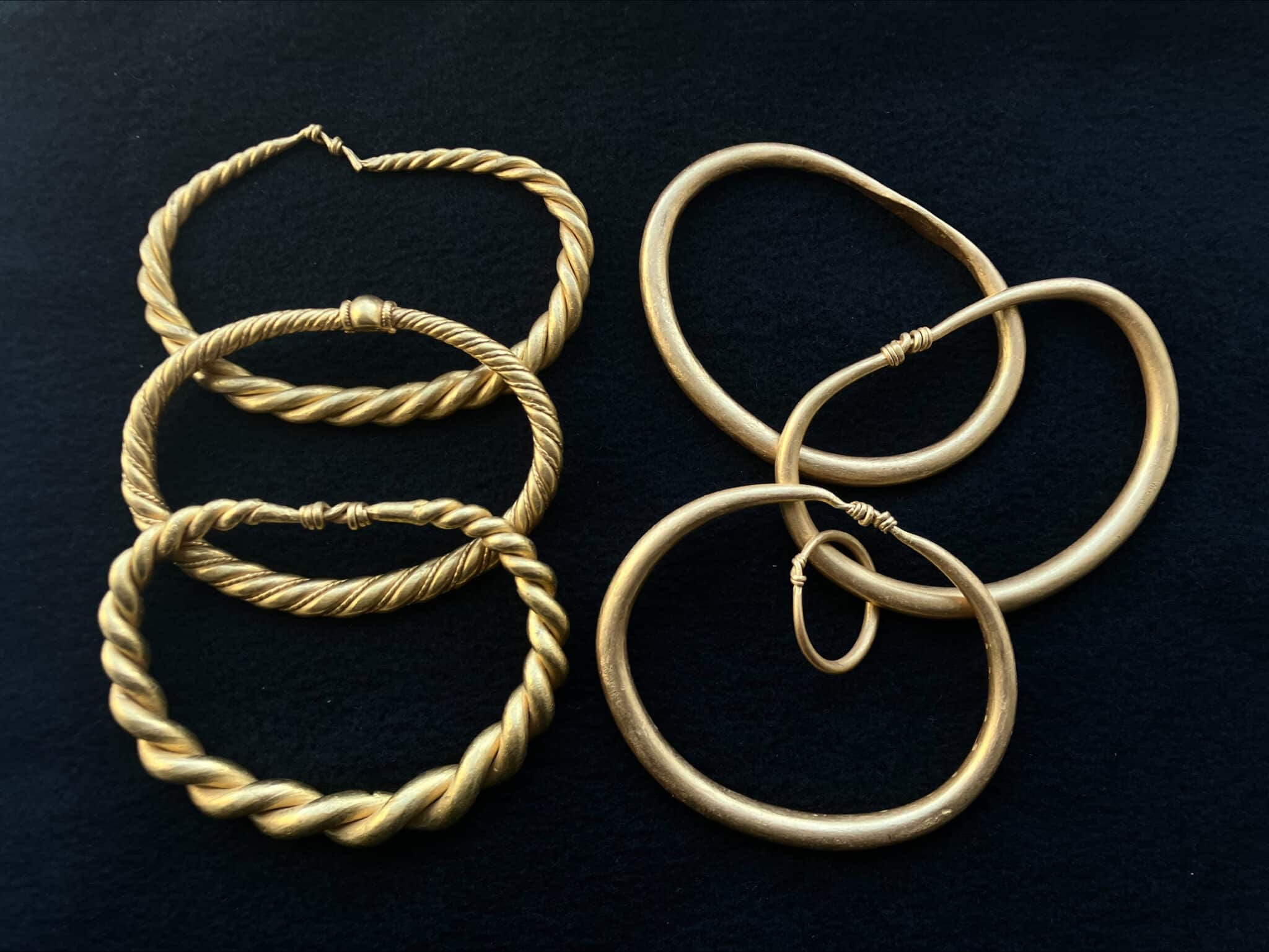
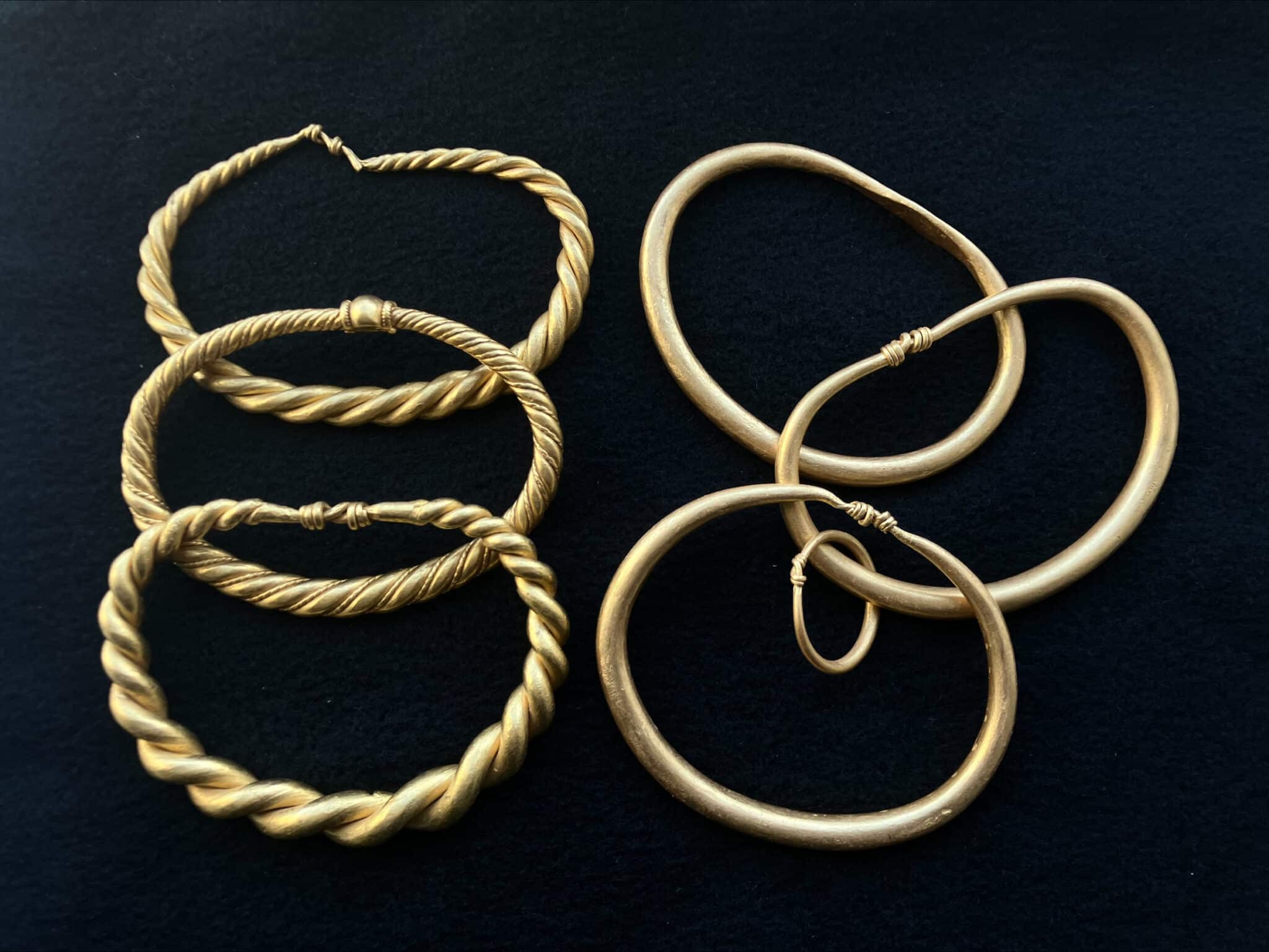
Six intact gold arm rings recovered from a forested area near Rold in northern Denmark rank among the largest Viking Age gold hoards ever found in the country, archaeologists announced. The rings weigh a combined 762.5 grams (26.9 ounces) and place the discovery third on Denmark’s all-time list of Viking Age gold finds.
The discovery began when a local resident spotted two rings partially exposed in the soil along a field path. He brought them to the North Jutland Museums for assessment on April 22. Archaeologists knew right away they were dealing with something rare.
They returned to the site and ran a systematic metal detection sweep over a wider area. That search turned up a third ring near the original spot and three more about 15 meters (49.2 feet) away. All six were intact.
Torben Sarauw, cultural heritage director and archaeologist at North Jutland Museums, said the museum had never seen anything like it before. Named the Rold Treasure, the find now ranks as the third largest Viking Age gold hoard in Denmark, trailing only the Tissø Ring found in West Zealand in 1977 and the Fæsted Treasure discovered near Ribe in 2016.
The rings follow a recognized Scandinavian style, but gold versions are far rarer than those made in silver. Sarauw noted that gold in the Viking Age was held almost entirely by the highest levels of society, which is why finds like these are so uncommon.
He also pointed to the craftsmanship as another reason the discovery stands out. The rings feature both twisted and smooth designs, a sign of highly skilled goldsmithing. Three are twisted from two rods, one with thin inlaid gold wire and a knob-shaped closure.
Others are smooth, made from solid rod or wire, with wrapped slip-knot closures. One ring stands apart with flat-hammered ends decorated with zigzag patterns and triangles.
Archaeologists date the rings to the late Viking Age, roughly 900 to 1000 AD. This was the period when Denmark was consolidating into a single kingdom. Harald Bluetooth marked that shift on the Jelling Stone around 965 AD.
All six rings are uncut and undamaged. Sarauw said that rules out their use as an everyday payment metal. He described them as more likely symbols of power, rank, or loyalty, or valuable gifts exchanged to mark social bonds.
When rings are buried together this way, he added, it usually signals deliberate concealment during unstable times or some form of ritual deposit. The Rold Treasure, he said, offers a rare window into Viking society and its structures.
The find site is on private land. Both the finder and the landowner have chosen to remain anonymous. All six rings have been submitted under Danish treasure law and will undergo further analysis before being forwarded to the National Museum.