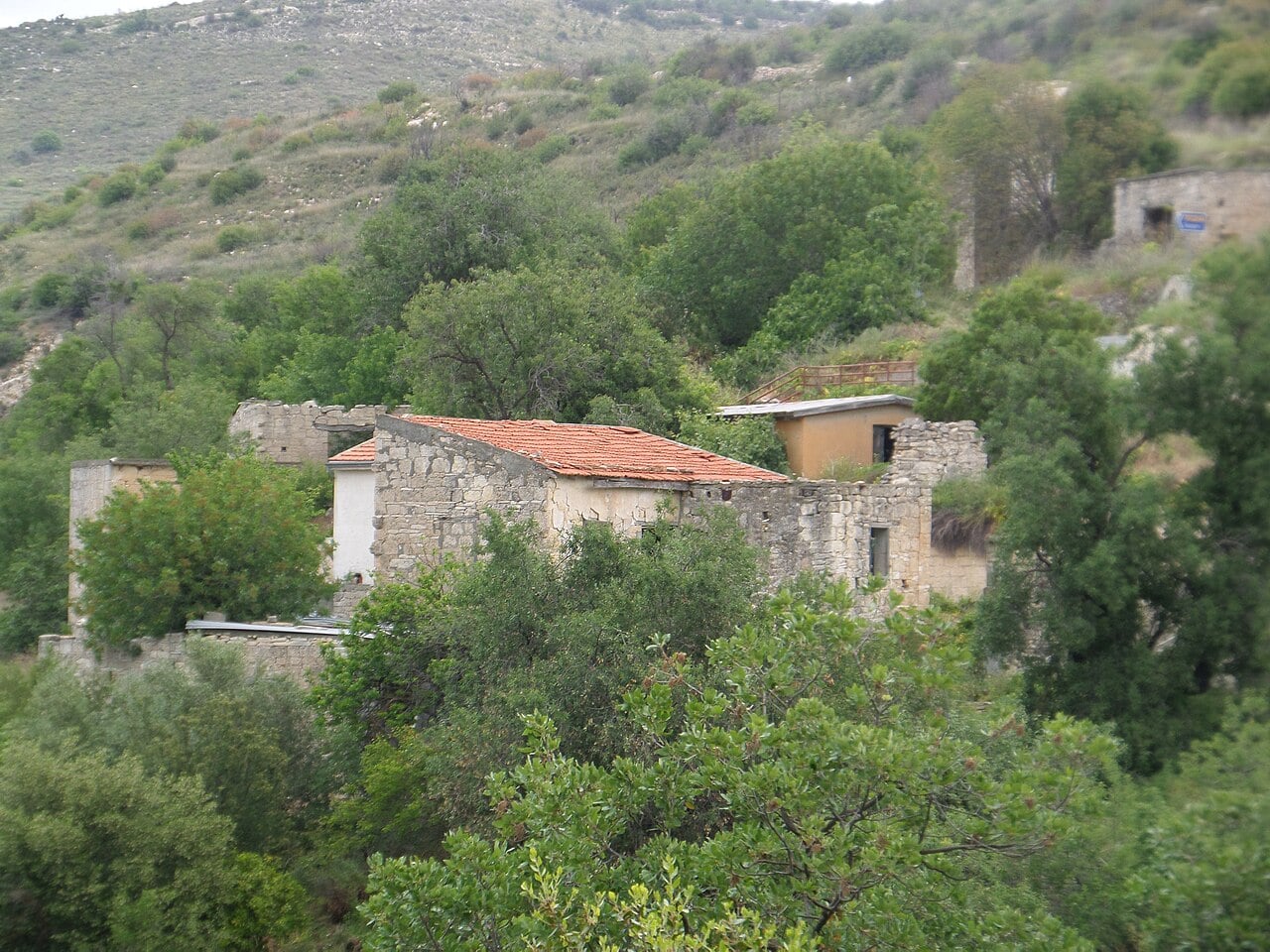
An Israeli-backed company is moving forward with plans to establish an Israeli settlement in the abandoned village of Trozena, located in the Limassol district of the Republic of Cyprus.
According to a report by the Cypriot newspaper Phileleftheros, the project aims to construct a total of 60 residential homes, a campsite, and a winery. A formal application for a planning permit has already been submitted.
According to sources cited in the report, the housing units and the winery are slated to be built within the traditional core of the village where the original residential area stood. The campsite, however, is planned for the outskirts of the community. The master plan involves demolishing existing derelict structures and erecting new buildings in their place.
While acquiring the land was a decisive first step for the investor, the approval process is far from simple as the Department of Environment has expressed strong reservations because the community and its surrounding region are protected under Natura 2000, the European network of protected natural areas dedicated to preserving vulnerable species of flora, fauna, birds, and habitats.
The Department emphasizes that the local flora and fauna are incredibly rich and require strict protection. It has requested additional data and clarifications regarding the type and scale of the development, and has not yet issued a planning permit.
Furthermore, the investor did not submit a single, unified application for the entire project. Instead, it submitted two separate applications for the 60 homes, one for the winery and one for the campsite. However, the Department of Environment has stated that it will evaluate the cumulative impact of all proposed buildings and uses as a single entity, rather than considering the applications in isolation.
Beyond the environmental impact, the project has triggered a broader political debate regarding foreign real estate acquisition in Cyprus.
Critics view the project as part of a worrying trend of selling off Cypriot land to foreign nationals, raising concerns about national sovereignty.
Proponents, on the other hand, point out that Trozena is an abandoned ghost village long neglected. They argue that local backlash is an overreaction to an investor who is actually willing to revitalize and develop the area.
Nevertheless, as the Phileleftheros report concludes, this is not the first time that Israeli property acquisitions—in both the government-controlled areas and the occupied northern part of Cyprus—have sparked intense public debate.