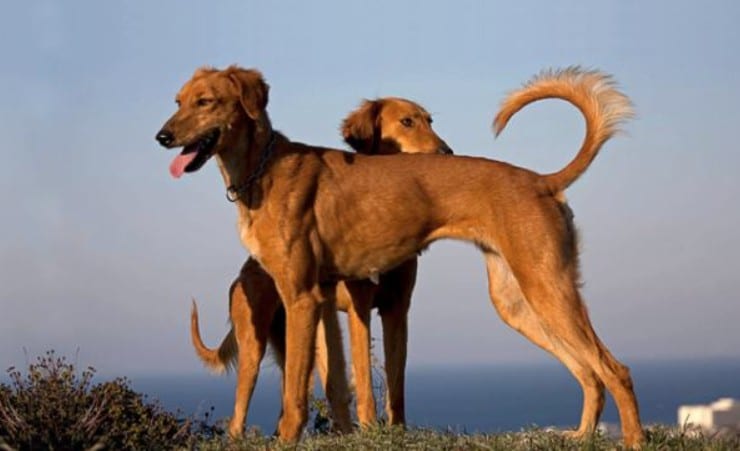
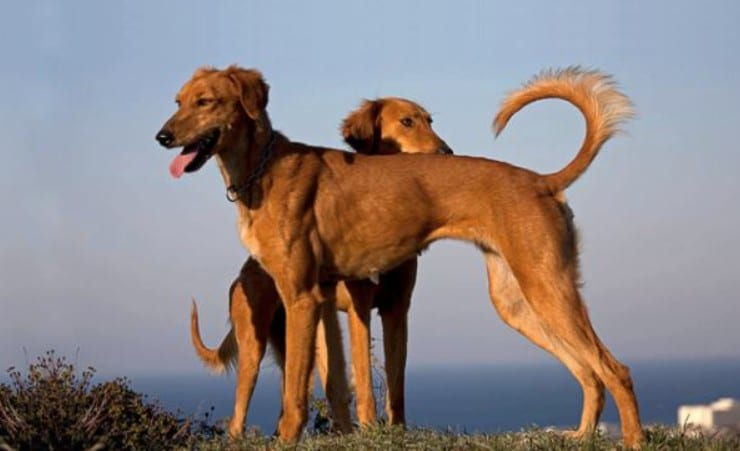
Walking quietly alongside the gods, warriors, and philosophers of ancient Greece was another foundational element of life: their dogs. Far from just pets, these animals were revered companions, fierce protectors, and vital hunting partners.
Today, while the ancient monuments stand in ruins, a living piece of that classical world still walks among us on four legs. Thanks to centuries of geographical isolation in rugged mountain ranges and remote Aegean islands, several indigenous breeds have kept their genetic lineages remarkably intact.
1. Alopekis (The Fox-Dog)
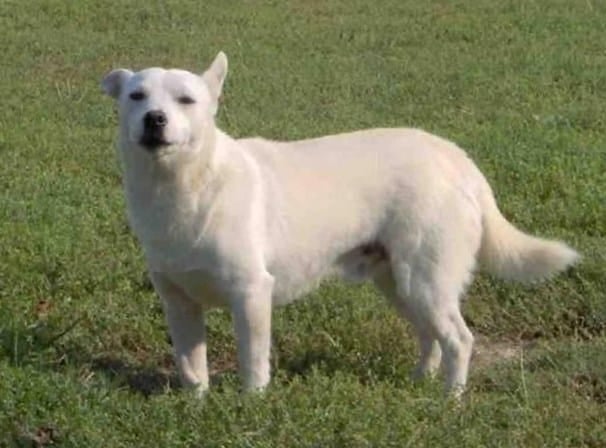
The name Alopekis literally translates to “little fox” or “fox-like.” Belonging to the primitive lupoid family, this small-to-medium-sized dog features erect ears, a wedge-shaped head, large almond eyes, a fluffy, curved tail, and a height reaching up to 30 cm.
The breed first appeared in the Greek region alongside the Pelasgians and is mentioned by classical authors such as Aristotle, Xenophon, and Aristophanes. They are depicted in numerous post-Paleolithic archaeological finds in Thessaly, including ceramics, sculptures, and tombs.
In his treatise Cynegeticus (On Hunting), Xenophon highlights the Alopekis as one of the two primary ancient Greek dog archetypes. Ancient writers actually believed the breed was born from the mating of dogs and foxes, earning them the ancient moniker Cynalopex (fox-dog).
Traditionally, the Alopekis was used to guard livestock, serving as an excellent watchdog that alerts owners to potential threats. Remarkably, they are said to sense natural phenomena—like impending earthquakes—before they happen. Despite their small size, they make exceptional companion animals due to their high emotional intelligence, adaptability, and ease of training. They are protective, deeply affectionate, great with children, and form unbreakable bonds with their families. Sadly, while the Alopekis is likely the oldest surviving dog breed in Europe, it is currently critically endangered and in urgent need of protection.
2. Hellenic Hound (Ellinikos Ichnilatis)
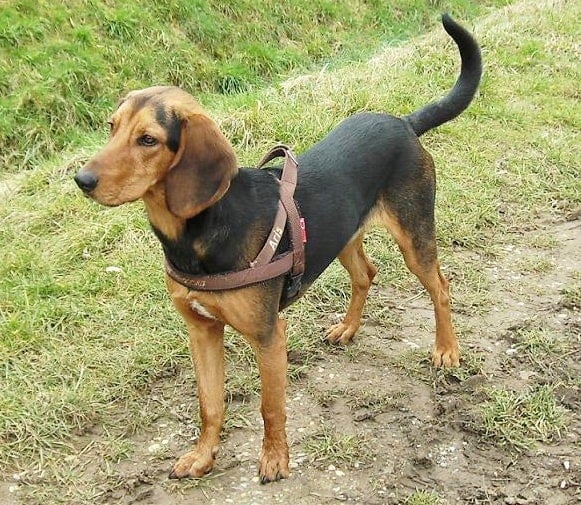
Known variously as the Hellenic Hound, Greek Harehound, Gekas, or Zagari, this is one of the few breeds to survive virtually unaltered from antiquity. This genetic purity is largely due to their isolation in the inaccessible mountainous regions of Greece, where they faced little crossbreeding.
The ancestors of the Hellenic Hound are the ancient Laconian hounds of the Peloponnese, who accompanied ancient mariners on their voyages and were even used as messengers in battle. Bred primarily for hunting hares and deer in Laconia, Argolis, and Crete, they possess a legendary sense of smell and immense endurance. Over time, the word Laconian evolved into lagoniko (hound), eventually passing to the Romans under the Latin name Canis Leporarius. Centuries later, the French called them Lievre (hare) and the Italians Lebriere. They were also dubbed Dromones (runners) due to their incredible speed.
Numerous ancient Greek frescoes, vases, and coins depict these hounds accompanying hunters, warriors, and the Bacchantes. They were even considered the inseparable companions of Artemis, the goddess of the hunt.
Reaching up to 55 cm in height and 25 kg in weight, officially recognized Hellenic Hounds feature a short, coarse, black-and-tan coat. They are vibrant, robust, intelligent, and friendly. Today, the Hellenic Hound holds the distinct honor of being the only native Greek breed officially recognized by the Fédération Cynologique Internationale (FCI).
3. Greek Shepherd (Ellinikos Poimenikos)

The Greek Shepherd (or Tsopanoskylo) is a formidable guardian breed that has been bred for centuries to protect livestock in the country’s rugged mountainous regions.
Closely resembling the ancient Molossus, this breed evolved naturally across the Greek landscape. They are woven directly into Greek epic poetry; a famous example is Argos, Odysseus’s fiercely loyal dog in Homer’s Odyssey.
Equipped with a large head and a broad chest designed to fend off apex predators, these dogs typically feature black, white, grey, or piebald coats, standing up to 75 cm tall and weighing up to 50 kg. They are an incredibly powerful, resilient breed that will not hesitate to defend their flock against wolves or bears. Their thick, heavy coat makes them perfectly suited to the harsh weather of the rocky Greek countryside.
Tragically, with the decline of traditional livestock farming and increased crossbreeding, purebred numbers have plummeted. It is estimated that fewer than 3,000 pure Greek Shepherds remain today. To counter this, the environmental organization ARCTUROS has been running a dedicated Greek Shepherd Breeding Program since 1998 to save the breed from extinction.
4. Kokoni

The Kokoni is a small, domestic breed native to ancient Greece. Its name likely derives from the modern Greek word kokona (meaning daughter or lady). In older times, daughters spent most of their time in and around the home, making the Kokoni the quintessential “daughter’s dog” or “house dog”—a stark contrast to the era’s working hounds and massive guardians.
The Kokoni stands up to 28 cm tall, with a body longer than its height, a triangular head, dropped ears, and a plumed, curved tail. Their coat is short on the face and front legs, but medium-to-long on the body, neck, and hindquarters.
Ancient vases, statues, and coins frequently depict the Kokoni, illustrating their intimate relationship with the ancient Greek family. They were historically called Parestia (by the hearth) because they would cuddle at the feet of women cooking by the fire. Athenian noblewomen would even take them along to the Agora (market).
Despite their small stature, Kokonis are not mere lapdogs—though they adore affection. They are highly intelligent, fiercely loyal, deeply intuitive, and naturally aristocratic. They train easily, love unconditionally, and excel as therapy dogs. Their resilience is proven by the fact that they survived for centuries on the streets of Greece. Today, the Kokoni is officially recognized by the Kennel Club of Greece (KOE) and remains one of the country’s most beloved companion pets.
5. Cretan Hound (Kritikos Lagonikos)
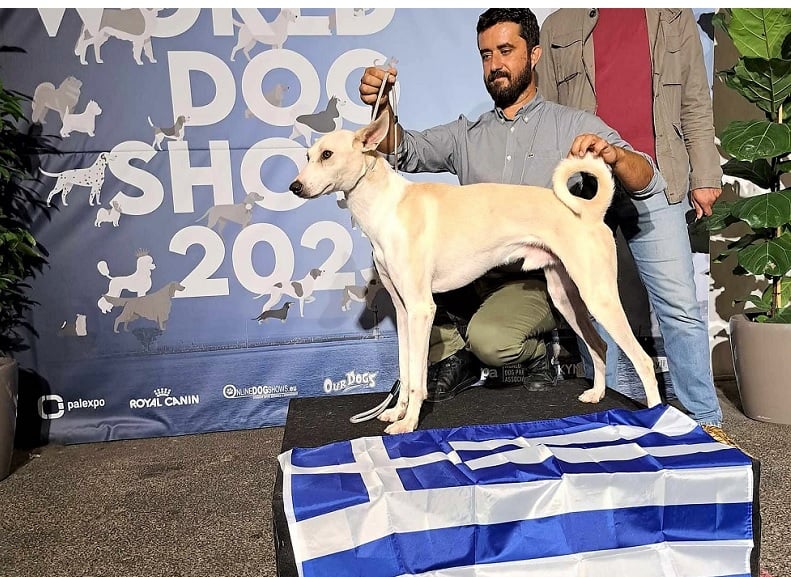
The Cretan Hound is an ancient sight-and-scent hound native to the island of Crete. It is considered one of the oldest hunting breeds in Europe, with a documented history stretching back over 5,000 years (circa 3200 BC), supported by countless archaeological artifacts found on the island.
The Cretan Hound features a lean, athletic body, a short, smooth coat, pricked ears, and a firm, curled tail. Standing up to 59 cm and weighing up to 22 kg, this dog is built for speed and agility. They are remarkably hardy, capable of navigating and hunting in the most treacherous, rocky, and steep terrains of Crete.
Possessing a highly efficient, frugal metabolism, they can work for hours under intense conditions. They have an astonishing sense of smell and a razor-sharp tracking instinct, making them peerless hunters. At home, they display an innate instinct to guard other farm animals, while remaining incredibly gentle, loyal, and loving toward their human families.
6. Molossus of Epirus (Molossos tis Ipeirou)

The Molossus of Epirus is a legendary guardian breed used since antiquity to protect livestock from large carnivores like wolves, jackals, and bears in the mountainous regions of northern Greece, particularly Epirus.
The breed was developed by the ancient Greek tribe of the Molossians and gained global fame during the era of Alexander the Great. In mythology, Molossus was the son of Neoptolemus and Andromache, and the grandson of Achilles—giving his name to the tribe and their famous dogs. This purely Greek breed is widely considered one of the primary ancestors of modern Mastiff breeds.
Alexander the Great famously deployed these massive dogs during his military campaigns, both to defend his army’s livestock and to aid his soldiers on the battlefield.
These are massive, imposing dogs, standing up to 75 cm tall and often exceeding 60 kg in weight. Despite their intimidating size, the Molossus of Epirus is celebrated today not just for its immense physical strength, but for its profound intelligence, steady temperament, and fierce loyalty to its pack.
7. The Rhodian Hound (Roditikos Lagonikos)
The Rhodian Hound is the newest addition to Greece’s protected canine heritage, having recently been officially recognized as the 7th indigenous Greek dog breed. This long-awaited decision is being celebrated as a historic milestone for Greek cynology, crowning years of research and preservation efforts on the island of Rhodes.
Much like its Cretan cousin, the Rhodian Hound is a primitive hunting breed whose presence on Rhodes stretches back thousands of years. Archaeological evidence, including ancient pottery, reliefs, and descriptions from classical texts, confirms that these elegant sight-hounds were highly prized by the ancient Rhodians for their speed, intelligence, and hunting prowess in the island’s unique ecosystems.
The Rhodian Hound is a medium-sized, athletic dog built for agility and endurance. Characterized by its lean silhouette, large expressive eyes, and incredible acceleration, it was traditionally used for tracking small game across varied terrain. Beyond its hunting instincts, the breed is known for its noble temperament, sharp intelligence, and a deep, calm loyalty to its human companions, making it an excellent family dog for active households.