
On the occasion of World Drug Day, a senior police officer outlines the shifting landscape of illicit drugs in Greece, including the rise of new substances and the “waterbed effect.”
Drug trafficking networks are constantly evolving, driven by a surge in novel psychoactive substances and an uncanny ability to adapt to law enforcement pressure, says Yiannis Karydakos, head of the newly formed Anti-Drug Sub-Directorate of the Organized Crime Division, speaking to the Athens-Macedonian News Agency (AMNA).
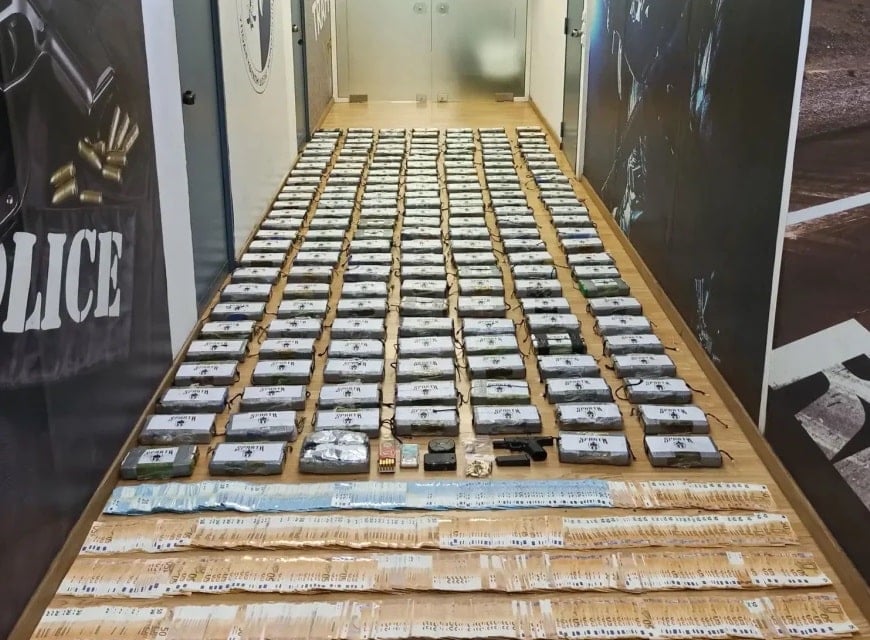
According to official data from October 2024 to date, the Sub-Directorate has handled 323 cases, resulting in 646 arrests. Over this short period, authorities have seized a staggering volume of illicit substances: 1.8 tons of cocaine, 5.2 tons of unprocessed cannabis, 174.5 kg of processed cannabis, 135.2 kg of heroin, 9,251 cannabis plants, and 18,265 ecstasy tablets.
“Trafficking networks are in a state of perpetual flux,” Karydakos notes, explaining that criminal organizations frequently overhaul both their hierarchy and operational methods to bypass police crackdowns, leverage new technologies, and cater to changing consumer habits.
One of the most prominent shifts in recent years is the digitalization of trade. Post-pandemic, cartels have heavily integrated encrypted messaging apps and postal courier services into their logistics—a trend Karydakos labels as a “new modus operandi.”
He also highlighted the “waterbed effect.” Just as pressing down on one part of a waterbed forces the water elsewhere, tightening the squeeze on established hubs does not eliminate the trade; it merely displaces it. Massive seizures at major maritime gateways like Piraeus and Thessaloniki have forced syndicates to seek alternative routes, elevating the strategic importance of other secondary entry points.
The domestic market landscape remains clear: cannabis and cocaine remain dominant. Conversely, while heroin usage has experienced a downward trend compared to previous years, it remains a persistent focus for investigators.
The global surge in cocaine production has directly impacted Greece, accounting for the 1.8 tons seized since late 2024. This massive international supply heavily influences local availability and reshapes the transit corridors cutting through the region.
Concurrently, emerging substances are complicating law enforcement efforts. Karydakos pointed specifically to synthetic cannabinoids as a growing threat. In some instances, legal hemp or cannabinoid products are sprayed with potent synthetic chemicals to artificially spike their THC levels. This dangerous trend prompted a legislative overhaul on May 20, which strictly banned the retail sale of such cannabinoids.
Other rising threats include “pink cocaine”—a novel cocktail of psychoactive substances—and ketamine, which Karydakos notes is increasingly stepping in as a depressant substitute to fill the vacuum left by declining heroin use.
Diversification isn’t limited to chemical compounds; it also extends to product forms. Authorities are now intercepting items that stray far from traditional street drugs, including recent seizures of THC-infused butter and liquid THC vaporizers. These discrete, highly portable, and deceptively packaged products cater to modern consumer preferences and are specifically designed to fly under the radar.
When asked whether Greece acts as a destination or a transit hub, Karydakos clarified that it serves both roles, but primarily functions as a critical transit corridor for cannabis and cocaine. This is largely due to Greece’s strategic crossroads location and its complex, sprawling coastline.
Technology has revolutionized how these syndicates communicate and coordinate. Highly encrypted platforms and privacy-centric apps make identifying key players exceptionally difficult. However, Karydakos noted that the high-profile takedowns of major international encrypted networks by global law enforcement in recent years have provided invaluable blueprints on how these modern syndicates operate.
Closing his statement for World Drug Day, the Anti-Drug chief issued a stern warning directed at younger demographics: “There is no such thing as a ‘good’ or ‘bad’ drug.” He emphasized that regardless of how substances are marketed, packaged, or perceived, every single one carries the risk of severe addiction and devastating consequences for a person’s life and health.
Related: Cannabis Use Among Teens in Greece Hits 25-Year Record