A collection of 22,000-year-old jewelry discovered in northern Spain is offering new insights into how Ice Age hunter-gatherers expressed identity, exchanged ideas, and maintained social networks across vast distances.
Researchers found that people living in and around Llonín Cave used shells, animal teeth, bones, and even fossils to create personal ornaments over thousands of years, revealing changing patterns of social life during the Upper Paleolithic.
The study, led by Daniel Pérez-García de los Salmones and published in PLOS One, analyzed 271 ornaments recovered from Llonín Cave in northern Spain. The cave preserves a long archaeological sequence dating from roughly 23,500 to 11,000 years ago, covering several major cultural periods of the Late Ice Age.
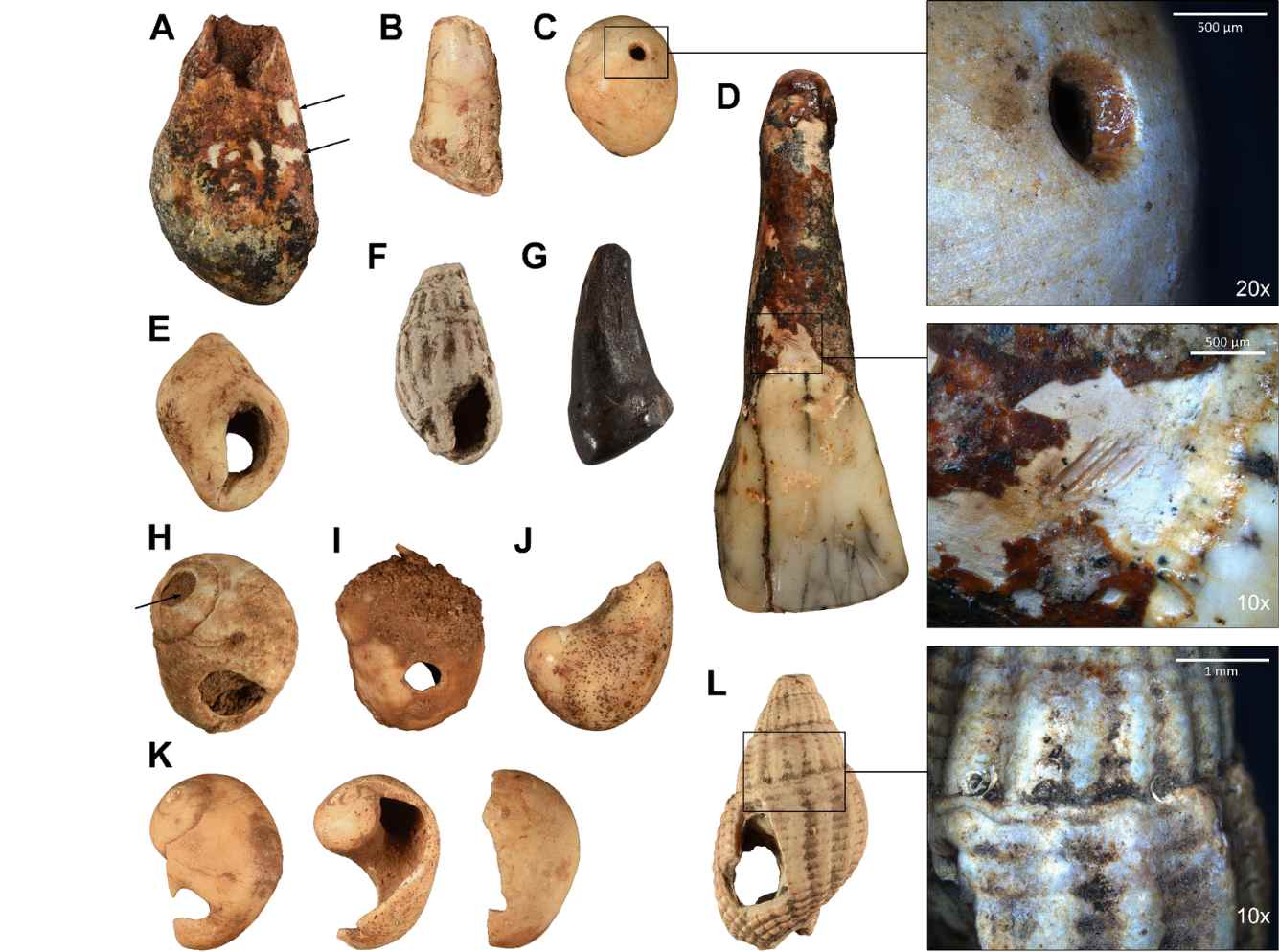
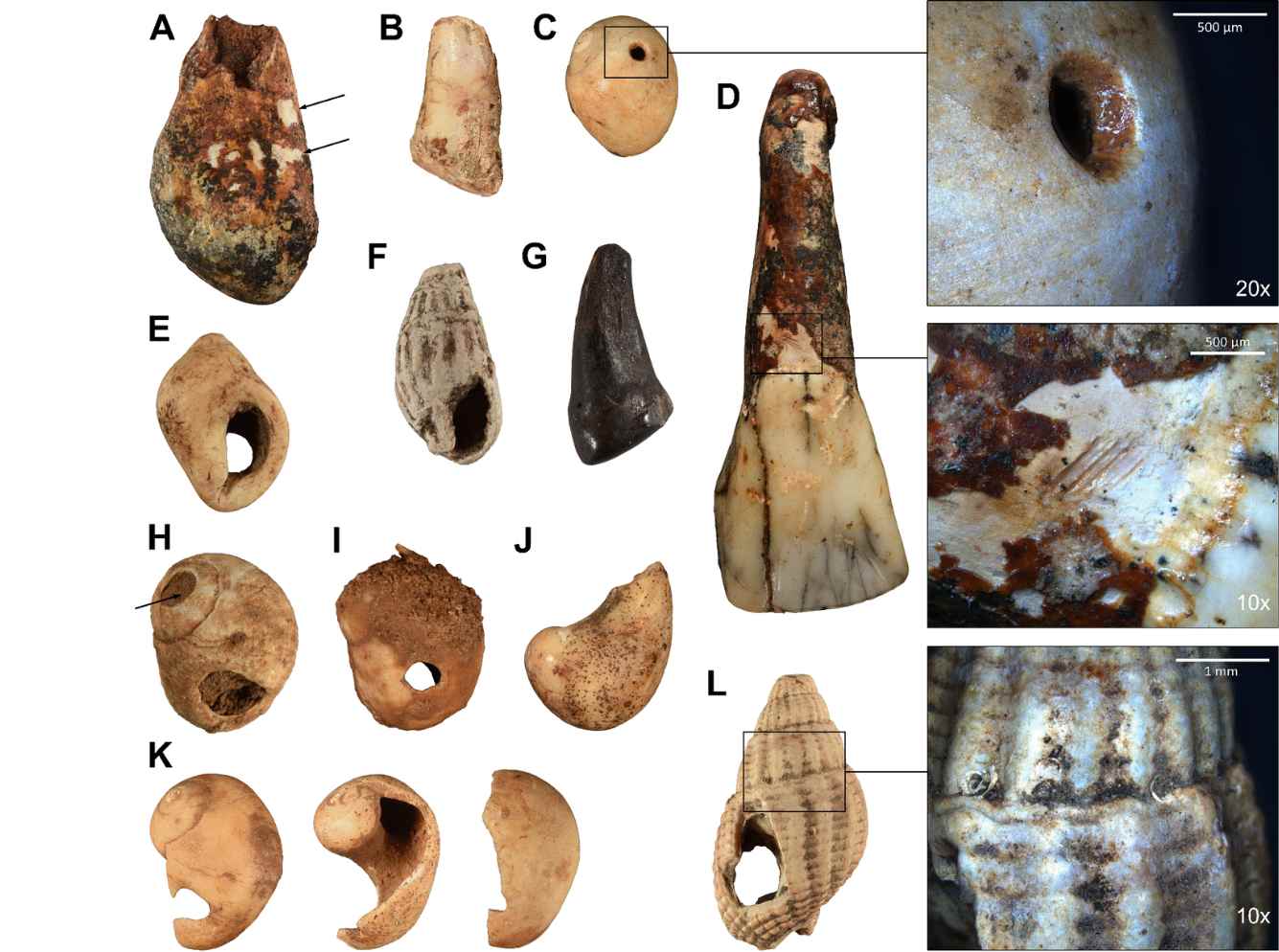
The ornaments included marine shells, red deer teeth, fish vertebrae, bone fragments, and a fossilized tube worm. Most were intentionally modified and worn as pendants or beads. Researchers identified at least 17 genera and 15 species used in their production. Marine shells made up the largest share of the collection, while red deer canine teeth were the most common animal-derived ornaments.
Microscopic analysis showed that many pieces had been worn for long periods. Friction from cords, clothing, or skin leaves polish marks, grooves, and rounded edges around perforations. More than 90% of the analyzed ornaments displayed signs of use.
A new study from Llonín Cave in northern Spain suggests Ice Age hunter-gatherers used shells, animal teeth, bones, and fossils to create ornaments that expressed identity, marked social ties, and connected communities across long distances.#Archaeology #IceAge #Jewelry #Spain pic.twitter.com/DXcBNuubUJ
— Tom Marvolo Riddle (@tom_riddle2025) June 9, 2026
Researchers also found evidence that some ornaments were made inside the cave. Unfinished deer tooth pendants and partially worked animal teeth suggest that people crafted jewelry on site rather than simply acquiring finished pieces from elsewhere.
One of the most striking discoveries involved shells that likely originated from the Mediterranean coast. The species Tritia mutabilis does not naturally occur along the Cantabrian coast of northern Spain, where Llonín Cave is located.
Its presence suggests that people exchanged objects or maintained contact networks stretching hundreds of kilometers across the Iberian Peninsula.
The cave occupied a strategic position between the Atlantic coast, the Ebro Valley, and routes leading toward the Pyrenees. Researchers argue that these pathways helped facilitate the movement of materials, ornaments, and cultural traditions between distant groups.
The study found that ornament styles changed over time. During the Upper Solutrean period, around 23,500 to 22,000 years ago, jewelry showed great diversity in materials, manufacturing methods, and designs. Researchers believe these ornaments likely served as markers of individual identity and personal expression.
Later, during the Middle Magdalenian period, ornament production became more standardized. Shell beads were more uniform in size and style, and many appear to have arrived at the cave already finished.
Researchers suggest that this shift reflects larger social gatherings where ornaments may have been used to signal group membership or strengthen alliances among different communities.
The findings suggest that personal ornaments were far more than decorative objects. They helped communicate identity, social relationships, and cultural connections during a time when hunter-gatherer groups were spread across changing Ice Age landscapes.
According to the researchers, Llonín Cave stands out as an important site for understanding how prehistoric people used jewelry to navigate both everyday life and wider social networks. The collection shows that even 22,000 years ago, people were connected through systems of exchange, shared traditions, and symbolic communication that stretched far beyond their local communities.