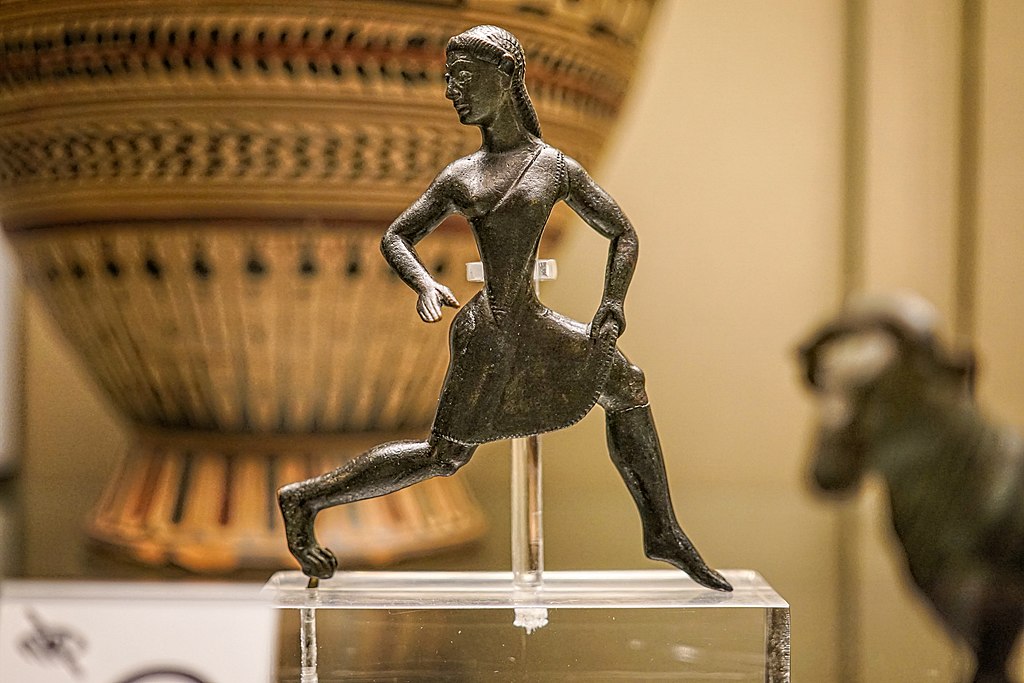
In the deep layers of ancient Greek tradition, the figure of Queen Sparta stands at the very origin of one of history’s most enduring names. Long before the rise of the fiercely disciplined city-state, her presence helped shape the identity of the land itself. Through her, the name Sparta emerges not just as a place but as a living memory, rooted in the landscape and carried forward through the city’s unbroken continuity.
In Greek tradition, Sparta is not just a place. The figure of Queen Sparta stands at the root of a name that would later come to symbolize discipline, power, and endurance. Long before the city-state rose to prominence, her story anchored the identity of the land itself.
According to tradition, Sparta was born into a distinguished lineage as the daughter of King Eurotas and Cleata, also known as Tiasa. Through her father, she is directly linked to the Eurotas River, the lifeblood of Laconia. This connection is no coincidence. In Ancient Greek thought, rivers were more than natural features. They carried ancestral significance, tying families to the very landscapes they inhabited. It is due to this bond that Sparta is deemed inseparable from the geography that has defined the region.
Her marriage to Lacedaemon marks a turning point in the shaping of Laconian identity. Lacedaemon, the son of Zeus and Taygete, was remembered as the eponymous founder of the land. Their union is more than a marriage. It is a symbolic transfer of power and legacy. As the traveler and writer Pausanias recounts, King Eurotas left no male heir and entrusted his kingdom to his son-in-law. Lacedaemon then reorganized the territory, giving his name to the broader region and its people, while naming the city itself after Sparta, ensuring that her legacy would endure at its very heart.
Sparta’s ancestry reaches even deeper into the earliest layers of Laconian myth. Her father, Eurotas, descended from a line of primordial rulers rooted in the land itself. Eurotas was the son of Myles, who, in turn, was born to the nymph Cleocharia and Lelex. Lelex occupies a unique place in local tradition, described as autochthonous—a being who sprang directly from the earth. Through him, the lineage of Sparta is not just noble but elemental, bound to the soil of Laconia in the most literal sense.
In this way, the story of Queen Sparta does more than explain a name. It reveals how the Ancient Greeks understood identity itself as something shaped by ancestry, landscape, and memory, woven together across generations.
The idea of autochthony carries powerful symbolic weight in Greek thought, expressing a sense of aboriginal origin and deep-rooted belonging to land. Some accounts, such as that of the mythographer Apollodorus, connect this early lineage to Poseidon, while others trace it to Helios. These variations do not weaken the tradition but enrich it, weaving together divine forces with the natural landscape. In this way, Laconian kingship is presented as something that emerges not just from human descent but from the earth, waters, and gods themselves.
Through Eurotas and his forebears, Sparta inherits a legacy that fuses divine, natural, and human elements into a single continuous line. Her identity, therefore, carries the imprint of a land whose rulers were believed to arise from its very soil and rivers. This inheritance is not merely symbolic but also has political meaning. By passing power through marriage, authority remains anchored within a recognized lineage, while the name of Sparta is preserved at the center of the emerging settlement.
Naming cities after rulers was a common practice in both prehistoric and historical Greece. It was a way of embedding memory directly into geography, and the city of Sparta is a lasting example of this tradition. Its name is not accidental but intentional, permanent, and deeply personal, tied to a founding figure whose presence endures in the identity of the land.
From this union, Sparta emerges as the mother of Amyclas and Eurydice of Argos, extending her influence beyond Laconia. Through Eurydice, her lineage reaches into another powerful royal house. She marries Acrisius, linking Sparta’s bloodline to the traditions of Argos. The line continues to Perseus, the legendary founder of Mycenae, reinforcing the far-reaching impact of her ancestry.
The mythic web expands further through figures like Hyacinthus, the son of King Oebalus. His story, marked by beauty, desire, and tragic loss, draws in gods such as Apollo and Zephyrus, illustrating how mortal and divine worlds intertwine within this lineage.
Across generations, this bloodline continues to unfold, eventually reaching Tyndareus. Through him, the legacy of Sparta moves fully into the realm of heroic myth—where family, fate, and legend converge in stories that would shape the Greek imagination for centuries.
As the modern Greek thinker Dimitris Liantinis once suggested, the roots of Ancient Greek tragedy can be traced back, in spirit, to Sparta—both the place and the lineage.
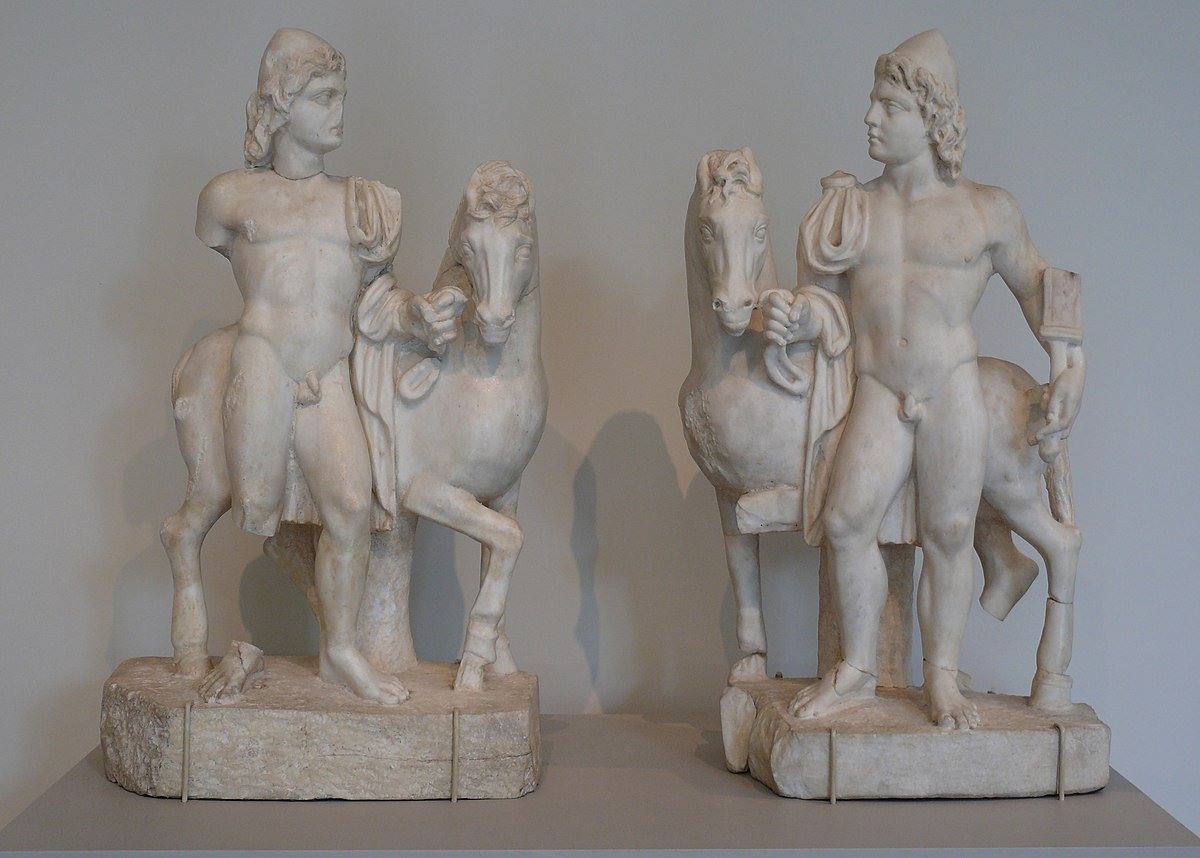
Among the descendants of King Tyndareus stand the Dioscuri, Castor and Pollux, twin brothers who came to embody loyalty, strength, and unbreakable brotherhood. Castor, renowned for his mastery of horses, and Pollux, celebrated for his skill in boxing, appear throughout myth as protectors and companions to heroes.
Yet it is their bond that defines them most. When Castor is killed, Pollux refuses to accept a world without him. In an extraordinary act, he shares his immortality, allowing them to alternate between the underworld and Olympus. In doing so, they become a lasting symbol of unity that transcends even death.
Alongside them stands Clytemnestra, whose story takes a darker and more human turn. As the wife of Agamemnon, she becomes entangled in the devastating events surrounding the Trojan War. Her life is marked by betrayal, grief, and calculated revenge. After Agamemnon sacrifices their daughter Iphigenia, Clytemnestra ultimately kills him upon his return from Troy, asserting her own form of justice in a brutal world. Her actions ignite further cycles of vengeance, most notably through her son Orestes, whose fate continues the tragic chain.
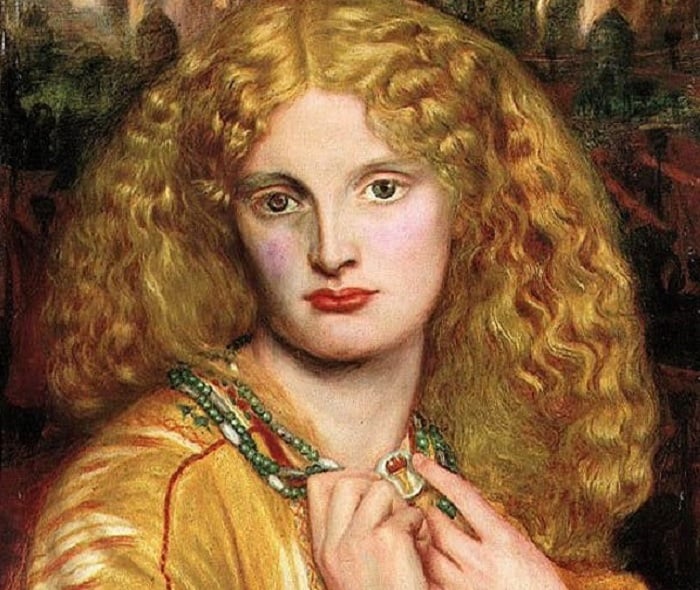
Within the same lineage stands Helen, whose beauty becomes the catalyst for one of the most defining conflicts in Greek tradition. Her departure from Sparta with Paris triggers the Trojan War, drawing kings and heroes from across the Greek world into a single, devastating struggle. The war itself, immortalized in the epics of Homer, becomes a cornerstone of Greek cultural memory.
Through Helen—often remembered as the woman for whom a war was fought—the lineage of Sparta extends far beyond its homeland, shaping stories that would come to define the identity of Greek civilization. In this way, the legacy of Queen Sparta is not confined to a name on a map; it unfolds across myth, tragedy, and epic, leaving an imprint on some of the most enduring narratives ever told.
Through these figures, the lineage of Sparta expands into some of the most powerful and enduring stories of Greek mythology. Each descendant reflects a different facet of human experience, and together, they form a vast network that ultimately leads back to a single origin—Sparta herself.
More than a mythic genealogy, her story reveals how Ancient Greek societies understood identity. Names, families, and places did not exist separately. They evolved together, shaping and reinforcing one another across generations.
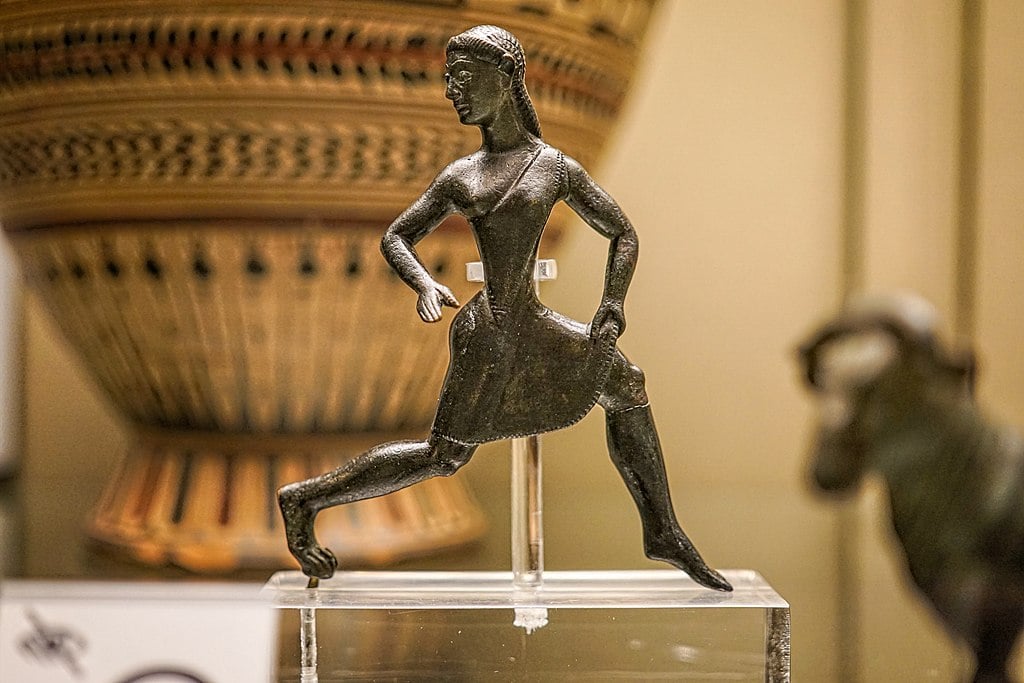
This memory is also preserved in artistic tradition. The geographer Pausanias describes how the daughters of Sparta were represented in sacred settings, such as a Delphic tripod at Amyclae, beneath which stood bronze statues of women. These images placed her lineage within a communal and religious framework, embedding it in both public space and shared belief.
Sparta, therefore, occupies a rare dual role. She exists at once as an individual figure and as a symbol. Through her, the city is given a human origin, and through the city that persists to this day, her name achieves permanence. In the end, Sparta endures not only as a place but as a story carried across centuries—a memory preserved at the intersection of myth, identity, and history.