University of Nicosia Opens Branch in Athens
Categories:

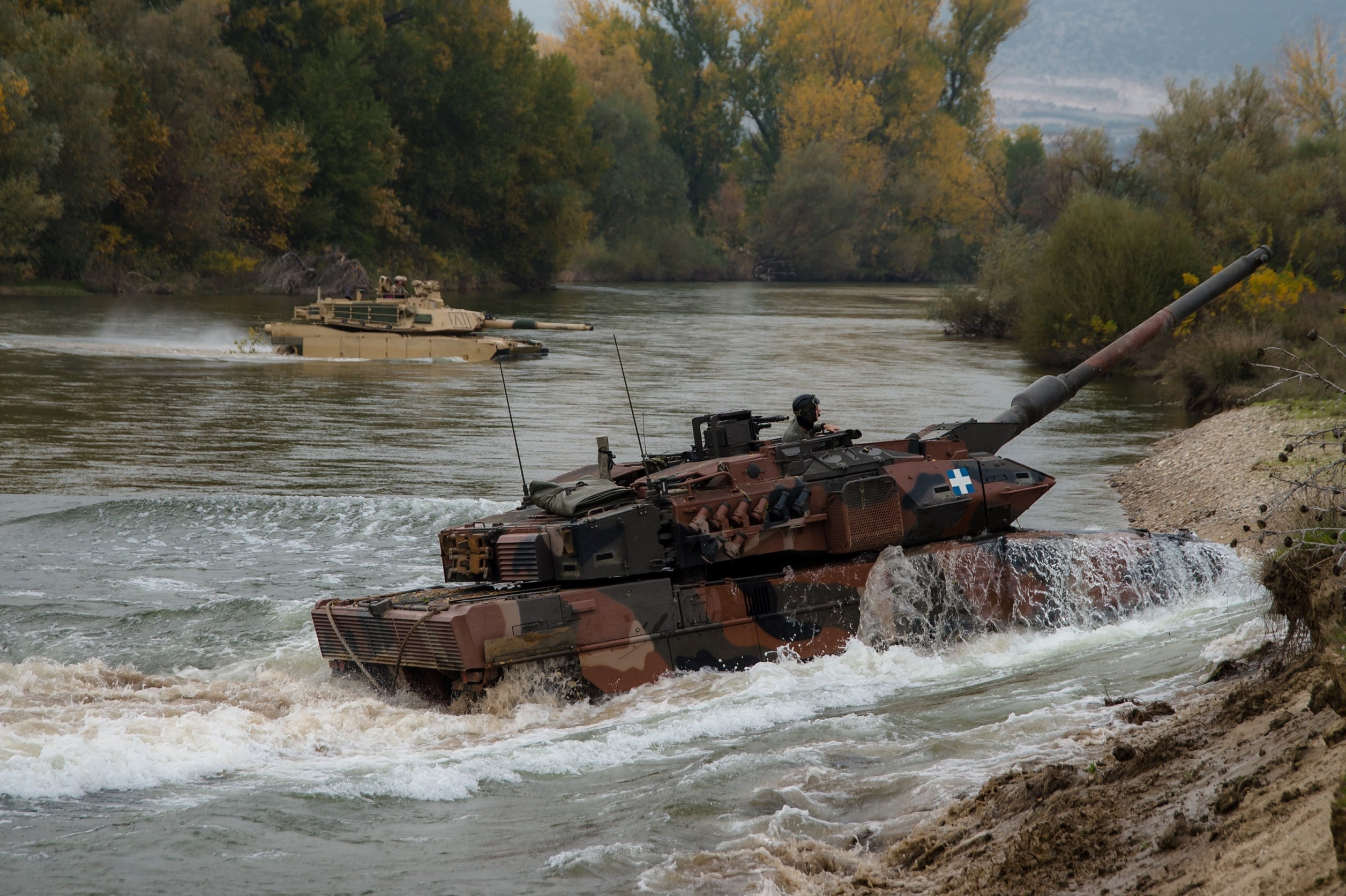
In a striking display of modern military mobility, footage has emerged of Greek battle tanks and infantry fighting vehicles rumbling through the narrow, picturesque streets of rural French villages in the context of Exercise ORION 26.
The sight of Greek armor operating thousands of kilometers from its home base has become the defining image of the multinational drills, the largest French military exercise since the Cold War.
For residents of these quiet communes, the ground-shaking presence of the Hellenic Army’s heavy armor serves as a vivid reminder of the scale of current Allied cooperation.
From these narrow village corridors, the Greek contingent—comprising 87 elite personnel and 23 heavy vehicles—is heading toward open-field “high-intensity” combat simulations. This deployment is not merely a training exercise; it is a logistical feat that saw these 60-ton machines transported via sea and air to participate in a 12,500-strong multinational force.
To underscore the importance of the mission, the Chief of the Hellenic Army General Staff, Lieutenant General Georgios Kostidis, is currently on-site in France to oversee the operations.
Orion 26 is the largest military exercise organized by France since the Cold War. Spanning three months and centered primarily along the Atlantic coastline, the exercise serves as a landmark for allied readiness amid rising regional threats.
The Numbers at a Glance:
Personnel: 12,500 troops from 24 allied nations.
Naval Power: 25 vessels, including the aircraft carrier Charles de Gaulle.
Airpower: 140 aircraft and over 1,200 drones.
Key Participants: Greece, Belgium, Italy, Spain, Japan, Morocco, and the United States.
The participation of the Hellenic Armed Forces carries deep geopolitical weight. It follows the recent renewal of the Strategic Partnership for Defense and Security, reaffirmed during President Emmanuel Macron’s visit to Athens.
Beyond simple interoperability, the presence of Greek armor on French soil is a practical demonstration of the Athens–Paris axis. This partnership has evolved into a stable pillar of strategic deterrence, not only for the Eastern Mediterranean but for the broader European security architecture.