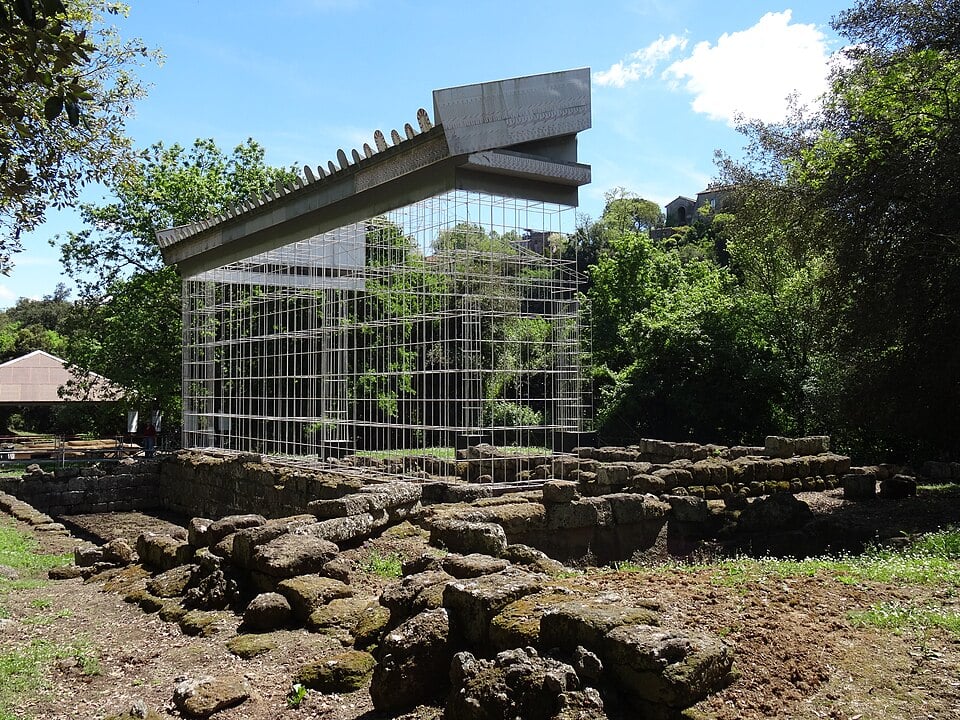
The ancient Etruscan city of Veii, once one of the richest powers near Rome, may not have simply faded after Roman conquest. A new study argues that its later Roman phase shows adaptation, community life, and resilience rather than failure.
The study, led by Adeline Hoffelinck and published in Antiquity, challenges a long-standing view of Veii as a city that declined after Rome captured it in 396 B.C. Scholars have often described Roman Veii as smaller, poorer, and less important than the earlier Etruscan city.
Hoffelinck argues that this judgment may say more about modern ideas of success than about ancient life. The study says researchers have often measured Veii by growth, wealth, and political power. But those measures may not fully explain how people lived in the city after the conquest.
Veii stood in the Tiber Valley of central Italy, about 17 kilometers, or 10.5 miles, north of Rome. At its height, it covered about 190 hectares and was known as a major Etruscan city-state. After Rome took control, the settlement became much smaller. Its Roman center covered about 20 hectares.
For decades, that change shaped the story of Veii. Earlier scholars described the Roman town as weak or unsuccessful. Some called it a “failed town.” They compared it with the larger Etruscan city that came before it.
New research suggests the ancient Etruscan city Veii was not simply a “failed” Roman town after conquest.
A study in Antiquity argues Veii’s smaller Roman phase shows resilience, not collapse. Its people used rituals, healing springs and civic networks to keep community alive. pic.twitter.com/A0NmXouGtS
— Tom Marvolo Riddle (@tom_riddle2025) May 8, 2026
The new study says that comparison is misleading. Hoffelinck notes that Roman Veii suffered from uneven archaeological preservation. Looting over many centuries has removed much of the evidence. Early excavations also recorded Roman remains only briefly, while Etruscan remains received more attention.
That imbalance helped create the idea that the Roman town had little value. The study argues that the evidence tells a more complex story.
Roman writers described Veii as a fallen city. Some used it as a symbol of Rome’s military victory. Ancient poems and histories presented the place as empty, rural, or forgotten. But archaeology shows that Veii was not destroyed or fully abandoned. People continued to live there for centuries.
The city did shrink. Its economy changed. Pottery production declined, and occupation clustered near main roads. Farming also became more important in parts of the old urban area. Yet Hoffelinck says these changes should not automatically be read as a collapse.
Instead, they may show a community finding new ways to survive after political and economic change.
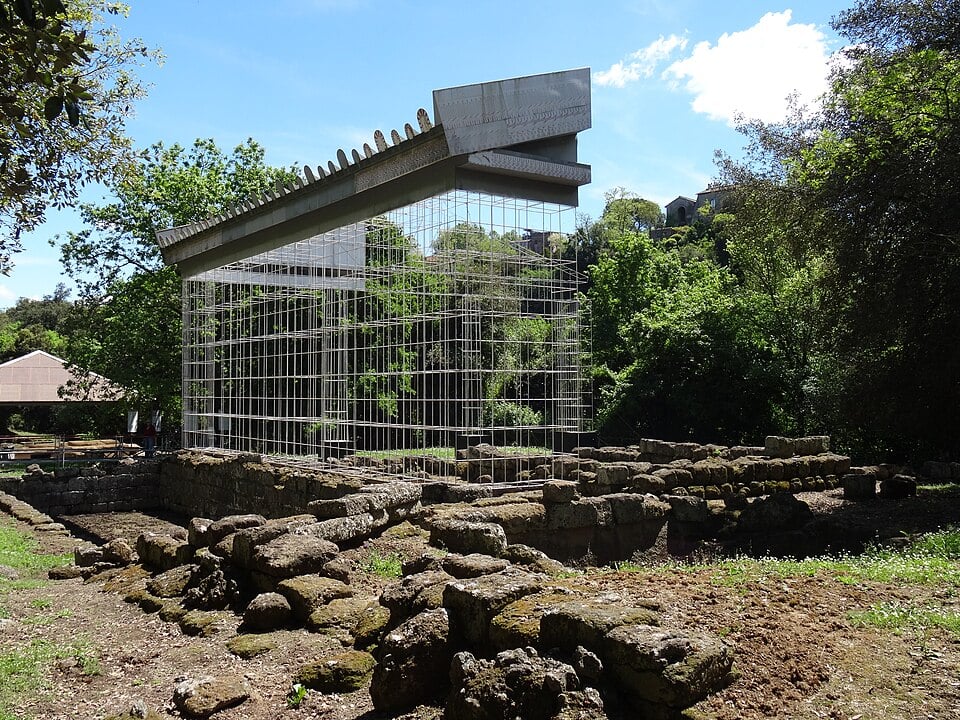
Sacred places played an important role. Several Etruscan sanctuaries were restored or reused after the Roman conquest. At sites such as Campetti, Comunità, and Macchiagrande, researchers found evidence of continued ritual activity. Some inscriptions show a mix of Etruscan, Latin, and Roman religious traditions.
This suggests that older local practices did not disappear. They changed and continued alongside new Roman influences.
The study gives special attention to Veii’s natural springs. The plateau was rich in water sources, and several baths and healing complexes developed there during the Roman period.
One major example is Campetti South-West. It began as an Etruscan open-air sanctuary and later became a thermal and religious complex. Its pools, reservoirs, and cisterns point to the use of water for healing and ritual. Inscriptions linked the site to deities connected with health, springs, and recovery.
Another important site is Bagni della Regina, a bath complex built over thermal springs in the Valchetta gorge. Earlier scholars thought it belonged mainly to the Imperial period. But newer reassessment suggests some parts may date to the first century B.C., before the Augustan settlement.
That matters because it points to local investment, not only Roman top-down planning. Hoffelinck argues that Veii’s people used water, religious traditions, and social ties to rebuild community life in a changed world.
The study also examines inscriptions from the first to third centuries A.D. These texts show different groups inside and outside the city walls raising funds and honoring local benefactors. They mention residents within the walls, residents outside the walls, religious associations, and political bodies.
Such evidence points to active civic life. It shows that people still gathered, donated, built networks, and invested in public spaces.
For Hoffelinck, Roman Veii was not a city trying and failing to become another version of its Etruscan past. It was a smaller community adapting to new conditions.
The study argues that archaeologists should be careful when using words such as “success” and “failure.” A city did not need to grow larger or richer to remain meaningful to the people who lived there.
Veii’s Roman history, the study concludes, is better understood as a story of resilience. Its people maintained rituals, used local resources, and built social connections. In doing so, they kept the city alive in a different form.