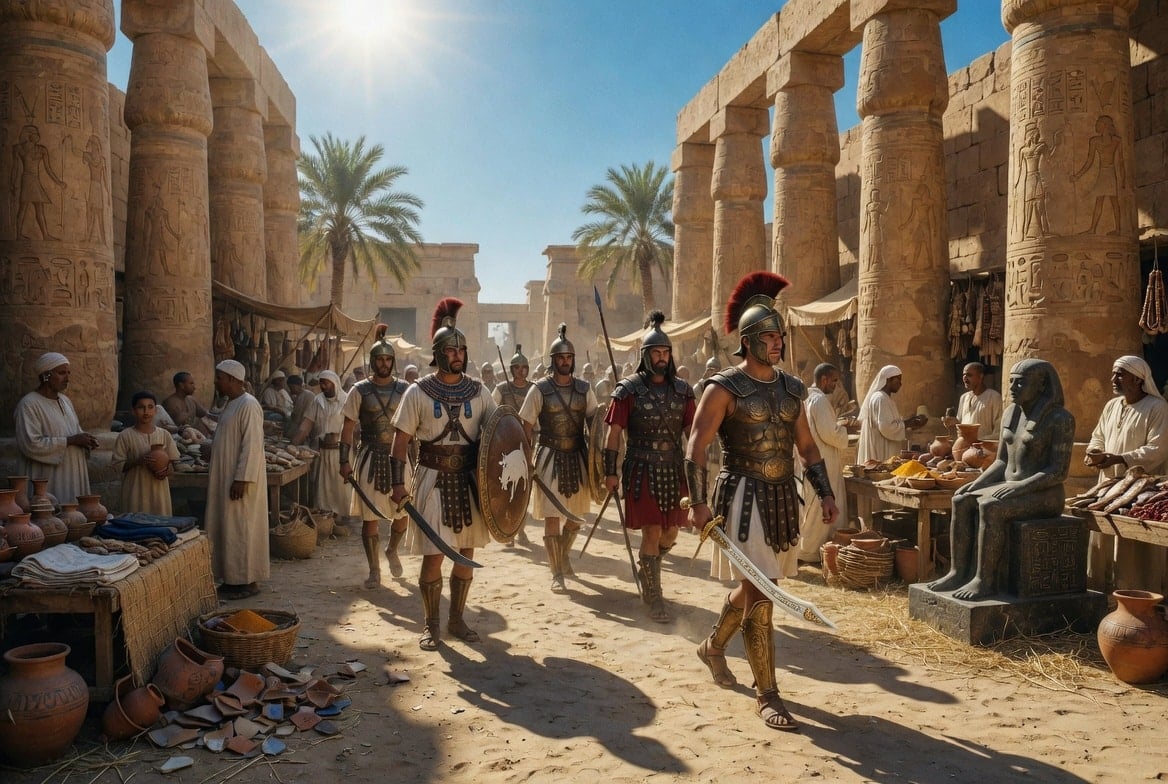
Greek soldiers who took part in war during the archaic period in the Mediterranean did far more than fight. A new study argues they served as cultural carriers who quietly transformed art, religion, and ethnic identity across the ancient world.
That is the argument of Nino Luraghi of the University of Oxford, published in Annales. Histoire, Sciences Sociales. Luraghi traces how Greek war workers active in archaic Mediterranean conflicts, particularly in Egypt and the Near East between the eighth and sixth centuries BC, moved ideas, objects, and beliefs between civilizations.
The study first questions the common use of the word “mercenary” for these soldiers. Ancient writers from the prophet Jeremiah to the philosopher Aristotle portrayed hired foreign soldiers as disloyal and quick to flee danger.
Luraghi shows both sides in ancient conflicts used that same rhetoric against each other simultaneously, suggesting it was propaganda, not fact.
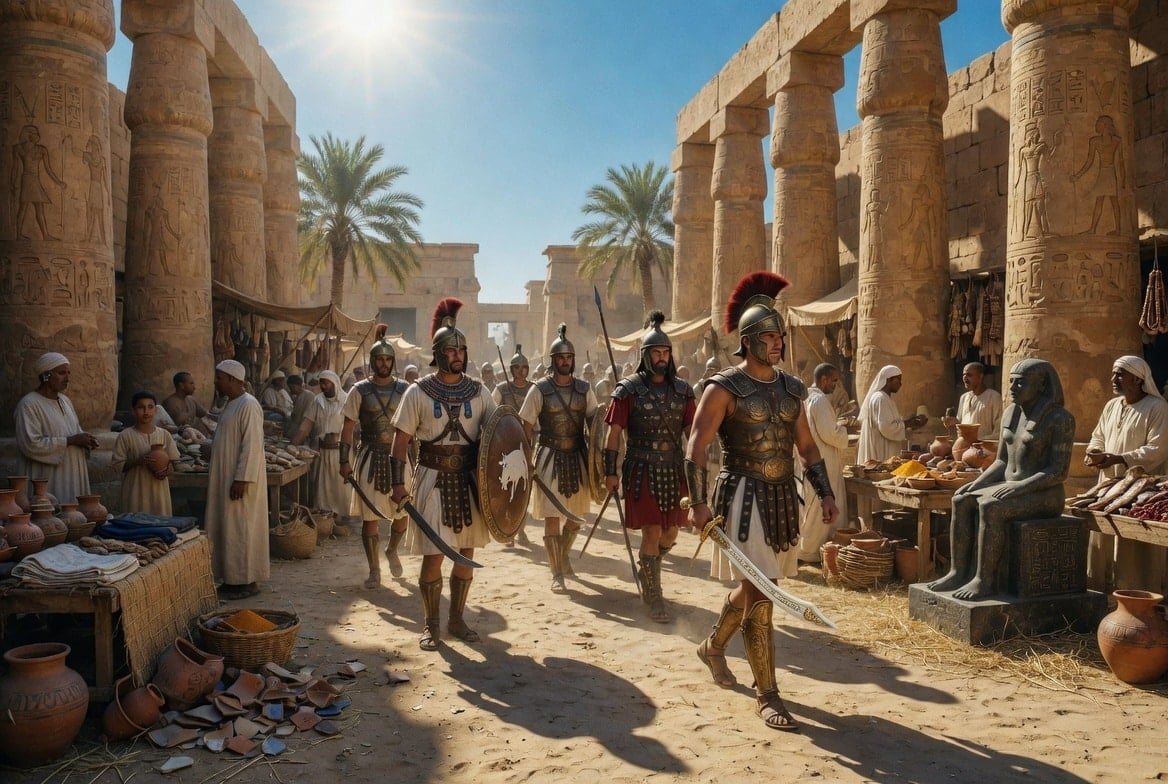
The material evidence tells a different story. Greek and Karian soldiers serving Egypt’s 26th dynasty adopted local burial customs, religious beliefs, and even Egyptian names.
Inscriptions carved by Greek soldiers on the giant statues at Abu Simbel in 593 BC document their presence in a military campaign into Nubia under Pharaoh Psammetichos II.
One of the study’s sharpest cases involves a high-ranking official named Wahibre-em-akhet. His burial goods, including a stone sarcophagus and ritual statuettes, look entirely Egyptian. Only the Greek names of his parents reveal his foreign origins.
Some soldiers returned home and brought foreign culture with them. A soldier named Pedon dedicated an Egyptian-style statue at a sanctuary in Ionia, inscribed with details of the rewards the pharaoh gave him for his bravery.
The poet Alkaios celebrated his brother Antimenidas returning from Neo-Babylonian service carrying an ivory-and-gold-hilted sword. Luraghi also identifies Assyrian horse trappings and bronze mace heads found at the sanctuary of Hera on the island of Samos as likely dedications by returning elite war workers who received them as symbols of loyal service.
These prestige objects, he argues, may help explain broader cultural shifts in Greece. The tastes and spending power of returning war workers were likely a factor in spreading Egyptian artistic forms into the Greek world, including the iconic kouros statues.
On identity, Luraghi draws a comparison with the Viking Varangians who served the Byzantine emperors and, more recently, the Gurkhas of Nepal recruited into the British army. In both cases, a distinct ethnic military identity formed through foreign service, not through ancestry alone.
Regarding the term “Ionians,” Luraghi argues it may not have originated in Aegean Greece at all. Assyrian records used “Yawan” to describe western sea raiders.
Greek soldiers enlisting in Egypt, he suggests, may have adopted that name as a form of collective self-branding whose reputation eventually carried back into the Greek world.