
Delphi offered more than prophecy in the times of the Ancient Greeks, as inscribed on the temple were a series of brief sayings with deep philosophical meaning known as the Delphic Maxims.
These concise statements distilled profound ideas about ethics, self-control, and human nature. Though short in form, they helped shape Greek thought for centuries and left a lasting influence on philosophers such as Socrates and Plato.
Among these maxims, two became especially well known: “Know Thyself” (Γνῶθι Σεαυτόν) and “Nothing in Excess” (Μηδὲν Ἄγαν). The Ancient Greeks did not treat these as simple moral slogans but rather as guiding principles for inner harmony and a philosophical pursuit of knowledge.
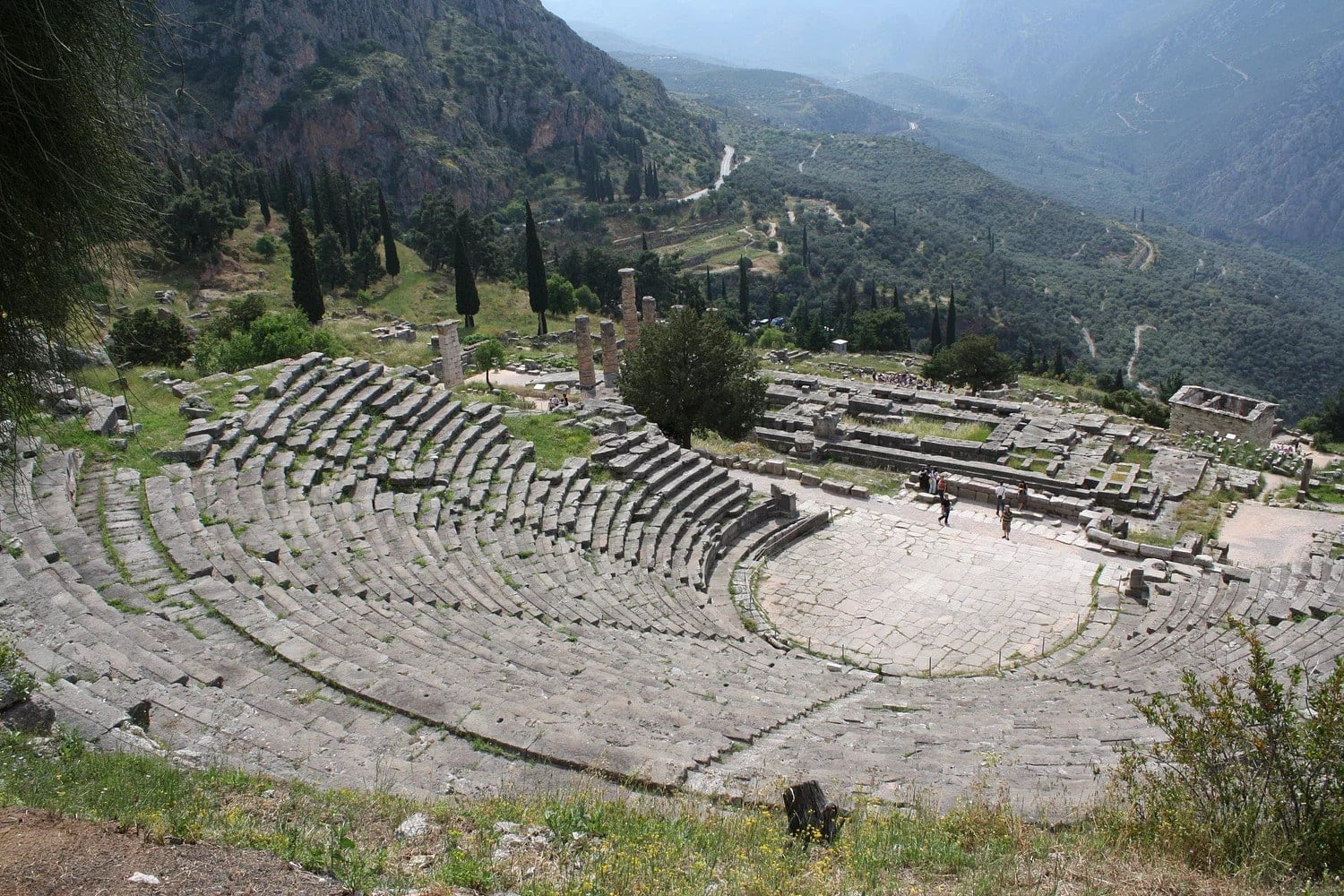
Few sacred places in the Ancient Greek world carried the same spiritual authority and symbolic weight as Delphi. Greeks from across the region traveled to the sanctuary of Apollo to consult the oracle, offer sacrifices, and seek divine guidance. Kings, generals, philosophers, and ordinary citizens all stood before the same sacred center, hoping to receive wisdom from the god.
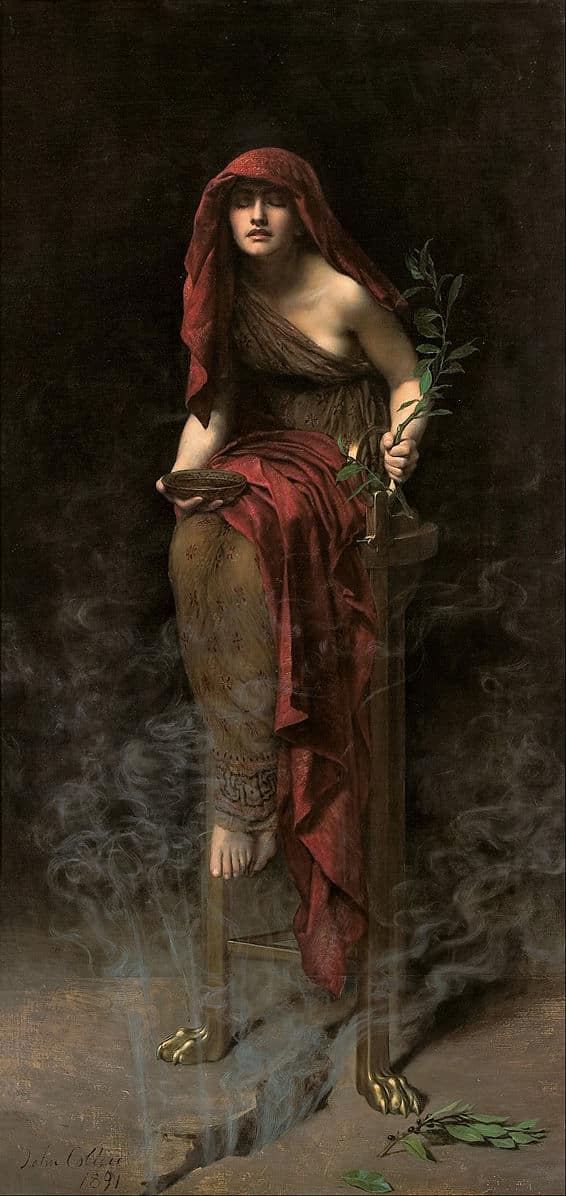
The sanctuary was located on the slopes of Mount Parnassus in central Greece, and the Ancient Greeks regarded it as the spiritual center of the world. According to myth, Zeus released two eagles from opposite ends of the earth, and they met above Delphi. The famous omphalos, or sacred stone, marked this divine center. The sanctuary belonged to Apollo, the god of light, harmony, music, prophecy, and rational order. Pilgrims arrived from across the Mediterranean to hear the oracle delivered through the Pythia, Apollo’s priestess.
Yet Delphi also functioned as a philosophical and ethical center. Visitors encountered sacred inscriptions carved directly into the temple itself. Tradition often attributed the Delphic Maxims to the Seven Sages of Greece, legendary figures associated with practical wisdom and political insight. Various sources preserve differing lists, though names such as Solon, Thales, Bias, Pittacus, and Chilon frequently appear among them. According to tradition, Chilon of Sparta is credited with “Know Thyself,” while Solon or Cleobulus is often associated with “Nothing in Excess.” Regardless of authorship, the Greeks regarded the maxims as expressions of divine wisdom connected to Apollo himself.
The maxim “Know Thyself” became one of the most influential phrases in Western philosophy. Most people interpret it as a call to humility. In this reading, the maxim reminds human beings of their limitations and the notion that mortals should not imagine themselves equal to gods. Pride, arrogance, and excessive ambition were seen as paths toward destruction.
This interpretation certainly existed in Ancient Greece. Greek tragedy repeatedly warned against hubris, the dangerous overestimation of human power. Delphi therefore urged visitors to recognize their finite condition. The maxim also encouraged a more practical form of self-awareness. A wise person understands both strengths and weaknesses, and this kind of understanding helps prevent poor decisions and reckless behavior. However, Socrates and Plato had a far more profound interpretation.
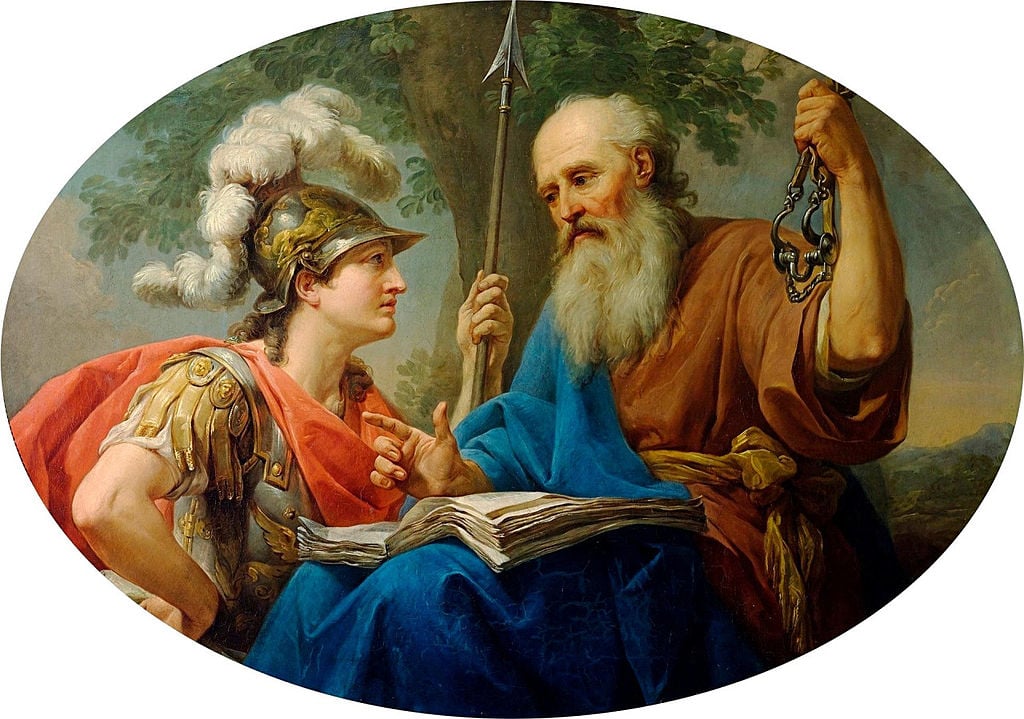
Plato’s dialogue First Alcibiades presents one of the most profound interpretations of the Delphic maxim. In the dialogue, Socrates questions the ambitious young Alcibiades, who is eager for political power and glory in Athens. Socrates asks Alcibiades a deceptively simple question: what exactly is the “self” that one must know?
Through careful reasoning, Socrates gradually argues that a human being cannot be reduced to the physical body alone. The body functions more like an instrument used by something deeper. Just as a musician plays a lyre, the soul uses the body. The true self, therefore, must be the soul rather than the body.
This interpretation transforms this Delphic maxim into an ontological and spiritual imperative. “Know Thyself” no longer refers only to recognizing personal limits. Instead, it becomes a call to discover one’s true essence and, in some readings, one’s divine orientation. For Socrates, self-knowledge forms the foundation of wisdom and political virtue. A person who does not understand the soul cannot govern properly because ignorance already governs from within.
In this sense, the Delphic maxim directs human beings toward inner awakening. Socrates takes the argument even further in First Alcibiades. He suggests that the soul knows itself by contemplating what is most like the divine. Wisdom, reason, and truth become the means through which the soul aligns with a higher reality. This idea deeply influenced later Platonic philosophy and Neoplatonism in which thinkers increasingly read the Delphic maxim as a spiritual path toward union with the divine intellect.
Within this framework, self-knowledge becomes sacred knowledge. To know oneself is to understand the soul’s origin, structure, and ultimate destiny. The Delphic inscription thus becomes more than an ethical reminder—it stands as a gateway into metaphysics.
Another great Delphic maxim is “Nothing in Excess,” which carried far deeper meaning than simple moderation. At a practical level, the saying encouraged balance and restraint. Ancient Greeks admired sophrosyne, or self-control. A wise person avoids extremes in pleasure, anger, ambition, and behavior.
Plato later developed this idea philosophically through his theory of the soul. In works such as Republic, Plato describes the soul as composed of distinct parts. Reason must govern spirit and desire in a balanced and harmonious way. When one part dominates excessively, disorder and inner suffering follow.
From this perspective, “Nothing in Excess” reflects a geometrical and proportional vision of the soul. Justice and wisdom arise through equilibrium. Greek philosophy often linked beauty itself to proportion and harmony. The Delphic maxim, therefore, expresses not only a moral principle but also a broader cosmic order.

Plato places a striking interpretation of “Nothing in Excess” into the mouth of Aspasia in Menexenus. This passage expands the maxim into a broader philosophy of inner independence and self-mastery. Aspasia declares:
“The saying ‘Nothing in Excess,’ spoken since ancient times, appears entirely correct. Indeed, it is the truest principle. The person who depends only on themselves and their own capacities for happiness, and who does not suspend their life on the fortunes of others, is best prepared for life. This individual is moderate, heroic, and wise. Whether they gain wealth and children or lose them, they remain faithful to this maxim above all. They will neither rejoice nor grieve beyond measure because they rely primarily on themselves and their inner strength.”
This interpretation reveals the ethical depth of the Delphic maxim. Moderation here is not merely quantitative but qualitative, shaping one’s entire way of living. It becomes a question of inner freedom.
A balanced person does not collapse under misfortune nor become intoxicated by success. Inner stability produces courage, wisdom, and resilience. Plato therefore connects moderation directly to philosophical strength.