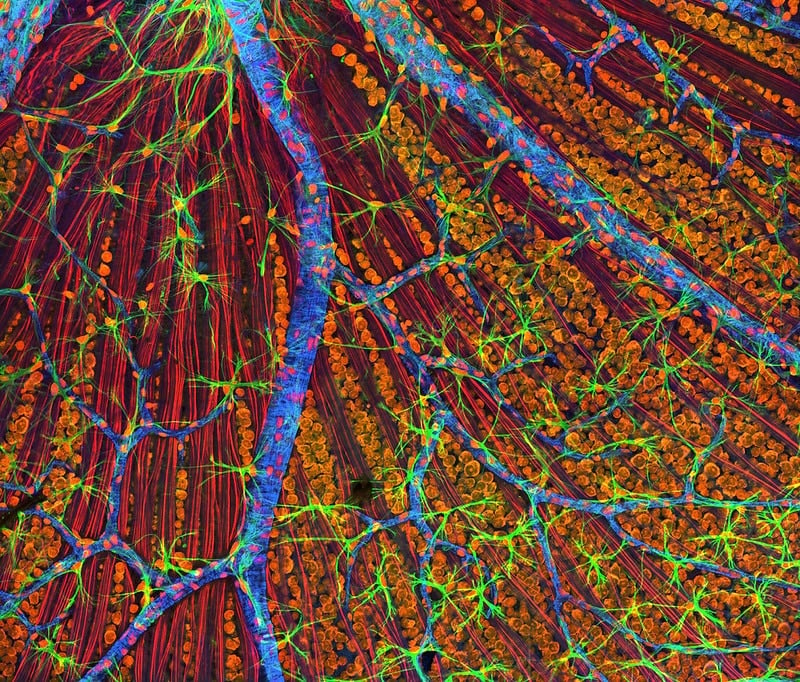

A highly anticipated gene therapy human trial is now testing whether scientists can make aging cells behave like younger ones, a development that could open a new chapter in regenerative medicine. The study, focused on keeping cells young through a process known as partial reprogramming, has treated its first patient with a form of glaucoma that can lead to blindness.
The trial is being conducted by Life Biosciences, a biotechnology company based in Boston. Researchers are testing a gene therapy designed to activate three specific genes inside cells. The goal is to restore some of the traits of younger cells without changing their identity or normal function.
Scientists have long been interested in the possibility of reversing some effects of aging at the cellular level. The new trial marks one of the first major efforts to test that idea in people.
Glaucoma was chosen as the first target because the disease damages neurons in the optic nerve, which carries visual information from the eye to the brain. Once injured, these nerve cells normally do not regenerate. Researchers hope the treatment will encourage damaged neurons to repair themselves and restore lost function.
The approach is based on a concept called partial reprogramming. Scientists discovered years ago that four genes could transform adult cells into stem-cell-like cells. While that breakthrough created powerful research tools, it also raised concerns because fully reprogrammed cells lose their specialized roles.
The new strategy takes a more controlled approach. Instead of using all four genes, researchers activate only three. The aim is to roll back some signs of aging while allowing cells to remain the specialized cells they were meant to be.
Interest in the field grew after a 2020 study led by geneticist David Sinclair. His team reported that activating the three genes in mice with damaged optic nerves promoted nerve regeneration and improved vision. The treatment also appeared to reverse vision loss in older mice and animals with glaucoma.
Scientists have launched the first human trial of a gene therapy designed to make aging cells act young again. The treatment uses three genes to partially reprogram cells and is being tested in glaucoma patients. pic.twitter.com/A7nVv2vmdi
— Tom Marvolo Riddle (@tom_riddle2025) June 10, 2026
Those findings generated excitement among scientists studying aging and longevity. They suggested that some effects of aging might not be permanent and that cells may retain the ability to recover youthful functions under the right conditions.
Since then, Life Biosciences has carried out additional studies in rodents and monkeys. According to the company, those experiments did not reveal serious safety problems. The human trial is now intended to determine whether the treatment can be used safely in patients.
Although several animal studies have reported promising results, some researchers worry that changing a cell’s biological age could have unintended consequences. One concern is that reprogrammed cells might begin dividing uncontrollably, increasing the risk of cancer.
Matt Kaeberlein said the technology offers enormous potential if it can be shown to work safely in people. At the same time, he noted that the field remains in its early stages and that researchers must carefully watch for serious side effects.
Experts say the eye may be one of the safest places to begin testing the approach. Any unexpected effects are likely to remain localized, reducing the risk of widespread damage elsewhere in the body.
Researchers view the trial as an important milestone for a field that has largely been confined to laboratory and animal studies. Success could eventually lead to treatments for diseases linked to aging and tissue degeneration. Failure, however, could reinforce concerns about the risks of altering cellular identity.
For now, scientists are watching closely as the first participants receive a therapy designed to answer one of medicine’s most ambitious questions: Can aging cells truly be persuaded to act young again?