
The Hittite Empire was a major Bronze Age civilization that controlled much of Anatolia and frequently clashed with the equally powerful New Kingdom of Egypt. But what do we actually know about the origin of the Hittite Empire?
Before we examine the origin of the Hittite Empire, it’s worth clarifying what exactly we mean by this reference. After all, this is not a straightforward issue. The Bible mentions Hittites, and many people assume that these were the Hittites of the Bronze Age Anatolian empire. However, the Biblical Hittites were actually a group of Canaanites who lived much further south in the Levant than the Bronze Age empire ever extended.
Then we have the Hattians. These were the rulers of much of Anatolia early on in the Bronze Age, long before the New Kingdom of Egypt. They, likewise, are not the same as the people of the Bronze Age Hittite Empire.
In reality, the Hittite Empire was the empire of a people who referred to themselves as “Neshites” or “Neshians.” This name originated from one of their earliest power centers, and they also used it for the name of their language. The nation conquered the land of the Hattians and continued using the name “Hatti” to refer to their territory. Even though the designation was adopted from the previous dominant nation, the Hattians, this caused modern scholars to identify the conquerors, the Neshites, as the Biblical Hittites. It is for this reason that we call them Hittites, even though they never actually referred to themselves as such.
In other words, the so-called Hittite Empire that is the entity in question is the Bronze Age empire of the Neshites, which was the powerful nation that repeatedly clashed with the New Kingdom of Egypt.
It’s unclear when exactly the Hittites first settled in Anatolia, but many scholars believe they came from north of the Black Sea at some point in the very distant past, possibly as early as around 4000 BC. However, they would not have had a distinct language at that time. This may have been developed by around 2000 BC and was Indo-European.
As we have seen, the Hittites (that is, the Neshites) were not the first to establish a powerful kingdom in Anatolia. When they began growing in power, they were already in the shadow of a pre-existing kingdom, the powerful nation of the Hattians. This expansion of power would eventually lead to the formation of the even more powerful Hittite Empire, but this was far from a quick process.
By the 18th century BC, there was a Neshite dynasty ruling over a small kingdom called Kussara that was to the east of the Hattian city of Hattusa. This itself was near the center of Anatolia. The dynasty of Neshite kings at Kussara became the forerunners of the kings of the Hittite Empire.
Only the names of few kings from the Neshite dynasty of Kussara are known. Two that are known are Pithana and his son Anitta. A collection of early Hittite documents record their activities. It is from these documents that we know that Pithana conquered a neighboring kingdom called Nesa, or Kanesh. This was perhaps the start of the Neshites’ rise to power, and the documents point to the subjugation of Hattian communities.
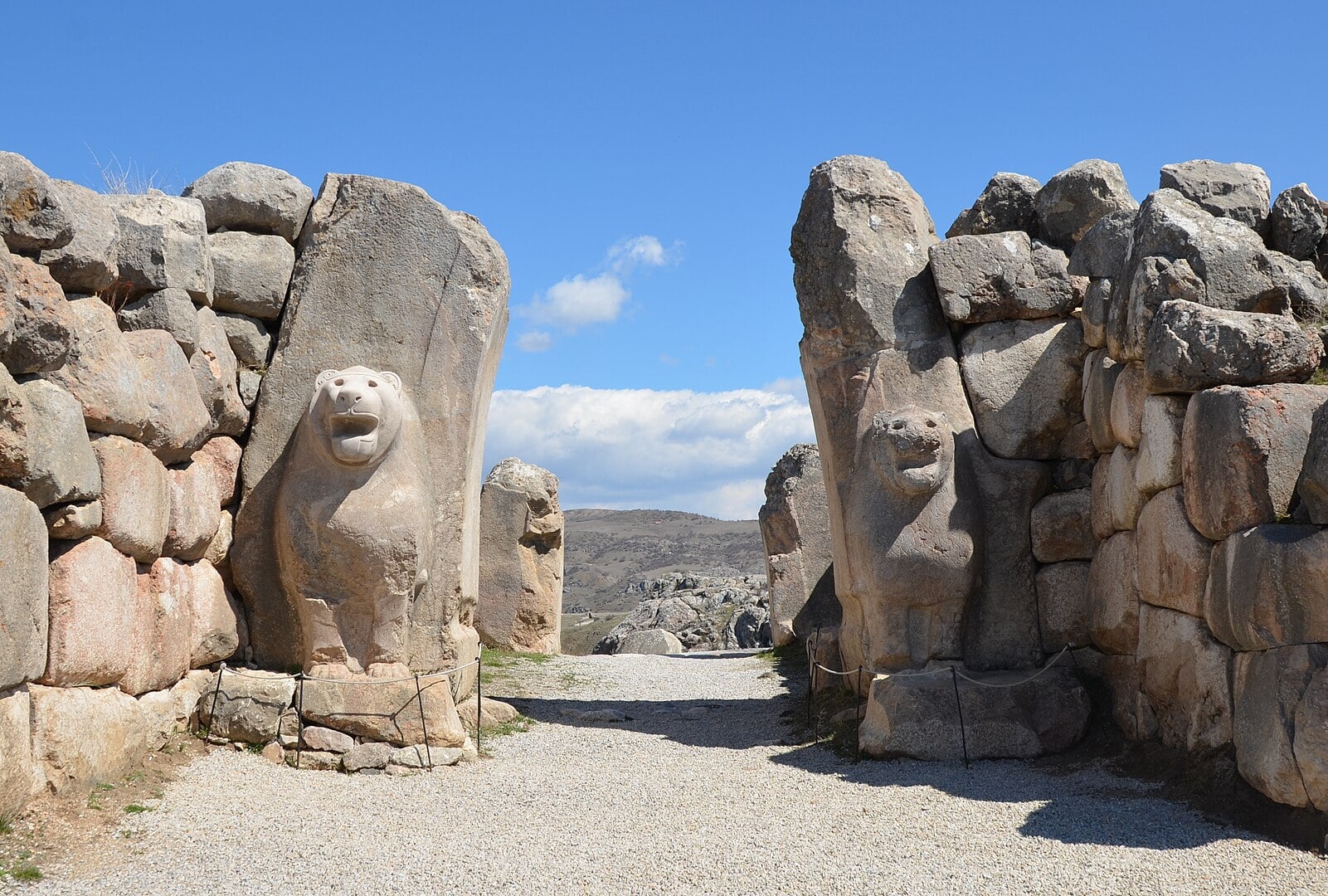
After Pithana, his son Anitta engaged on additional conquests. One of the cities that he conquered was Hattusa. It was one of the most significant cities of the Hattians, which would later go on to become the capital of the Hittite Empire.
This transformed the Neshites from a group of relatively weak and isolated kingdoms into a substantial state encompassing a sizable portion of Anatolia. However, this state was only a fraction of the later Hittite Empire, and it soon became fragmented. Nevertheless, the temporary unification appears to have had a lasting impact on the Neshites as a people, and their brief success at expansion was soon to be repeated on a much larger scale.
About a hundred years later in the 17th century BC, a king named Hattusilis I rose to power. A document known as the Edict of Telepinu records his successful campaigns in Anatolia although it does not provide extensive details about these. Nonetheless, it does indicate that he was able to extend his rule as far as the coastlands of Anatolia.
It was also at this time that the city of Hattusa was pronounced the capital of the dynasty’s expanding domain. This is the point at which we can truly consider the Hittite Empire to have finally emerged. In other words, it was the origin of the Hittite Empire. Its power expanded rapidly, successfully attacking lands as far as northern Syria under Hattusilis I.
This king was eventually succeeded by his grandson, Mursilis I. Under his rule, the Hittite Empire continued to expand, and the ambitious king even led an army as far away as Babylon in southern Mesopotamia, near modern-day Baghdad.
It appears that the Hittite Empire faltered for some time after the death of Mursilis, although the lack of records from this period makes it challenging to determine what exactly occurred. The Hittites, however, soon recovered and reached the height of their power with Suppiluliumas I in the 14th century BC.