Among the most intriguing practices in Ancient Greek medicine was the use of spiderwebs—and even live spiders—in healing treatments. Ancient medicine often surprises modern readers with remedies that seem unusual at first glance, yet many of these traditional approaches contained a practical logic beneath layers of symbolism and inherited belief.
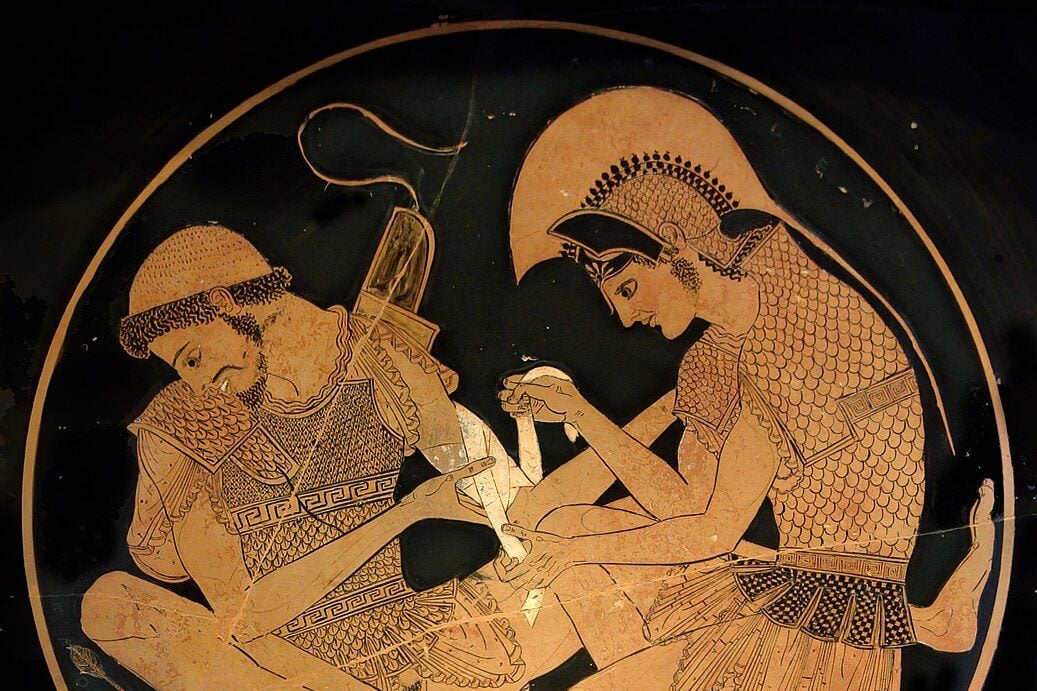
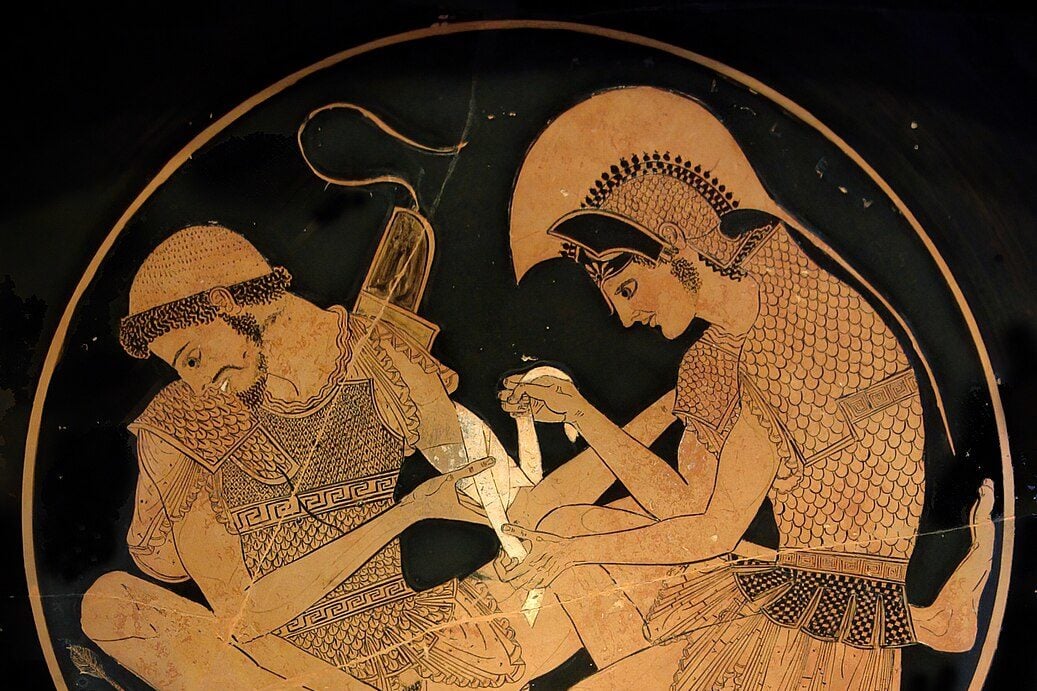
Greek and Roman physicians placed particular emphasis on controlling bleeding, especially in the context of warfare and surgery. Soldiers frequently sustained deep wounds from swords, spears, and arrows, while physicians had no access to modern antiseptics or advanced surgical instruments. In response, healers continuously experimented with natural materials that could help stop blood flow and protect exposed tissue. One of the more unusual solutions they turned to was spiderwebs.
Ancient Greek and Roman medical writers do, in fact, refer to the use of spiderwebs in medicine. Spider silk was observed to have properties that made it unexpectedly effective for wound care. Physicians noted its ability to absorb blood, cover injuries, and support the clotting process. While they lacked any understanding of modern biochemistry, their meticulous attention to such effects often led them to surprisingly effective medical practices.
The Roman author Pliny the Elder offers some of the clearest references to spider-based medicine in his encyclopedic work Natural History. He describes a range of remedies involving both spiderwebs and actual spiders, noting that the former could help stop bleeding and support healing when applied directly to wounds. He also made mention that spiders were believed to serve as effective remedies for a variety of diseases and injuries in antiquity.
For Ancient Greek healers, spiderwebs appeared naturally suited for wound treatment. Their soft, fibrous texture allowed them to cover cuts with ease, while their adhesive qualities helped seal damaged tissue and protect it. Ancient warfare produced particularly severe injuries. Greek hoplites and Roman soldiers fought in brutal close combat, where swords and spears regularly tore flesh open. Even relatively minor wounds could turn fatal due to blood loss or infection. Physicians accompanying armies therefore required treatments that acted quickly and could be easily carried onto the battlefield.
The use of spiderwebs among the Ancient Romans and Greeks provided several practical advantages in medicine. They were lightweight, widely available in nature, and naturally adhesive when applied to skin. Healers thus collected cobwebs and preserved them for medical use, and soldiers are sometimes described as carrying small containers filled with spiderwebs during military campaigns.
Long before the development of modern antibiotics, healers frequently relied on natural substances that appeared to reduce infection risk and support faster healing.
The great Greek physician Galen likewise discussed spider cobwebs in his work On the Powers of Simple Remedies in which he refers to their Ancient Greek medicinal applications in the treatment of injuries and the control of bleeding. Because gladiators suffered frequent injuries, Galen gained extensive experience treating wounds and preventing infection. Greek medicine placed strong emphasis on observation and practical effectiveness, so physicians often tested remedies repeatedly under real and demanding conditions.
This connection makes historical sense. Ancient doctors valued materials that combined absorbency, flexibility, and ease of application. Spider silk possessed all three qualities. Furthermore, physicians in antiquity often preferred natural substances that were readily available in military environments, where medical resources were limited.
Modern science helps explain why ancient healers valued spiderwebs. Spider silk is composed of strong protein fibers capable of forming protective coverings over wounds. The silk also absorbs moisture effectively and creates a temporary barrier against dirt and contaminants. Additionally, spiderwebs may exhibit mild antiseptic properties due to natural compounds present within the silk. Although ancient physicians could not observe bacteria, they recognized through experience that some treatments reduced infection more effectively than others.
Many people also associate spiderwebs with clotting because webs can contain traces of vitamin K from insect remains and environmental material. Vitamin K is a nutrient that contributes to blood coagulation in the human body. Most importantly, however, the web itself functions physically as a mesh. When pressed against a wound, the fibers help gather blood and support clot formation.
Modern medicine even studies spider silk for advanced surgical materials due to its exceptional strength and biocompatibility. Ironically, contemporary science now investigates properties that ancient healers observed intuitively thousands of years ago. Thus, ancient healers may have developed practical wound-care techniques through centuries of observation rather than theoretical science.

The use of spiderwebs highlights a central feature of ancient medicine, namely that Greek and Roman physicians often relied on empirical observation rather than formal scientific theory. They closely observed which remedies appeared effective and preserved those methods within medical tradition.
Greek physicians, in particular, placed great value on careful observation. The Hippocratic tradition encouraged doctors to study symptoms, environments, diets, and physical responses in detail. As a result, treatments survived not because they were theoretically justified but because they produced visible and consistent results. In this context, spiderwebs were valued because their silk fibers formed a natural covering over wounds while also helping to control blood flow. Folk medicine across many cultures likewise used cobwebs as anti-fungal and antiseptic remedies for cuts and open injuries.
Spiderwebs likely entered medical practice through precisely this kind of experiential process. Healers observed reduced bleeding and improved healing following their application, and over time, the practice spread across regions and generations. Cobwebs were part of a much broader landscape of natural medicine in antiquity. Ancient healers regularly used honey, wine, herbs, oils, vinegar, and minerals in wound care and general treatment.
Many of these substances also possessed genuine antibacterial or medicinal properties. Honey, for instance, inhibits bacterial growth and is still used in certain modern wound treatments. Wine and vinegar functioned as early disinfectants due to their alcohol and acid content. Within this framework, spiderwebs would not have seemed unusual to ancient physicians. Instead, they represented another readily available natural material with observable healing potential. Greek and Roman medicine thus consistently explored the relationship between nature and health, making use of natural resources, including even something so peculiar to modern eyes as spiderwebs.

Ancient cultures attached rich symbolic meaning to spiders and the act of weaving, and in Greek tradition, these associations carried particular weight. Mythology linked weaving to intelligence, fate, and skilled craftsmanship through figures such as Athena and Arachne, embedding it within a broader cultural framework that connected material creation with order, skill, and even divine influence. Spider silk itself likely appeared mysterious and almost otherworldly, given its delicate structure and surprising strength—qualities that blurred the boundary between natural substance and something almost magical.
This symbolic dimension may have reinforced confidence in cobweb-based remedies, since ancient medicine often operated at the intersection of practical treatment and cultural meaning. In battlefield contexts especially, where speed and improvisation were essential, surgeons had to remove arrows, close wounds, cauterize bleeding, and stabilize fractures under extreme conditions with limited equipment, relying heavily on whatever materials were immediately available. Spiderwebs fit this environment well, both practically and symbolically, as soldiers or assistants could gather them quickly from camps, caves, or buildings, requiring no preparation and allowing for rapid application under pressure.
Even when cobwebs were not perfectly effective, they could still provide a basic protective layer that was often better than leaving wounds exposed, which would have only allowed dirt and uncontrolled bleeding to pose immediate risks to survival. In many cases, this simple barrier alone may have made a meaningful difference in outcomes. Today, the same material that once carried symbolic and practical value in antiquity is again attracting scientific interest, as researchers explore spider silk for potential applications in surgery, tissue engineering, and regenerative medicine.