The planned demolition of a surviving Hitler Reich Chancellery bunker has sparked controversy in Germany, with city officials supporting redevelopment while historians and heritage experts argue the Nazi-era site should be preserved.
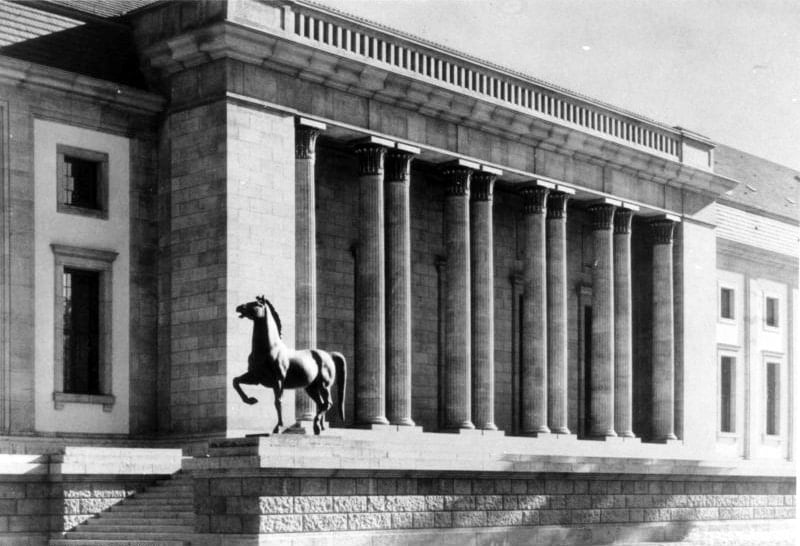
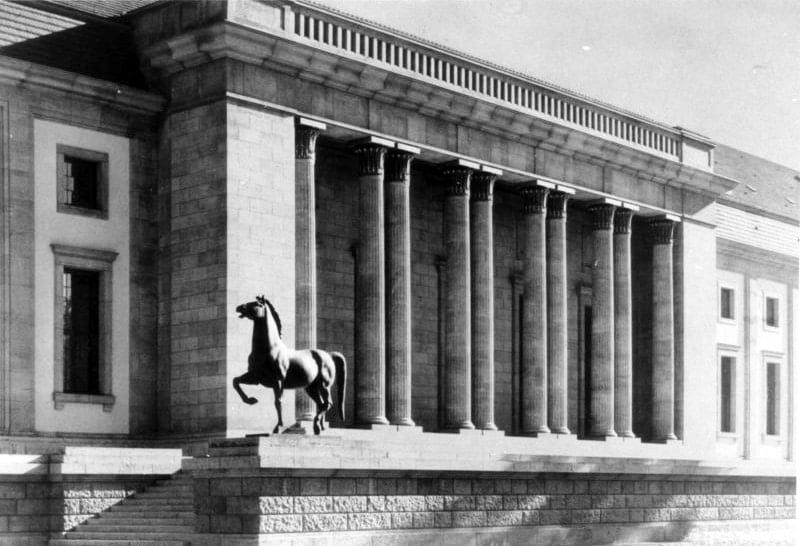
The underground bunker is one of the few remaining parts of the New Reich Chancellery, which served as the headquarters of Hitler’s government during World War II. Most of the massive complex was destroyed in the final months of the war, and Soviet authorities ordered the remaining structures demolished in 1949.
Berlin Housing Senator Christian Gaebler said the city should not delay much-needed housing and commercial development to preserve the bunker. He also warned that leaving the structure in place could attract people who glorify the Nazi regime.
“We are not standing in the way of new housing developments just to preserve a bunker that might then even become a place of pilgrimage,” Gaebler said.
Berlin continues to face increasing demand for housing, and officials view the site as suitable for residential and commercial development. A final decision on the proposal has not been announced.
The demolition proposal has drawn opposition from historians and preservation groups, who argue the bunker should be protected as an important historical site.
Dietmar Arnold, chairman of the Berlin Underworlds Association, called the proposal “absolute madness” and said the bunker is one of the last physical remains of Hitler’s former seat of power.
Berlin plans to demolish Nazi bunker under city center for housing
Berlin’s Housing Senator Christian Gaebler (SPD) backs demolishing the bunker, the last visible remains of Hitler’s New Reich Chancellery built by architect Albert Speer. The complex sits on wasteland in… pic.twitter.com/kXxA09Bpi5
— NewsTongue (@NewsTongueX) June 30, 2026
“It is a site of the perpetrators,” Arnold said. “It was the power centre of Nazi Germany, Hitler’s New Reich Chancellery, and these are the last remains.”
Arnold wants the bunker preserved and converted into a museum and memorial in partnership with the Holocaust Museum. He said the exhibition could examine the final months of World War II and the collapse of Nazi Germany.
Arnold said he last entered the bunker in 2007 and found it to be in very good condition. He noted that the structure is not the better-known Führerbunker, where Hitler and Eva Braun died by suicide in April 1945. That bunker is about 120 meters (394 feet) to the north.
Instead, the surviving bunker was used by staff working in the New Reich Chancellery. During the final months of the war, part of the underground complex also served as a hospital.
According to Arnold, about 1,200 square meters (12,900 square feet) of the bunker remain intact. Its walls and ceiling are about 1.7 meters (5.6 feet) thick. He believes new buildings could be constructed above the bunker without destroying it.
The proposal has also raised concerns among heritage officials. Last year, the Berlin State Monuments Council said the bunker has significant historical value and questioned plans to remove it.
“The New Reich Chancellery was the planning centre and starting point of World War Two and also symbolises the catastrophic end of the Nazi regime,” the council said.
The council urged the Berlin State Office for the Preservation of Historical Monuments to assess the site’s historical significance and determine whether it should receive official protected status before any demolition moves forward.