
Greece has officially secured the second-place ranking worldwide in the 2026 Blue Flag awards, underscoring its role as a global leader in coastal environmental management. With 657 awarded beaches (representing 15% of the world’s total), the country maintains its strong standing in the international program, surpassed only by Spain.
The Blue Flag is a voluntary eco-label awarded to beaches and marinas that meet a rigorous set of 33 criteria. These standards are focused on four key pillars: water quality, environmental management, environmental education, and safety and services.
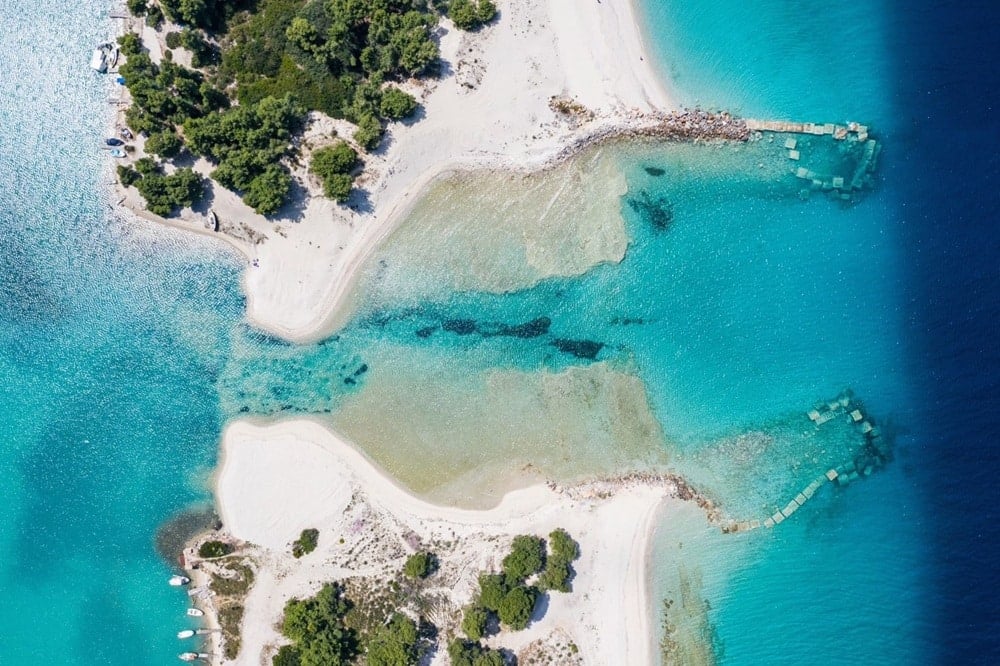
The Halkidiki peninsula remains the top-performing region in Greece for 2026, boasting 93 flags. This area is internationally recognized for its organized coastline and exceptional water purity. At the regional level, Crete maintains the overall first-place position with a total of 153 flags distributed across its four prefectures.
Other notable regions include:
Rhodes: Consistently ranks among the top islands for high-standard tourist infrastructure.
Attica: Home to 18 Blue Flag beaches, serving the capital’s significant visitor traffic.
Sithonia: Within Halkidiki, this specific sub-region alone accounts for 18 of the awarded beaches for the 2026 season.
To achieve and maintain Blue Flag status, coastal municipalities and private operators must pass frequent and unannounced inspections throughout the season. The non-negotiable requirement is “Excellent” water quality; no other classification (such as “Good” or “Sufficient”) is acceptable.
Beyond water purity, the 2026 criteria emphasize:
For the Greek tourism sector, which remains a primary driver of the national economy, these awards are a vital asset. International travel agencies and tour operators utilize the Blue Flag list as a primary filter when recommending destinations to clients. It provides a globally recognized “seal of approval” that guarantees public health and environmental protection.
As sustainable travel becomes a priority for global tourists in 2026, Greece’s consistent top-three placement ensures its competitive edge, attracting visitors who value high-quality services and responsible environmental stewardship.