While patents are often considered a modern legal invention, evidence suggests that Ancient Greek society may have developed early forms of patent-like protection. Writing in the 3rd century AD, the Greek author Athenaeus of Naucratis points to a system that closely resembles what we now call intellectual property.
As Michael Witty argues in his article,“ Athenaeus describes the most ancient intellectual property,” the earliest known example of such protection appears in the Greek colony of Sybaris in southern Italy. There, innovators were granted exclusive rights over their creations—an approach strikingly similar to modern patent law.
Witty highlights what may be the first recorded instance of a state-backed monopoly designed to reward innovation, revealing that ancient societies were already grappling with how to encourage creativity while limiting imitation.
At the center of this argument is Athenaeus himself, a writer of the late second and early third centuries AD, best known for his 15-volume work Deipnosophistae (The Learned Banqueters). This expansive compilation brings together literary excerpts, anecdotes, and discussions—many centered on food—preserving fragments of earlier works that might otherwise have been lost.
The Greek term deipnosophistai refers to “learned diners,” men who philosophize at the dinner table, often about culinary matters. For historians, Deipnosophistae is an invaluable source, and within its pages lies a brief but significant description of a practice in the prosperous Greek world of Magna Graecia that closely resembles an early form of intellectual property protection.
To understand the significance of Ancient Greek patents, Michael Witty places the concept of intellectual property within a broader historical framework. Modern patents, he explains, grant inventors exclusive rights for a limited time in exchange for disclosure, effectively giving them a temporary monopoly over their creation. However, this system did not appear overnight. Earlier societies experimented with different ways to reward innovation, often blending economic incentives with social and political priorities.
The example preserved by Athenaeus of Naucratis stands out because it so closely resembles a modern patent in both structure and intent. According to Witty’s interpretation, a law in Sybaris granted exclusive rights to cooks who invented new dishes. For a period of one year, only the creator could prepare and sell the dish, preventing others from copying it and allowing the innovator to profit from their originality.
Witty underscores the importance of this account by noting that it contains many of the defining features of a patent system. In his view, nearly all the elements of a modern patent are present—except, perhaps, formal disclosure. Even without a developed legal framework, the core principles of intellectual property (exclusive rights, limited duration, and state-backed enforcement) were already taking shape in this Ancient Greek practice.
Michael Witty draws much of his argument from the work of German historian Conrad Cichorius (1863–1932). In his study A Patent Law from Greek Antiquity, Cichorius identified what he believed to be an early form of patent legislation in the Ancient Greek world. Because the work was written in German and remained relatively obscure, it was long overlooked by scholars working in the field of intellectual property history.
Cichorius argues that what we now recognize as patent law has its roots in the ancient city of Sybaris, dating back to the 6th century BC. His evidence comes from a passage preserved by Athenaeus of Naucratis in Deipnosophistae, where he cites earlier historians, including Phylarchus, on the customs of Sybaris.
In this account, Athenaeus describes a law granting cooks exclusive rights over new culinary creations. If a chef invented a new dish, no one else was allowed to reproduce it for one year. During that time, only the inventor could profit from it, encouraging both financial reward and competitive innovation among other cooks. The same passage also notes additional economic privileges in Sybaris, including tax exemptions for eel sellers and reduced duties for those involved in producing or trading purple dye.
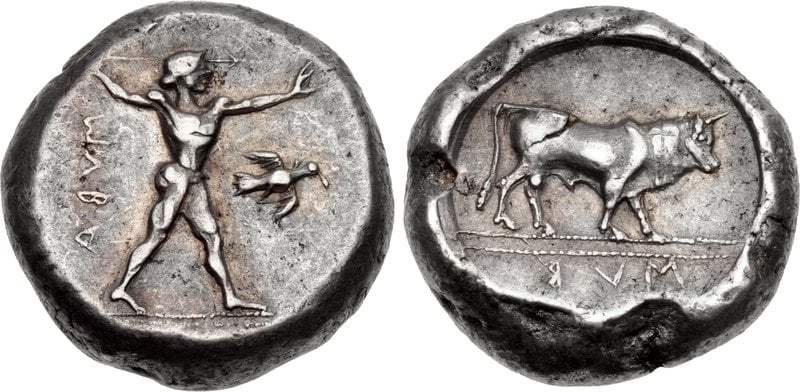
Sybaris itself was one of the wealthiest and most commercially active cities in the Ancient Greek world of Magna Graecia until its destruction by its rival city Croton around 510 BC. Because of this dating, Cichorius places the origins of this patent-like system firmly in the 6th century BC.
He summarizes the significance of the passage by comparing it directly to modern law, writing that if one were to define a patent as a state granting an inventor exclusive rights for a fixed period while prohibiting others from exploiting the invention until that period expires, then the Sybarites would appear to have implemented a fully developed patent system in principle.
The absence of formal disclosure requirements in antiquity raises intriguing questions about how Ancient Greek patents may have functioned in practice. In modern patent law, inventors are required to publicly disclose the details of their invention in exchange for legal protection. In Sybaris, however, disclosure may have taken a more sensory form.
Instead of written documentation, the scholar suggests that public exposure—through seeing, experiencing, or even tasting a new dish—could have served as an equivalent form of disclosure. In this sense, the invention was made “public” not through technical description but through direct experience. This highlights the adaptability of intellectual property concepts across different historical and cultural settings.
The context of Sybaris is crucial. Renowned in antiquity for its wealth, luxury, and refined lifestyle, the city was especially associated with high-end cuisine and culinary innovation. In such an environment, gastronomic creativity would have carried significant cultural and economic value. By granting exclusive rights to successful cooks, Sybaris effectively encouraged competition, rewarding originality while preventing immediate imitation. In many ways, this approach mirrors the economic logic of temporary monopolies designed to incentivize innovation that is behind modern patents.
Witty’s analysis also emphasizes how unusual such a system for “patents” was in the Ancient Greek world. Greek society generally did not recognize exclusive ownership of ideas or techniques. Knowledge was typically shared freely, and imitation was often seen as a form of learning rather than intellectual theft. Against this backdrop, the Sybarite law stands out as a rare exception. Even Athenaeus of Naucratis presents it as a notable curiosity, suggesting it was unusual even by ancient standards.
The broader implications of this example are significant. By identifying a patent-like system in Ancient Greece, Michael Witty challenges the assumption that intellectual property is a purely modern development. Instead, it appears as a recurring solution to the universal problem of how to balance the benefits of innovation with the risks of imitation. The Sybarite law thus represents an early attempt to address a challenge that continues to shape intellectual property systems today, showing that its core principles have deep historical roots.
Equally important is the role of the state in enforcing such rights. Just as modern patents depend on legal institutions for protection, the Sybarite monopoly would have required official recognition and enforcement. This suggests that even in antiquity, governments were willing to intervene in economic life to encourage innovation and regulate competition. The link between state authority and intellectual property therefore has a long and complex history.
Witty further contrasts this ancient practice with later developments in intellectual property law, noting that such protections tended to weaken during periods of political fragmentation and reappear in more stable, centralized economies. This pattern reinforces the idea that intellectual property systems are closely tied to broader social and economic conditions. Where states have the capacity to enforce rules and regulate markets, mechanisms to reward innovation are more likely to emerge.
Another striking feature of the Sybarite example is its emphasis on practical, everyday creativity rather than abstract invention. The innovation in question—a new dish—represents a tangible, immediate form of ingenuity rooted in daily life. This suggests that early forms of intellectual property may have been far more closely connected to ordinary economic activity than to scientific or technological advancement. In this sense, the origins of patents may lie not in laboratories or workshops but in kitchens and marketplaces.