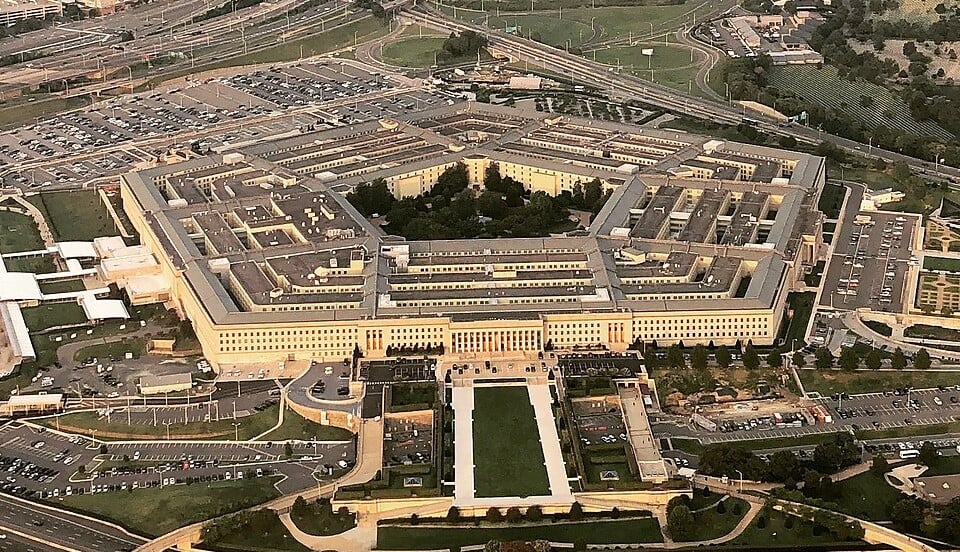
The Pentagon has sharply reduced the number of religion codes used by the U.S. military, replacing a list of about 220 faith groups and denominations with 31 broader religious categories.
The updated system, which is expected to take effect in July, has sparked debate among veterans, chaplains, lawmakers, and religious groups over its potential impact on faith representation within the armed forces.
The new categories include Buddhism, Hinduism, Baha’i, Islam, Judaism, Sikhism, and a designation for people with no religious affiliation. Christian denominations make up most of the recognized categories.
Military officials said the change is intended to simplify record-keeping and improve data collection for military chaplains. The Pentagon explained that the revised list is not meant to determine which religions are officially approved or recognized by the government.
Service members whose faiths are not among the 31 listed categories will still be able to identify their religion and include it on military dog tags, officials said.
The policy change has drawn criticism from some veterans, former chaplains, and religious groups who argue that the consolidation could reduce the visibility of minority faiths within military records.
The Office of the Secretary of War is announcing a significant change to the Department’s categorization of religious affiliation. In a long overdue move, we reduced the list from over 200 unmanageable categories to 31. With this move, we are returning to the original intent of… https://t.co/dgHX5ytzjJ pic.twitter.com/eho537O08J
— Sean Parnell (@SeanParnellASW) June 5, 2026
A former U.S. Army chaplain said that the move raises concerns about the military’s commitment to religious diversity.
“When I raised my hand to become an Army chaplain, I swore that I would support and defend the Constitution,” the former chaplain said. “The First Amendment is the free exercise of religion for everybody. That’s what I was buying into.”
The update also arrives amid broader debate over Defense Secretary Pete Hegseth and his public use of Christian prayers while discussing military operations. Some critics have questioned whether such expressions blur the line between personal faith and official government leadership.
The revised system has also sparked concern among members of the Church of Jesus Christ of Latter-day Saints. Under the new classification structure, the church appears as a separate category rather than being included among the military’s Christian denominations.
That decision prompted criticism from Mike Lee, a Republican senator from Utah and a member of the church.
“Can anyone tell me why The Church of Jesus Christ of Latter-day Saints was left out of the list of Christian churches?” Lee wrote on X.
Can anyone tell me why The Church of Jesus Christ of Latter-day Saints was left out of the list of Christian churches? pic.twitter.com/t4u6PI29ON
— Mike Lee (@BasedMikeLee) June 6, 2026
According to an analysis, the consolidation removed separate classifications for numerous faith traditions, spiritual movements, and nonreligious belief systems. Those no longer listed individually include Eckankar, Heathen, Native American spiritual traditions, Rosicrucianism, Druidism, Deism, Asatru, Paganism, Humanism, Unitarian Universalism, Wicca, Shamanism, and Atheism, among others.
Defense Department officials have emphasized that the changes are administrative rather than ideological. Sean Parnell, a Defense Department official, said the military continues to place a high value on the First Amendment and the free exercise of religion for all service members.