
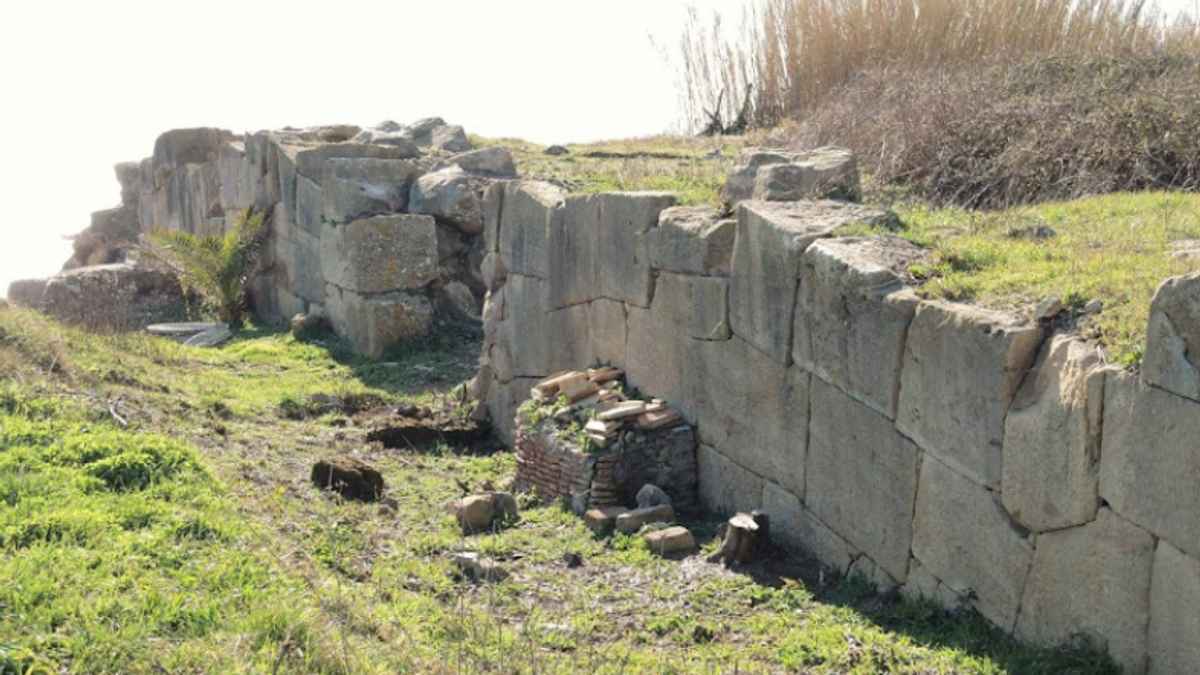
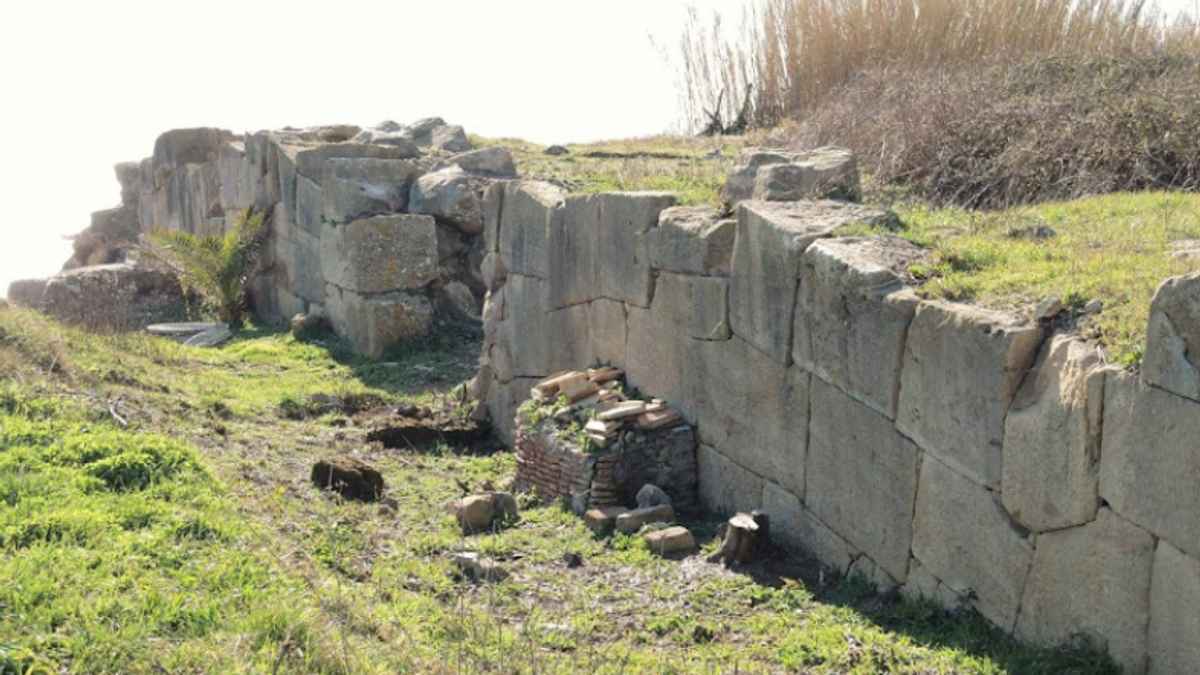
Pyrgi was one of the most compelling coastal cities of ancient Italy, reflecting a strong sense of historical continuity that connected the Etruscan world with the Greek sphere through the enduring legacy of the Pelasgians.
Situated on the Tyrrhenian coast, it functioned as the principal port of Caere, one of the most powerful and influential cities of Etruria.
To understand Pyrgi, one must first recognize its dual nature. On the one hand, it functioned as a strategic maritime hub. Ships moved between Italy, the Greek world, and the wider Mediterranean. Trade routes brought goods but also ideas, rituals, and identities. Ancient memory connects the site to the Pelasgians —the ancestors of the Greeks— and this link forms the core of its relationship with the Greek world. The Pelasgians appear in Greek and Italic traditions as an early population connected with both regions. Through them, Pyrgi becomes part of a shared ancestral horizon between Greeks and Etruscans.
Additionally, this connection is preserved in literary tradition, with Strabo recording that the region was associated with a ruler named Maleus, placing him within a Pelasgian framework:
“From Kosses toward Ostia there are small towns: Gravisci, Pyrgi, Alsium, and Fregenae. Up to Gravisci it is three hundred stadia. Between them lies the place called Regisvilla. Here it is said that there was the palace of Pelasgian Maleus, who ruled over these lands and, together with his fellow Pelasgians, went to Athens. From the same lineage are also the inhabitants of Agylla.”
In this tradition, the Pelasgians represent an early stratum of population that connects Italy with Greece. The Etruscans themselves appear in ancient accounts like that of the historian Herodotus as closely linked with earlier populations of the region, including Pelasgian groups. Within this framework, Pyrgi becomes a point where Etruscan identity and Pelasgian memory overlap. Greek cultural elements then enter through this shared background rather than appearing as isolated influences.
The importance of Pyrgi appears clearly in its historical record. In 384 BC, Dionysius I of Syracuse attacked the city. His troops landed at night and entered the sanctuary area. They plundered the temple of Ilithyia and carried off a large amount of treasure, reported as one thousand talents of gold and silver. The event shows both the wealth concentrated in the sanctuaries and the importance of Pyrgi as a religious center tied to wider Mediterranean networks.
Later, around 273 BC, Caere faced pressure from the expanding Roman Republic. To avoid war, the city surrendered part of its territory. Rome then established a colonia maritima at Pyrgi. The settlement took the form of a rectangular fortified structure. Its purpose was control of the coast, protection against piracy, and security against possible Punic threats. During this transformation, temple buildings were ritually dismantled but worship continued in open-air spaces. The sanctuaries of Pyrgi provide the clearest evidence of its cultural structure. A perimeter wall enclosed the area, and inside stood two main temples.
Temple B dates to around 510 BC. Thefarie Velianas constructed it. Meanwhile, the structure follows a Greek architectural model with a single cella surrounded by columns. Additionally, the gold tablets found in the sanctuary record its dedication to the Phoenician goddess Astarte, identified in Etruscan as Uni. The same inscriptions connect her with Ilithyia, the Greek goddess of childbirth. This triad places Greek, Phoenician, and Etruscan religious systems within the same sacred framework.
Next to Temple B stood a large rectangular building with twenty rooms. These rooms housed priestesses attached to the sanctuary. Roman tradition later, including the satirist Lucilius, refers to them as the “prostitutes of Pyrgi.”
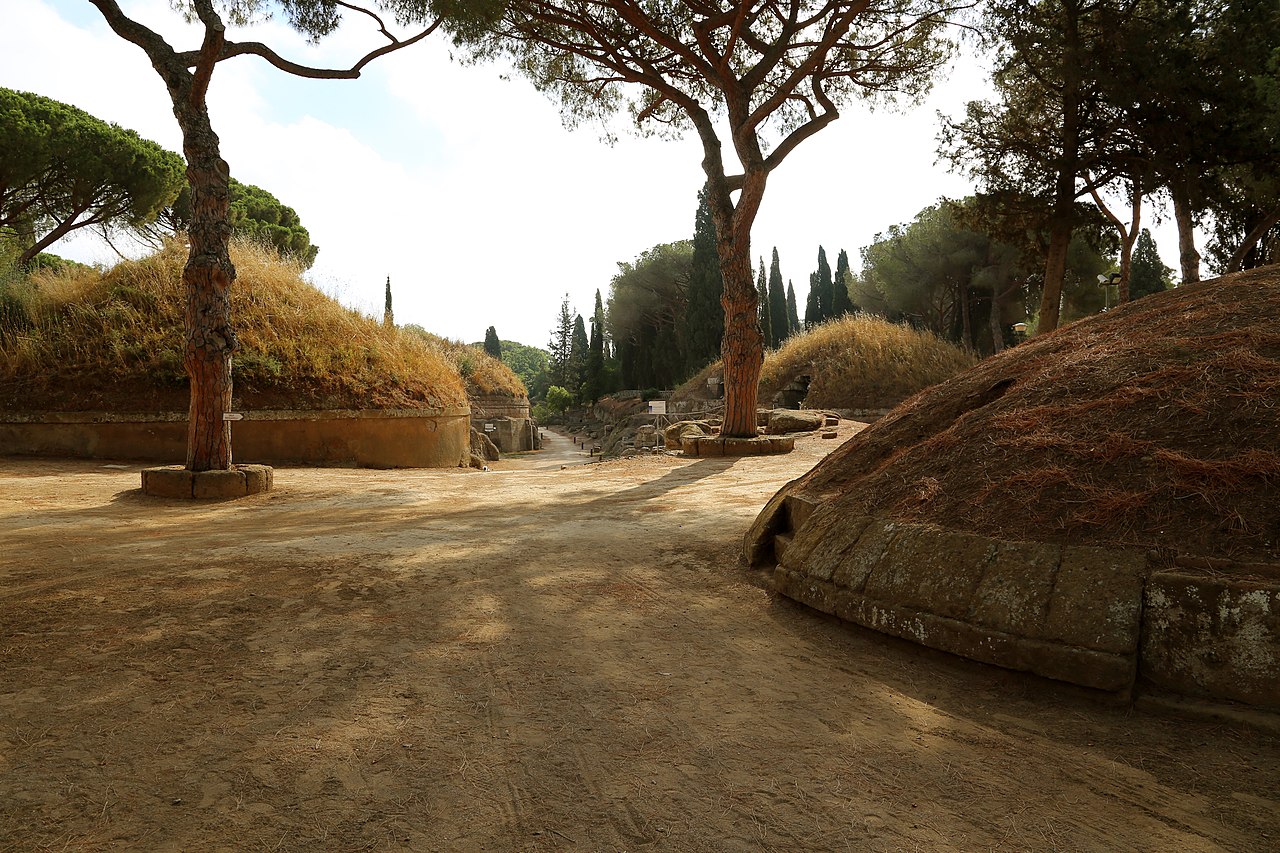
Nearby stood precinct “C.” It contained a cylindrical altar and a ritual pit dedicated to underworld worship. Inscriptions from this area mention Tinia, the Etruscan equivalent of Zeus, alongside Uni. This combination places sky and fertility deities within the same ritual space.
Temple A belongs to a later phase, built around 470–460 BC. It was constructed after Caere’s defeat by Syracuse at the Battle of Cumae in 474 BC. Additionally, its construction marked a political response, restoring the authority of Caere through monumental architecture. However, the temple follows an Etruscan plan with a deep front porch, multiple column rows, and rear chambers.
Temple A was dedicated to Thesan. She corresponds to the Greek Leucothea, associated with the sea and protection of sailors. The temple includes one of the most important artistic works of Etruria: a large terracotta pediment showing scenes from the Greek myth of the “Seven against Thebes.”
The pediment presents two main scenes. In the upper section, Zeus strikes Capaneus with lightning as he attempts to scale the walls of Thebes. In the lower section, Tydeus lies wounded while seizing Melanippus, preparing to devour his skull. Athena turns away while holding the vessel of immortality. The composition combines violence, divine intervention, and moral order.
The relief style reflects a strong Greek influence, but its execution belongs to local Etruscan tradition. The myth likely follows a version associated with the poet Stesichorus, showing that Greek epic material circulated deeply in Etruria. The image presents a clear narrative of divine justice against human arrogance.
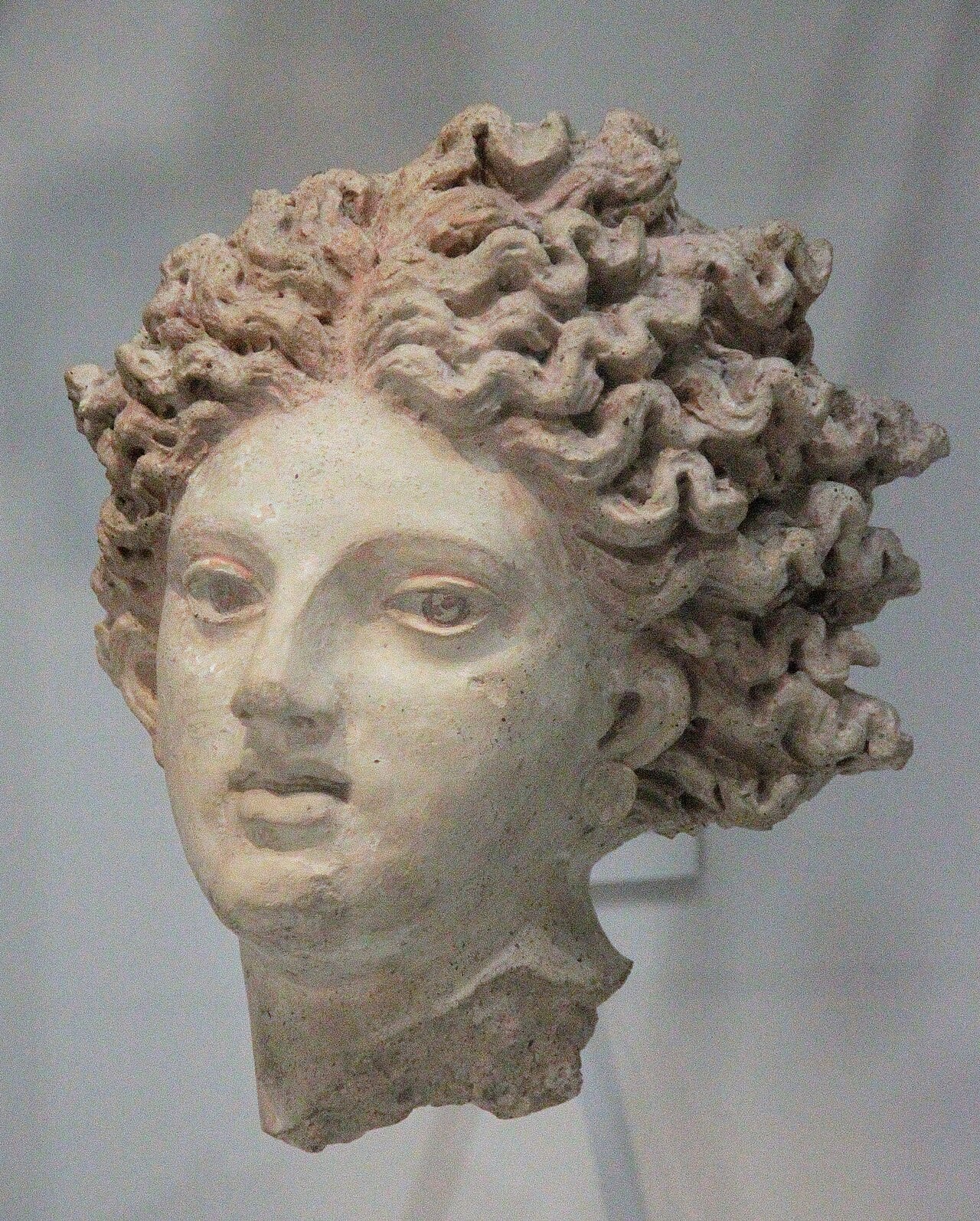
This southern sanctuary preserves the earliest and most developed Demeter-related cults in Pyrgi. Meanwhile, rituals connect agricultural cycles with fertility and the underworld. The central structure, sacellum “Beta,” dates to 530–520 BC. Its roof carries acroteria with busts of Achelous, the river god with human and bull features, and female-headed antefixes representing nymph-like figures. Votive deposits include Greek pottery with Etruscan inscriptions. These offerings in the city are dedicated to Cavatha and Sur, where Cavatha corresponds to Kore-Persephone in the Greek world, which bears its roots in the Pelasgian tradition, while Sur links to an underworld form of Apollo, which places Greek religious concepts directly inside Etruscan ritual practice.
All these sanctuaries confirm a structured religious environment where Greek, Etruscan, Phoenician, and older local traditions operate together. The Greek element does not appear as external influence alone. It connects directly with the Pelasgian layer preserved in tradition. Through this layer, Pyrgi becomes part of a shared historical memory linking Italy and Greece.
Eventually, Pyrgi becomes a key city for understanding the relationship between the Pelasgians, the Greeks, and the Etruscans, as it preserves both material evidence and literary memory. In conjunction, they form a coherent picture of a Mediterranean world shaped by long-term continuity rather than isolated origins.


