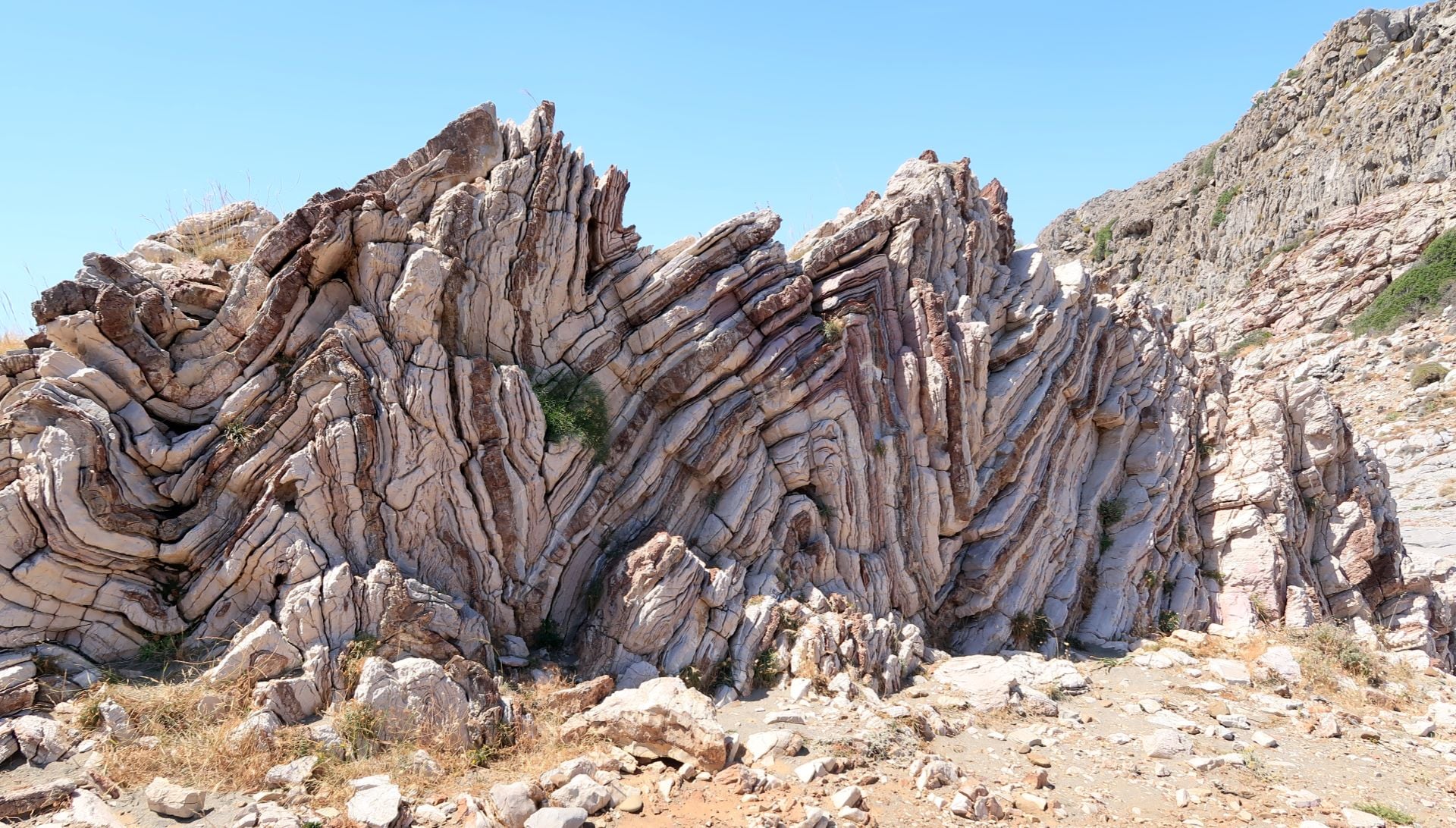

The Mayor of Milos, Manolis Mikelis, has issued a fierce warning against new central government legislation and aggressive corporate development, which he claims threaten to permanently disfigure one of Greece’s most visually distinct islands.
In a wide-ranging critique of Greece’s proposed tourism zoning framework, Mikelis accused the central government of bureaucratic negligence and creating legal loopholes that favor wealthy international funds while systematically locking out local residents.
At the heart of the crisis is a newly introduced tourism spatial plan released online by the Ministry of Tourism. The legislation establishes strict minimum land requirements for building new hotels, setting the threshold at 8, 12, or 16 stremmata (approximately 2 to 4 acres) depending on the specific zone.
Mikelis points out that because land ownership on Milos is historically fragmented—with local families generally owning plots of only 4 to 6 stremmata—the law effectively bars residents from developing small, independent hospitality businesses.
“Consequently, it allows the big funds and the rich who have too much money to come in, forcing locals to sell off their property just so these businesses can operate for only seven months a year,” Mikelis warned, speaking to Greek Reporter.
The Mayor also expressed deep concern that the central government plans to issue a legislative decree to retroactively amnesty existing illegal corporate constructions. “That is the goal, that is what we see happening,” he said, adding that his office is actively trying to block a recent influx of newly issued building permits from being executed.
The local administration has recently been forced to take emergency legal action following severe environmental violations in some of the island’s most ecologically sensitive regions.
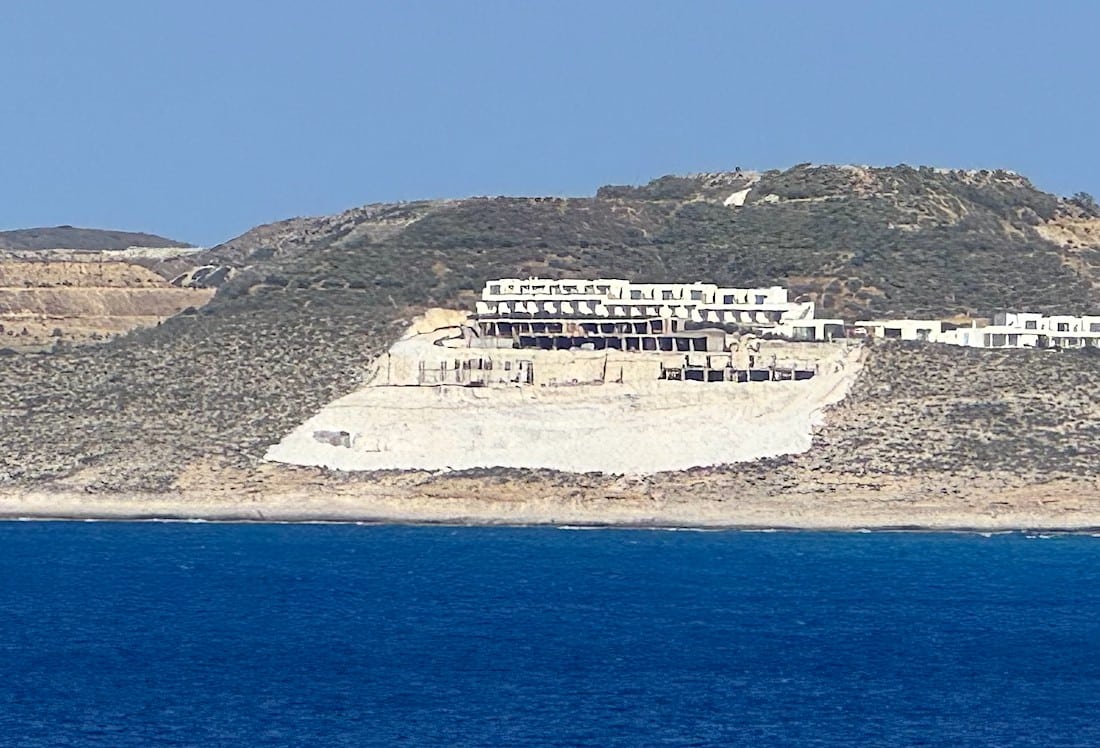
In the Kaminia/Sarakiniko area, an investor engaged in illegal excavations directly adjacent to the beach, destroying ancient fossils verified by the Goulandris Museum. Despite public administration inspectors declaring the project “100% illegal,” the developer ignored government-mandated restoration deadlines with zero consequences.

Meanwhile, in Mytakas—an extension of Sarakiniko’s famous Lunar-like volcanic landscape—a large development company purchased an existing hotel with plans to construct a massive 271-bed complex featuring 100 private swimming pools.
According to municipal records, the developer illegally excavated and shipped out 11 shiploads of pozzolan (volcanic ash) to cement factories. Local authorities intervened only when bulldozers began moving toward the public shoreline.
“We went to the Supreme Court (Council of State) and we are waiting for the final decision,” Mikelis stated. “A temporary revocation of the permit has been issued, and we are waiting for the final ruling.”
Beyond environmental destruction, Mikelis is fighting a bureaucratic battle to preserve the island’s unique cultural heritage: the syrmata. These are traditional, vibrantly colored fishermen’s structures carved directly into the seaside volcanic rock across coastal villages like Klima, Mandrakia, and Fourkovouni.
The municipality is pushing for strict architectural guidelines to ensure all 350 existing structures are protected and repaired using traditional methods, despite a lack of formal state recognition.

“The syrmata were the cultural heritage of this place, showing the life of people 150 years ago,” Mikelis explained. “In order to survive, they made a hole in the rocks to store their boat and their fishing equipment so they could live off fishing and survive during the Axis occupation and long before it.”
The Mayor noted that the term originates either from dragging (syrsimo) boats into the caves, or from historical lookouts who would shout “Syrma, syrma!” (“Watch out!”) to warn workers of approaching gendarmes, as the structures were originally built without formal permits.
“Venice exists inside the water, yet we as a state cannot recognize these areas as special urban settlements,” Mikelis lamented.
The conflict highlights a growing rift between local municipalities and the central government. In 2023, Milos completed a comprehensive local zoning plan (SCHOOAP) designed to protect its environmentally sensitive Natura-designated areas. However, the central government overturned the environmental study to accommodate high-value corporate investments.
Speaking to Greek Reporter, Mikelis described the Ministry’s overriding framework as a “death knell” for the local small entrepreneurs who built the island’s reputation. Instead of smaller rooms tailored to the island’s cultural scale, legal loopholes are being exploited to build massive 300-bed luxury resorts that block public beach access.
The cash-strapped municipality is currently diverting vast public funds toward legal fees to fight these investments in court, explicitly pointing to neighboring Cycladic islands that have already been ruined by anarchic overdevelopment.
Milos is not fighting alone. Mikelis concluded by vowing to form a united front with other Greek island mayors to force a rewriting of the national tourism framework.
“We will use every legal remedy to convince the people who wrote these unacceptable laws not to destroy our land any further,” Mikelis said.
“Our destinations shouldn’t last for just 10 years and then be degraded because they destroyed the beauty and unique characteristics of our islands. Together with other mayors, we are coordinating to make our voice stronger, ensuring longevity so that when someone pays to travel here from America, Australia, or Europe, they can still find and visit these rare beauties.”