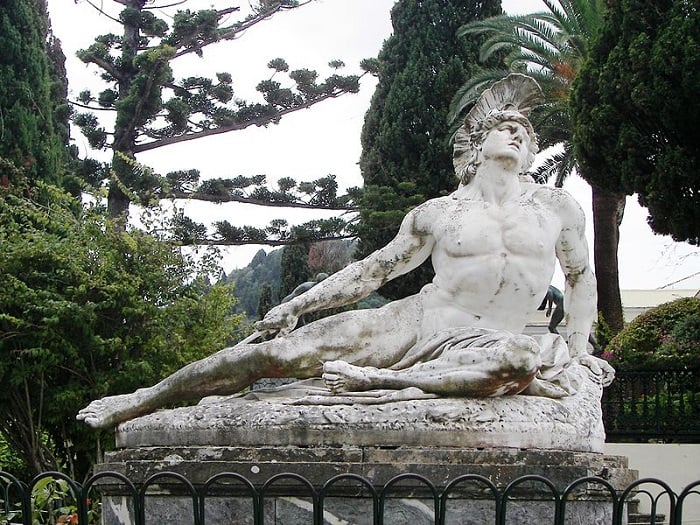
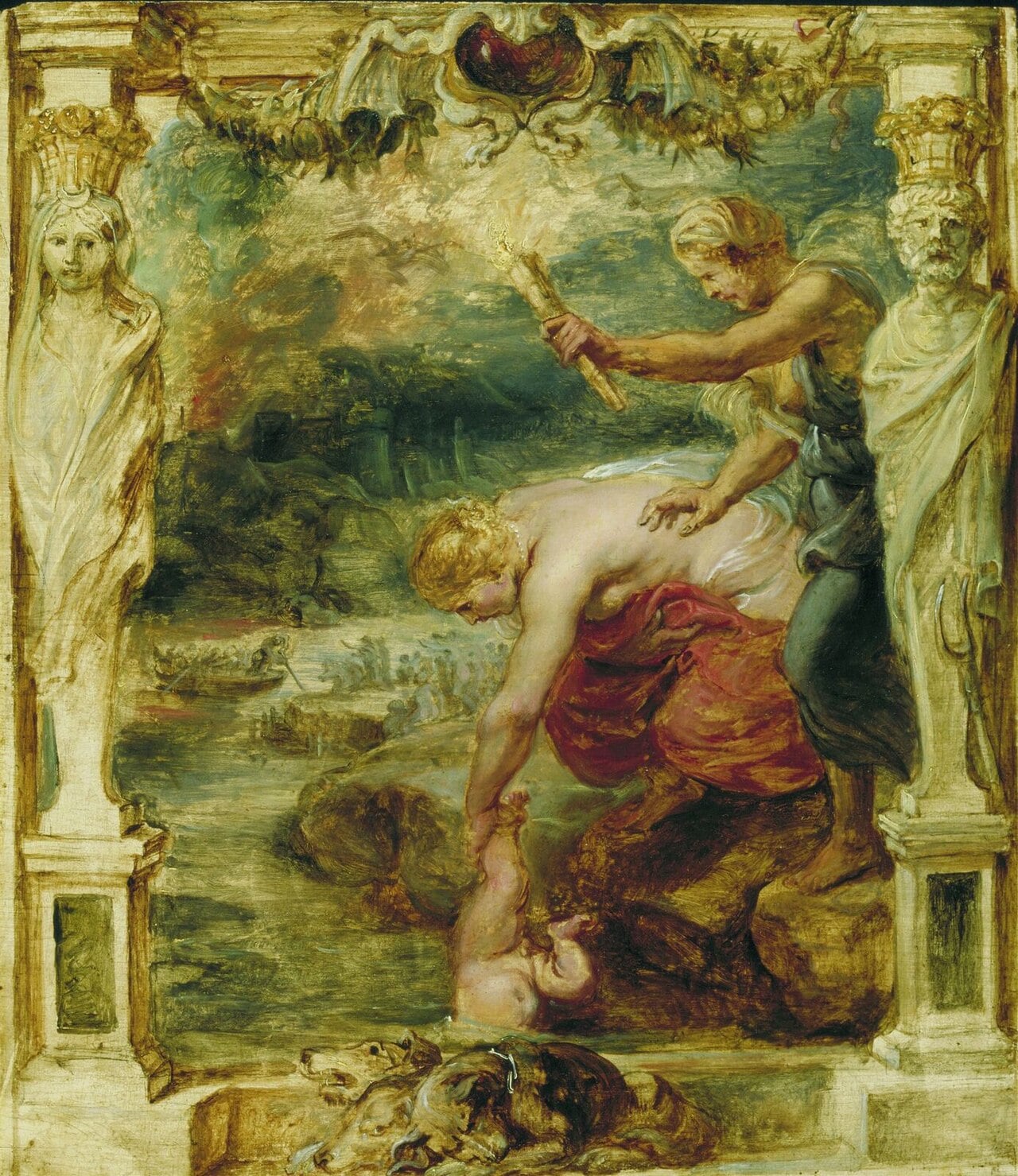
Few expressions from ancient mythology are as widely recognized as “Achilles’ heel.” Today, the phrase symbolizes a hidden weakness capable of bringing down even the strongest individual. Pop culture often depicts Achilles as vulnerable specifically because of his heel, as, according to the myth, his mother, Thetis, dipped him into the River Styx while holding him by the foot.
However, ancient sources present a more complex account. A growing number of scholars question whether Achilles’ vulnerable point was located in the heel at all, instead pointing to the ankle or the talus region of the foot. Recent work by archaeologist Barbara Carè has helped revive this debate and challenge long-standing interpretations.
The issue extends beyond mythology alone. It also involves translation, anatomical interpretation, and the evolution of classical tradition. Most significantly, it raises the possibility that the familiar idea of an “Achilles’ heel” may rest on a historical misunderstanding of ancient terminology.
Many people assume that the Iliad describes Achilles as invulnerable—excluding, of course, his heel. In reality, Homer makes no such claim. Instead, Achilles is portrayed as a mortal warrior, albeit an exceptionally powerful one. The more detailed story involving the River Styx appears much later in the tradition. Among the writers who developed this version was the Roman poet Publius Papinius Statius, whose unfinished epic, the Achilleid, plays a central role in shaping the myth.
In Statius’ account, Thetis attempts to protect her son from death by immersing him in divine waters while holding onto a part of his body, leaving one area untouched by the river’s power. This later tradition strongly influenced medieval and modern retellings. Over time, artists, translators, and scholars gradually solidified the image of a single vulnerable heel untouched by the Styx. Yet the original wording of these sources introduces important ambiguities and interpretive problems.
Barbara Caré argues that many readers have misinterpreted Statius’ anatomical description. In her reading, the vulnerable area is not the sole or the heel itself but the region of the ankle where Thetis held Achilles during his immersion. This distinction is significant. The heel and the ankle refer to different anatomical structures, yet later tradition gradually collapsed them into a single, simplified image.
The confusion likely developed through translation choices and symbolic reinterpretation. Once translators began associating Achilles specifically with a “heel,” the image became culturally fixed and increasingly difficult to dislodge. However, the ancient language itself appears less precise than modern retellings suggest. Caré’s research points in particular to the talus bone, known in antiquity as the astragalus (plural: astragali), which connects the foot to the leg and plays a central role in ankle movement. On this basis, the vulnerable point may have been the ankle joint rather than the heel proper.
An additional source reinforces this interpretation. In the Bibliotheca, traditionally attributed to Apollodorus of Rhodes, Achilles is killed when Paris, guided by Aphrodite, strikes a vulnerable point. The Greek term used in this context is sphyron (σφυρόν). This word does not strictly mean “heel” but more commonly refers to the ankle or lower ankle region. In contrast, Ancient Greek writers used pterna (πτέρνα) for the fleshy heel of the foot. This linguistic distinction reshapes the traditional image of Achilles’ death.
If Apollodorus intended to refer to the ankle rather than the heel, then later translations that rendered the wound as a “heel injury” introduced a significant distortion. In that case, the vulnerable point would correspond to the joint where Thetis held Achilles during his immersion rather than the lower rear portion of the foot.
For this reason, the famous Greek expression Achilleios pterna (“Αχίλλειος πτέρνα”) may itself reflect a later interpretive tradition rather than the earliest mythic evidence. Modern Greek commonly uses pterna (πτέρνα) to mean heel, but this usage can oversimplify the nuance present in ancient sources.
First of all, the key ancient texts do not consistently employ terminology that unambiguously isolates the heel as the point of vulnerability. Moreover, the anatomy of the myth does not fully align with the symbolic logic often attached to it. If Thetis held Achilles while immersing him, she would more plausibly have grasped him at the ankle joint rather than the heel, since an ankle grip provides greater stability. Lastly, the term sphyron (σφυρόν), used by Apollodorus, aligns more naturally with an interpretation centered on the ankle region.
As a result, translating Achilles’ vulnerable point simply as pterna results in a misleading sense of precision. It reduces a broader anatomical area to a single fixed location. Over time, this simplification solidified into accepted tradition, eventually being treated as unquestionable.

Barbara Caré’s work also examines the cultural significance of astragali in the ancient world. For many years, archaeologists often treated astragali as simple animal bones. However, more recent research has revealed far more complex uses. In antiquity, astragali were used in games, ritual practices, divination, and symbolic acts, suggesting a range of cultural meanings that went well beyond their biological function.
This broader context is important because the talus bone carried significance far beyond anatomy alone. It is associated with movement, balance, and physical stability—qualities that make the ankle region particularly crucial for mobility. A wound in this area could incapacitate even the most powerful warrior.
Caré argues that misinterpretations of Achilles’ vulnerable point have also shaped the way these objects are understood archaeologically. Earlier scholarship often focused too narrowly on the modern “heel” concept, overlooking the symbolic and functional importance of the ankle and astragalus region. As a result, revisiting the anatomy of Achilles may also encourage a reassessment of how astragali are interpreted within ancient material culture.
The persistence of the “Achilles’ heel” metaphor demonstrates how powerfully translation and interpretation shape cultural memory. Once a phrase becomes embedded in everyday language, its origins are rarely questioned. In Achilles’ case, a subtle anatomical misunderstanding may have helped produce one of the most enduring metaphors in cultural history.
This also highlights the risk of reading ancient texts through modern assumptions. Later audiences often expected a single, clearly defined weak point, and the heel fits this expectation neatly, appearing both vulnerable and symbolically distant from the warrior’s strength. Nonetheless, ancient anatomical terminology did not always correspond to modern categories, and body parts were not always conceptualized with the same precision we expect today.

From a practical standpoint, an arrow striking the ankle could immediately collapse a warrior’s mobility. Achilles depended on speed, agility, and fluid combat movement, so damage to this region would have severely undermined his battlefield advantage. In that sense, this interpretation arguably offers a more coherent narrative explanation than a narrowly defined heel wound.
Moreover, the astragalus carried significant religious associations across the ancient Mediterranean. The Greeks used astragali in ritual contexts and divination practices, and they were frequently deposited in sanctuaries and graves, suggesting meanings that extended well beyond anatomy alone. For this reason, the vulnerable ankle region may have held symbolic weight that later traditions gradually obscured or reinterpreted.
The debate over Achilles’ heel may appear minor at first glance, but it raises broader questions about classical interpretation and historical memory. Did ancient authors explicitly describe a heel wound, or did later translators progressively narrow a more general anatomical reference? Over time, did repeated retellings transform an ankle injury into one of the most enduring metaphors in cultural history?
At the very least, the available evidence suggests that the traditional image is not as certain as it appears. Ancient terminology and narrative context often point more naturally toward the ankle region than to an isolated heel.