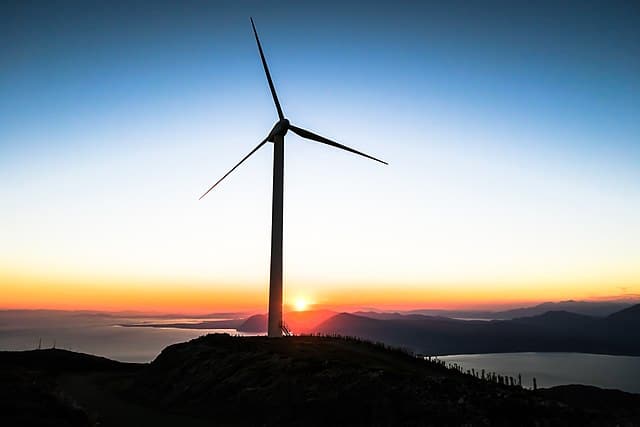
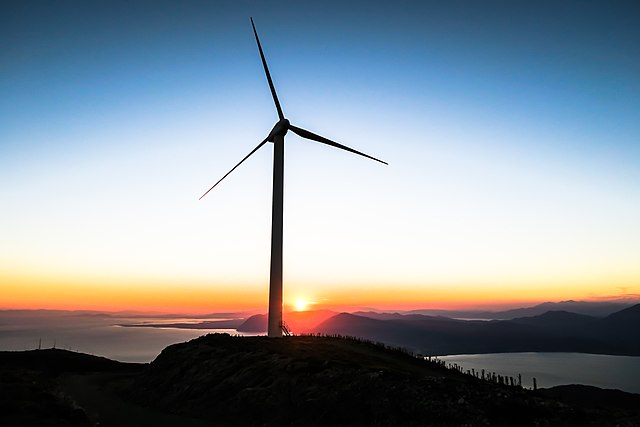
Despite Greece’s more than three hundred days of sunshine per year, its powerful winds, and its growing energy investments, Greeks still pay disproportionately high electricity bills compared to other EU states.
In recent years, Greece has rapidly expanded solar and wind power production and has often produced more renewable electricity than many other European countries relative to its size. At first glance, this should lead to cheap electricity for households and businesses; yet Greek consumers continue to face some of the highest electricity bills in Europe. This situation appears contradictory, but the explanation lies in a combination of market structure, taxation, infrastructure limitations, fuel dependence, and European Union energy rules.
To understand why electricity remains expensive in Greece, it is important to look at how electricity is produced, distributed, stored, and priced.
One major reason for the discrepancy between high production and high bills is that the former does not necessarily lead to lower energy expenses. Greece may generate large amounts of renewable energy during sunny or windy periods, but electricity prices are determined by the overall energy market rather than solely by the cheapest available source. Greece operates within the common European electricity market framework, established by the European Union. Under this system, the final wholesale electricity price is usually determined by the most expensive power plant needed to satisfy demand at a given moment. This is called the “marginal pricing” system.
Executive Maja Turković of CWP Europe, a renewable energy developer, explains: “Prices across most European markets are set by the last and most expensive unit needed to meet demand—known as marginal pricing.” For example, even if solar farms produce electricity very cheaply during the day, Greece may still need natural gas power plants in the evening or during periods of low wind. Because natural gas plants are more expensive to operate, they often set the market price for all electricity traded during those hours. As a result, consumers may pay prices influenced by gas costs even when renewable energy production is high.
Greece remains heavily dependent on imported natural gas. Unlike countries with large domestic gas reserves, Greece imports most of its gas from international markets. When global gas prices rise because of wars, geopolitical tensions, or supply shortages, Greek electricity prices rise as well. The energy crisis that followed the Russian invasion of Ukraine demonstrated this clearly. Even countries with growing renewable sectors suffered high electricity prices because gas still played an important role in balancing electricity supply.
Another important factor is the structure of the Greek electricity market itself. For many years, the market was dominated by the Public Power Corporation, known as PPC or DEI. Although competition has increased, the market remains relatively concentrated compared to larger European countries. Smaller markets with fewer producers often experience less competitive pressure, which can contribute to higher prices.
Furthermore, Greece’s geographical challenges likewise increase costs. The country has thousands of islands, many of which are not fully connected to the mainland electricity grid. Supplying electricity to islands is expensive because isolated systems often rely on diesel generators or costly local infrastructure. Although Greece has invested heavily in island interconnections, these projects require billions of euros and take many years to complete. The cost of these investments is eventually reflected in consumer electricity bills.
Electricity bills in Greece also contain many charges beyond the actual energy cost. Consumers pay regulated network charges, renewable energy support fees, municipal taxes, public broadcasting fees, and value-added tax. Even when wholesale electricity prices fall, these additional charges can keep final household bills high.
The European Union exerts a substantial influence on the structure and operation of the Greek energy market. EU energy policy is designed to foster a cleaner, more integrated, and more competitive electricity system across member states, requiring Greece to comply with regulations concerning carbon emissions, renewable energy targets, electricity trading mechanisms, and infrastructure development.
A particularly consequential instrument is the Emissions Trading System (ETS). Through this framework, electricity producers reliant on fossil fuels are required to purchase carbon allowances corresponding to their emissions, significantly increasing the operational cost of high-carbon generation. Coal and lignite plants are especially affected due to their elevated carbon intensity. Greece historically depended heavily on lignite, a domestically available but low-grade form of brown coal that once underpinned relatively inexpensive electricity generation and a degree of energy autonomy. However, the tightening of EU climate regulations has rendered lignite-based production progressively less economically viable.
As lignite use has been scaled back in alignment with EU decarbonization objectives, Greece has become increasingly reliant on natural gas as a transitional energy source. While this shift has contributed to lower emissions, it has simultaneously increased exposure to fluctuations in international gas markets. This dynamic helps explain why electricity prices have remained elevated even as investment in renewable infrastructure, including solar and wind capacity, has expanded.
EU regulations place considerable emphasis on accelerating the development of renewable energy sources. Through initiatives such as the European Green Deal and the “Fit for 55” package, member states are required to substantially increase their share of renewables while reducing overall greenhouse gas emissions. In response, Greece has approved a growing number of large-scale solar and wind projects.
Nonetheless, the expansion of renewable capacity introduces the structural challenge of energy storage. Solar installations generate electricity predominantly during daylight hours, while wind output fluctuates according to meteorological conditions. Electricity demand, by contrast, persists continuously throughout the day and night. In the absence of adequate storage infrastructure, surplus renewable generation during periods of low demand may be curtailed or wasted, while conventional gas-fired plants are still required to meet demand later in the cycle.
As noted by the environmental think tank The Green Tank, “The main reasons are the country’s growing dependence on fossil gas and the lack of energy storage infrastructure.” Consequently, energy storage has emerged as a central policy and infrastructure concern both in Greece and across the European Union.
EU regulatory frameworks increasingly prioritize investment in battery storage, pumped hydroelectric systems, and the development of smart grids. Instruments such as the EU Electricity Market Regulation and the Clean Energy Package are designed to facilitate grid modernization and enable storage facilities to participate more effectively in electricity markets. Greece has begun advancing several large battery installations and pumped-storage plants. However, these initiatives require substantial time, permitting processes, financing, and extensive grid upgrades.
At present, Greece’s large-scale storage capacity remains insufficient. As a result, renewable generation cannot yet fully displace fossil-fuel-based backup systems. During periods of high renewable output, wholesale electricity prices may temporarily decline, yet during evenings or during periods of low sun and wind, gas-fired plants continue to set marginal pricing levels.
A further constraint lies in the condition and capacity of transmission and distribution networks. In many cases, the pace of renewable energy development has outstripped the ability of the grid to accommodate it. In certain regions, new solar and wind producers face significant delays or outright limitations in connecting to the system due to insufficient network capacity. This congestion reduces the efficient utilization of renewable electricity and contributes to higher overall system costs.
Responsibility for the operation and upgrading of the system is divided between the Independent Power Transmission Operator and the Hellenic Electricity Distribution Network Operator. Importantly, electricity bills reflect far more than generation costs alone. They incorporate supplier profit margins, transmission and distribution charges, regulated fees, renewable energy levies, taxes, balancing costs, and additional supplier-related charges. As noted by Europe2day, “The gap between the wholesale and retail markets widened significantly, reflecting higher profit margins for suppliers and increased costs for consumers.”
EU regulations require these operators to guarantee non-discriminatory access to the grid while also strengthening cross-border interconnections with neighboring states. Greece has achieved measurable progress in this regard, particularly through interconnectors with Bulgaria, Italy, and other Balkan countries, although continued infrastructure expansion remains capital-intensive and time-consuming.
European electricity market integration further shapes pricing dynamics. Greece participates in the EU “target model,” which links national electricity markets into a unified framework. In principle, this arrangement is intended to enhance competition and reduce prices by enabling electricity to flow more efficiently from lower-cost to higher-cost regions.
Interconnected electricity markets can also transmit price volatility across national borders. When wholesale prices rise in neighboring European systems due to gas shortages or heightened demand, those increases are frequently reflected in the Greek market as well. In this way, Greece is only partially insulated from broader European energy pressures.
Climatic conditions introduce an additional layer of complexity. Greece regularly experiences extremely high summer temperatures, resulting in substantial reliance on air-conditioning. During heatwaves, electricity demand rises sharply, particularly in densely populated urban centres and tourist destinations. These peak-demand periods necessitate greater use of costly backup generation and place significant strain on grid infrastructure.
Tourism further amplifies seasonal demand patterns. Greece has recorded successive peaks in international arrivals over the past decade, with millions of visitors concentrated in the summer months, precisely when cooling needs are at their highest. Islands and coastal regions, in particular, require substantial temporary increases in electricity supply, compelling the system to maintain additional reserve capacity that is expensive to build and operate.
Altogether, the Greek energy situation illustrates the broader reality that with modern electricity systems, high levels of energy production do not automatically translate into low consumer prices. Affordability is shaped equally by storage capacity, transmission infrastructure, market design, fuel dependence, and long-term investment planning. While Greece is steadily transitioning toward a cleaner and more resilient energy system, the costs of that transition remain visible in current household and business electricity bills. Nevertheless, renewable energy capacity, especially solar power, continues to expand rapidly alongside gradual progress in energy storage infrastructure.