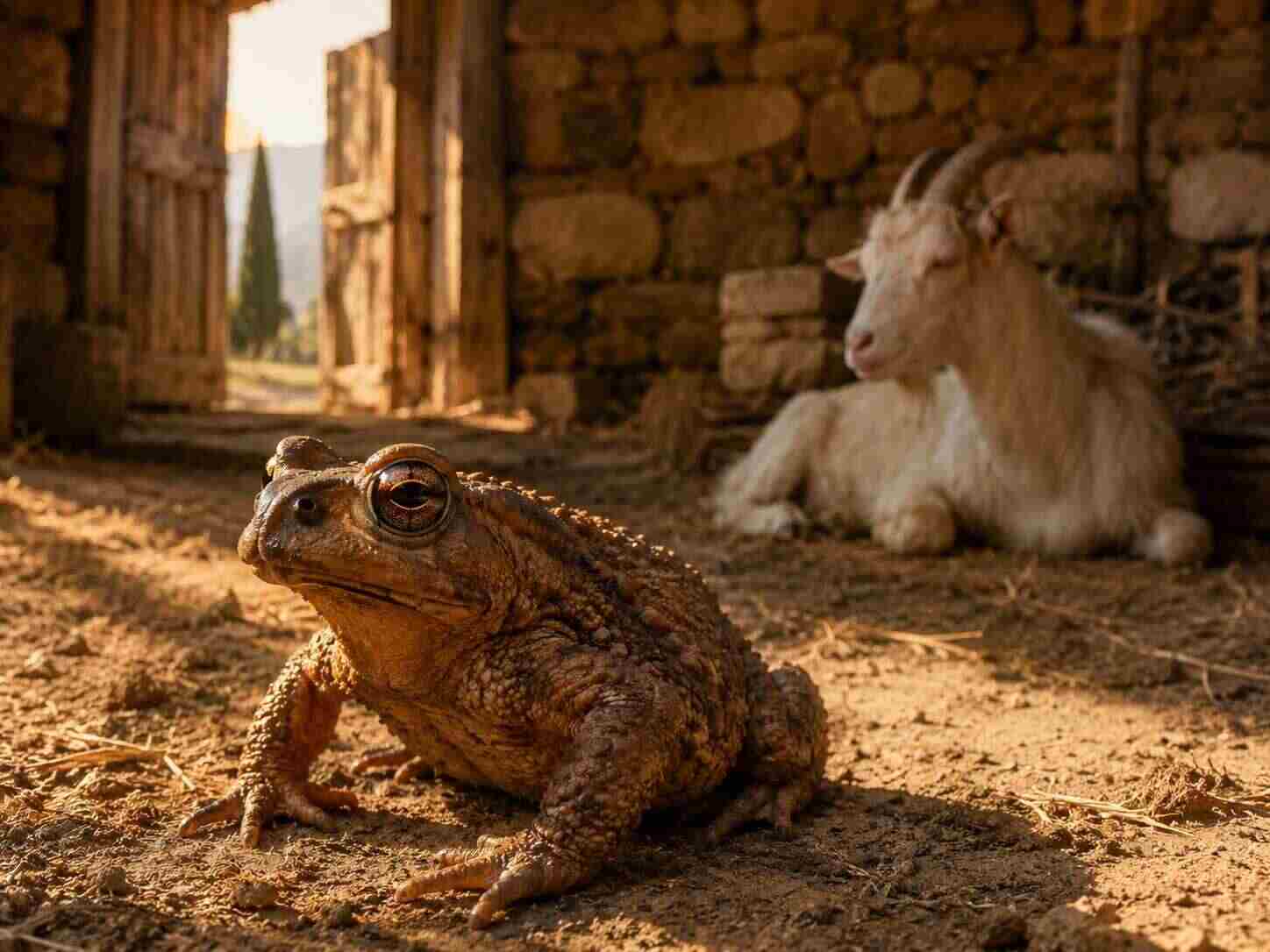
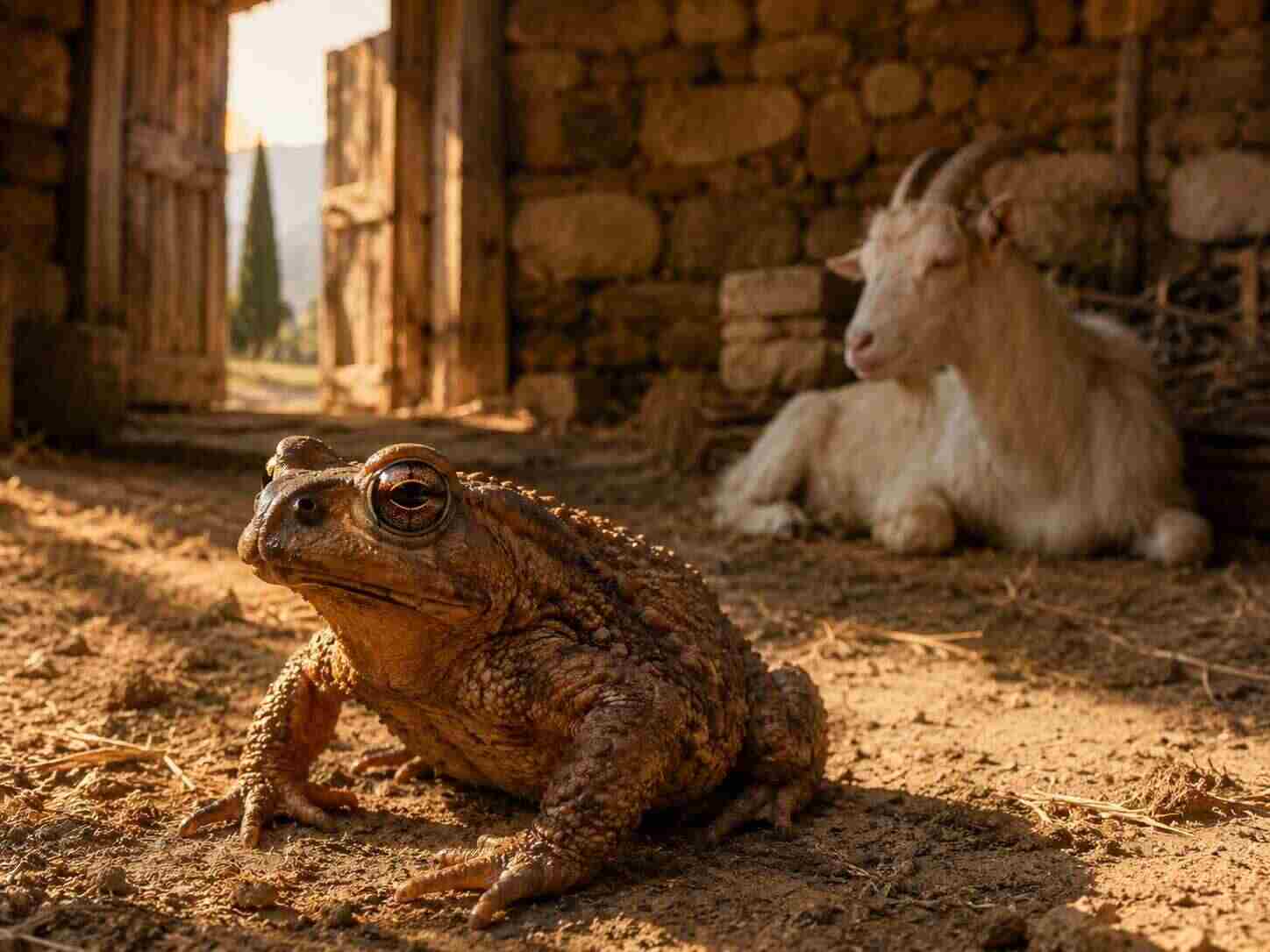
For centuries, Greek villagers across mainland Greece lived with a firm conviction that toads were dangerous predators. People believed the animals crept into barns at night, latched onto the udders of goats, sheep, and cattle, drank their milk, caused mastitis, and ultimately killed the animals.
A new study published in PLoS ONE shows that this belief was so powerful it permanently shaped the language communities used to name the animal, and left behind a trail of evidence about the region’s demographic and cultural history.
Leonidas-Romanos Davranoglou of the Oxford University Museum of Natural History led the research, interviewing more than 7,700 people across Greece over 35 years.
Researchers found the livestock belief to be universal across all communities of mainland Greece, shared by Greek speakers, Albanian-speaking Arvanites, Vlach communities, and Slavophone groups without exception.
It also dominated neighboring Albania, where the most common local name for the toad translates directly as “cow sucker.”
The beliefs went further than udder-sucking. Many people believed toads jumped into milk buckets and poisoned the contents. Others believed toads opened wounds in the legs of cattle and drank the blood.
Some believed toads contaminated cisterns and made drinking water unfit for use. Several informants refused to speak further with researchers when their accounts were questioned, insisting they had personally seen toads attacking their animals.
None of it is biologically possible. The toad’s mouth lacks the anatomy needed to suckle any animal, and no amphibian can digest milk. Yet the belief shaped language in measurable ways. One of the most widespread Greek names for the toad, “vouza,” derives from a medieval Greek word meaning teat or breast.
Researchers also found names built from the Greek word for ‘teat’ (nipple of a female animal’s udder), combined with words for cow, and Albanian-influenced names meaning cow sucker that entered Greek communities with Arvanite settlements in the 14th and 15th centuries.
Davranoglou and co-author historian Leonidas Embirikos traced the roots of the belief to Roman-era folklore surrounding nightjars. The ancient writer Pliny described these nocturnal birds as barn invaders that suckled goats and left them blind. That tradition spread across Europe.
Researchers noted that in some parts of Greece, the toad itself is called by the same name used for the nightjar, meaning “goat-tit,” suggesting the two beliefs merged over time. The nightjar tradition is likely older, they noted, since it exists even in Crete, where the common toad does not live.
The toad’s own behavior likely helped sustain the fear. When the animal encounters a wall, it raises its front legs above its head. To someone already suspicious of the creature, that posture can resemble an animal searching for something to grab onto.
Early Christian attitudes reinforced the negative image further. As amphibians and reptiles came to be viewed as demonic creatures in early Christianity, the toad’s association with darkness and harm grew stronger.
Researchers suggested this shift also contributed to the disappearance of personal names based on the ancient Greek word for toad, which had been common in classical times.
Moreover, where the oldest surviving Greek names for the toad remained in use, such as on the islands of Andros and Euboea and among Pontic Greek speakers in Turkey, the livestock belief was entirely absent.
In those communities, toads in Greece were seen as helpful animals that ate crop pests. Some residents of Andros called the toad “the animal of the Virgin Mary.”
Researchers interpreted this pattern as evidence that the fear attached itself to the animal at a particular historical moment, likely during the Roman period, and spread outward from there while leaving older, more isolated communities untouched.