Hippodamus of Miletus was an Ancient Greek polymath who lived during the 5th century BC and is often regarded as the father of urban planning in Europe. He introduced a new way of thinking in which the city was viewed as a designed system rather than a random settlement, an approach that continues to echo through modern streets, grid systems, and metropolitan layouts.
Hippodamus came from Miletus, a city renowned for philosophy, science, and political experimentation. This intellectual environment helped shape his ideas. Although he rarely appears in popular histories of cities, his influence still defines many of them today. He observed how cities often expanded without coordination, but he also recognized how war and reconstruction created opportunities for redesign. From this environment emerged the radical idea (for his time) that cities should be organized according to rational order.
Ancient sources preserve a vivid and somewhat controversial image of Hippodamus. He is portrayed as a figure who sought attention and deliberately set himself apart from social norms. The philosopher Aristotle describes him in striking terms and believed he went too far in cultivating his public image. Hippodamus wore his hair long and adorned himself with expensive ornaments. He also reportedly wore the same simple warm clothing in both winter and summer.
Together, these traits created an image of deliberate eccentricity. At the same time, intellectual tradition preserves a more philosophical side of his reputation. In a treatise on virtue, Theano, the wife of the philosopher Pythagoras, addresses a Hippodamus of Thurium. Historians such as Mary Ritter Beard often identify him with Hippodamus of Miletus. Theano explains that her work reflects the doctrine of the golden mean.
Aristotle describes Hippodamus in Politics as a pioneer of urban planning while also outlining his vision of an ideal city. Hippodamus designed a city intended for about ten thousand free male citizens. Including women, children, and enslaved people, the total population would have amounted to roughly fifty thousand.
He connected the structure of the city to the administration of the state. By studying how cities functioned in practice, he aligned physical design with political organization. This approach transformed urban space into a reflection of governance itself. Hippodamus divided citizens into three groups. Soldiers formed one class, artisans another, and farmers completed the structure. Each group occupied a distinct social role, with the system intended to create clarity and order within the state.
He also divided land into three categories. Sacred land supported religious life, public land served civic needs, and private land sustained individual households. Through this system, his broader philosophy of balance and organization extended into geography itself.
A key milestone in Hippodamus’ legacy appears in the Urban Planning Study for Piraeus, dated around 451 BC. It helped shape planning standards across much of the classical Greek world. The study introduced a highly structured residential model, dividing urban space into blocks of roughly 2,400 square meters (25,833 sq ft). Within each block, planners arranged small clusters of two-story houses, all aligned according to strict rules. Each building was clearly separated by walls, reinforcing a precise and orderly layout.
Design also placed strong emphasis on orientation. The main facades of homes faced south, a choice that improved access to natural light and overall environmental comfort. At the same time, it reinforced visual uniformity across residential districts. In effect, the system replaced irregular, organic settlement patterns with a consistent spatial logic.
The same planning framework extended into infrastructure as well. It incorporated mathematical, and even polynomial-based, reasoning in the design of water systems. Engineers relied on structured calculations to develop pumping and distribution mechanisms, reflecting how Hippodamus pushed planning beyond architecture into technical urban systems.
Many cities in the classical era adopted these principles, replicating both the block structure and the underlying infrastructural logic. As a result, the Piraeus model became an enduring reference point for organized urban expansion. Aristotle examined Hippodamus’ model with a critical eye and questioned the concentration of military power, arguing that assigning arms to only one class would result in an imbalance and potentially lead to the oppression of farmers and artisans.
He maintained that a stable political system requires a broad middle class. In his view, citizens should share responsibilities and participate more flexibly in lawmaking, defense, and labor. Such balance, he argued, helps prevent domination by any single group. Aristotle also challenged rigid social divisions more broadly. Human life changes over time, and individuals naturally shift roles and responsibilities. For that reason, overly strict classification cannot fully reflect social reality. He ultimately favored systems that allow greater overlap between civic functions.
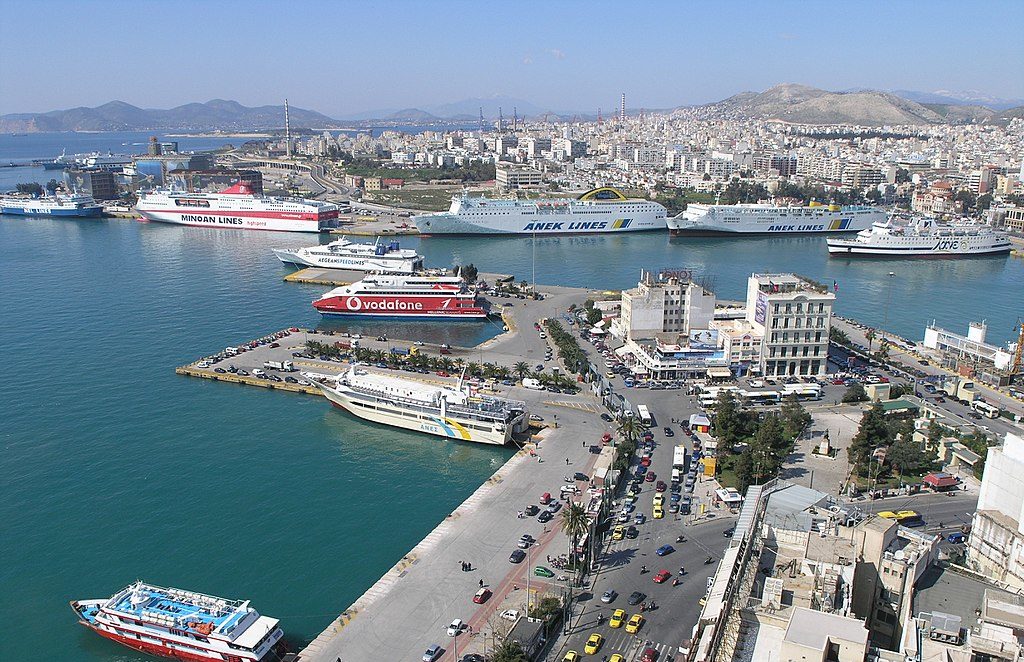
Aristotle credits Hippodamus as the first thinker to systematically design cities. Hippodamus did not merely imagine political order. He also translated it into physical space through geometric precision, applying these ideas in Piraeus, for instance, where planners constructed wide streets radiating from a central agora. This layout later became known as the Hippodamian system in his honor. It improved movement, supported trade, and strengthened civic organization.
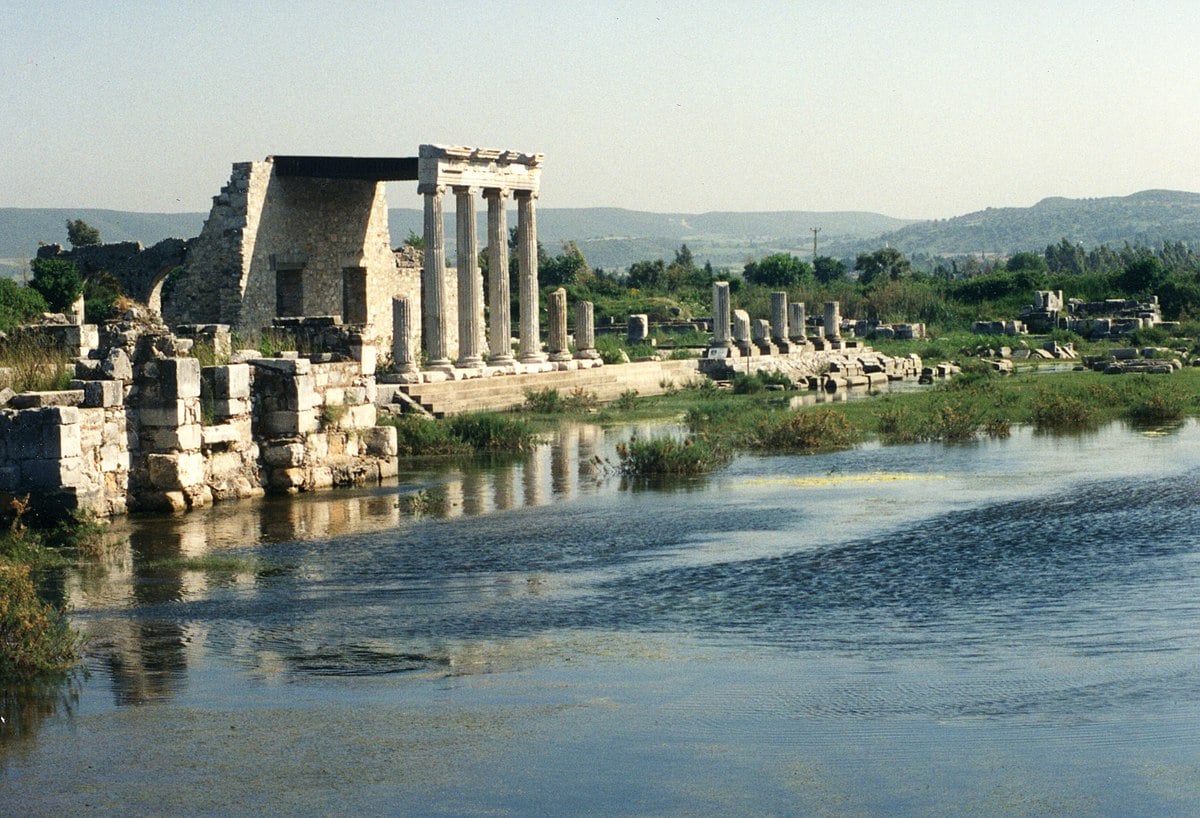
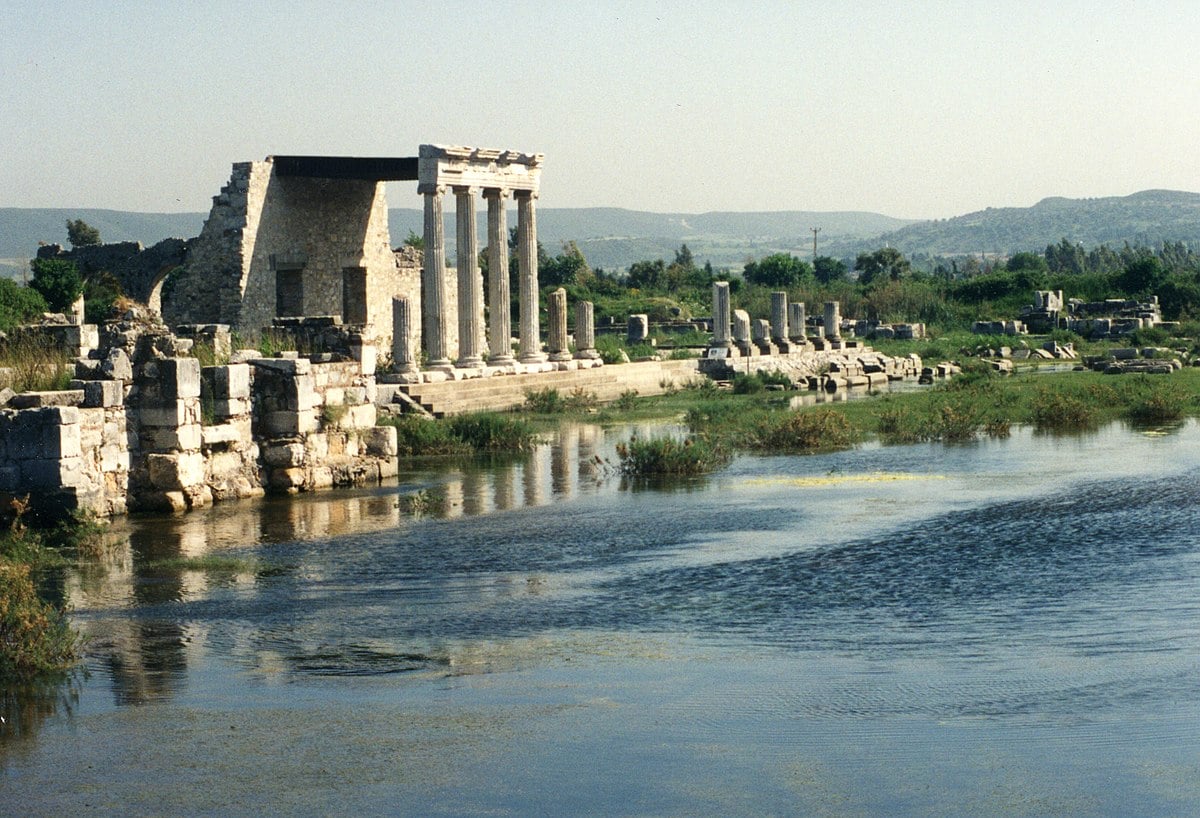
He also contributed to the rebuilding of Miletus, where he introduced early grid principles. Straight streets intersected at right angles, replacing older, irregular street patterns with a more ordered urban framework. He is also associated with the later design of Thurii. In this settlement, he implemented a fully orthogonal grid in which streets intersected in a consistent and predictable pattern across the entire city. Some ancient sources even refer to him as Hippodamus of Thurium.
His influence is often extended further to major urban centers such as Halicarnassus, Alexandria, and Antioch.

Hippodamus introduced one of the earliest fully developed grid systems in urban planning. His design relied on straight streets intersecting at right angles, creating a layout defined by order, predictability, and clarity. Tradition also connects him to the planning of Rhodes. The geographer Strabo described the city’s layout as almost theatrical in form, suggesting a deliberately composed spatial experience shaped by planning principles.
In the port of Miletus, scholars have identified what may be an early prototype of his system, organized around a large central open space that structures the surrounding plan. This approach reflects a long-term vision. Hippodamus did not design only for immediate needs but also for future expansion and growth. His legacy is particularly significant in architectural and urban history. The grid system associated with his name later influenced Roman city planning and went on to shape Renaissance and Enlightenment urban design.
A clear modern parallel can be seen in Manhattan. The Commissioners’ Plan of 1811 imposed a strict grid in which streets and avenues follow a highly regular structure, supporting navigation and large-scale urban expansion. Other cities also reflect aspects of this influence. Chicago uses a strong rectangular grid, while Barcelona expanded through the planned Eixample district, which introduced a highly organized urban extension.