Former Eurogroup President Jeroen Dijsselbloem has admitted that the first two bailout programs imposed on Greece relied too heavily on excessive austerity measures.
Speaking at the presentation of the new SKAI documentary “Sto Chiliosto” (To the Millimeter)—produced by journalists Eleni Varvitsiotis and Victoria Dendrinou—Dijsselbloem also discussed the later bailouts. He noted that while these subsequent programs shifted their focus toward necessary structural reforms, the sheer volume of changes required simultaneously created significant challenges.
Reflecting on the importance of interpersonal relationships in high-stakes diplomacy, Dijsselbloem highlighted that the personalities involved in negotiations are critical.
“Who enters the room matters from the very first moment,” he stated. “Experience, political maturity, negotiating skills, and the ability to build trust are essential. Whenever a new minister took office, I would visit their capital to understand their political background, their motivations, their constraints, and their ambitions.”
Regarding the negotiations with the government that took office in 2015, Dijsselbloem noted that discussions with Euclid Tsakalotos were constructive, despite the clear divide between the two sides.
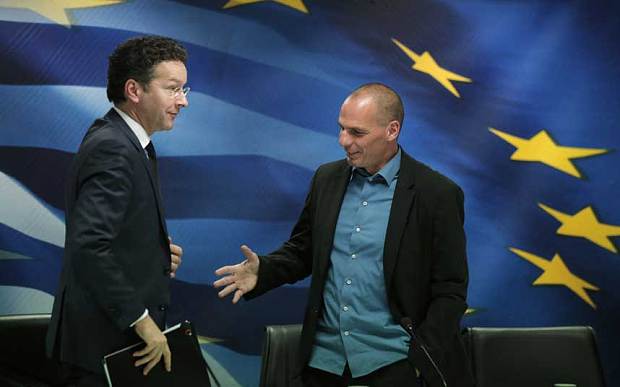
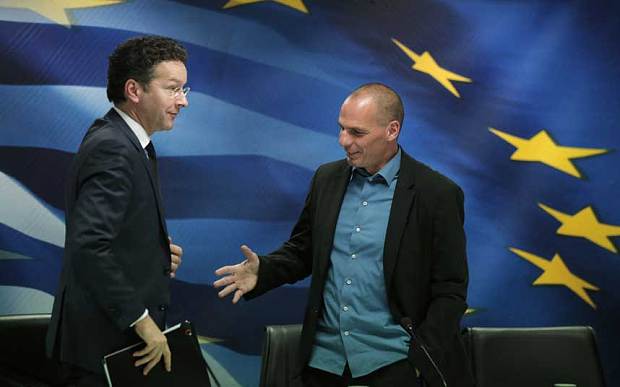
He contrasted this with his experience with Yanis Varoufakis, noting, “The real problem was that Varoufakis essentially kept saying, ‘We don’t want another program,’ while simultaneously asking for more loans within the Eurogroup. It made for a very difficult discussion.”
Addressing the historical context of the crisis, Dijsselbloem explained that the revelation of Greece’s initial inaccurate fiscal data severely damaged the trust required within the Eurozone.
“At the start of the crisis, many Eurozone countries were also hit hard. Ireland faced a massive banking crisis, and the Netherlands had to nationalize three banks. The Baltic states, also part of the Eurogroup, had already undergone painful adjustment programs despite having lower per capita incomes than Greece,” he recalled.
He noted that Greek ministers often seemed to lack an understanding of the broader context facing their counterparts.
“I remember intense confrontations between the Lithuanian Finance Minister and Varoufakis. The Lithuanian minister couldn’t understand why his country—which had survived a brutal adjustment program—was expected to support Greece with favorable loans. There was little effort from the Greek side to understand the reality of the other Eurozone members.”
In a revealing moment from the documentary, Dijsselbloem disclosed that during a joint press conference with Yanis Varoufakis, he could not hear the translation in his earpiece, leaving him to observe the situation without a real-time understanding of the words being spoken.
Thomas Wieser, the former President of the Euroworking Group, offered his perspective on the same incident: “I was looking at a very angry man [Varoufakis], and I was trying to read his facial expressions to understand what he was saying.”
Related: New Book Reveals How Grexit Was About to Become Reality in 2015