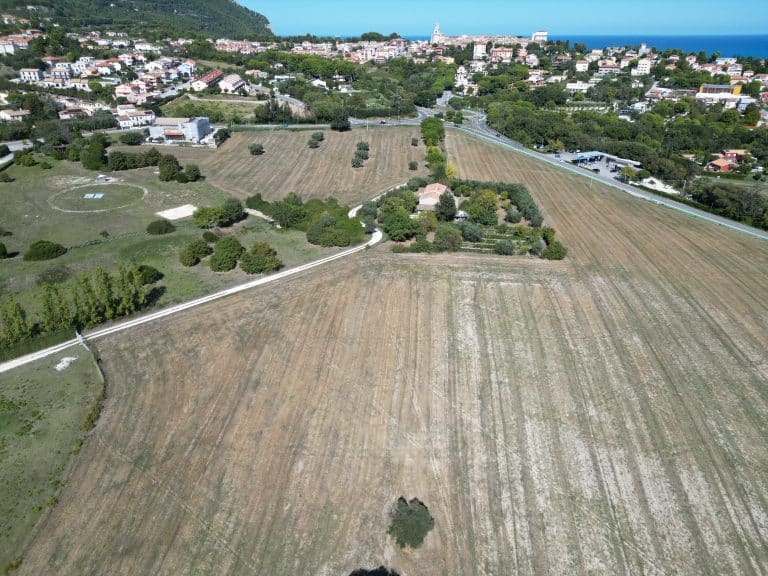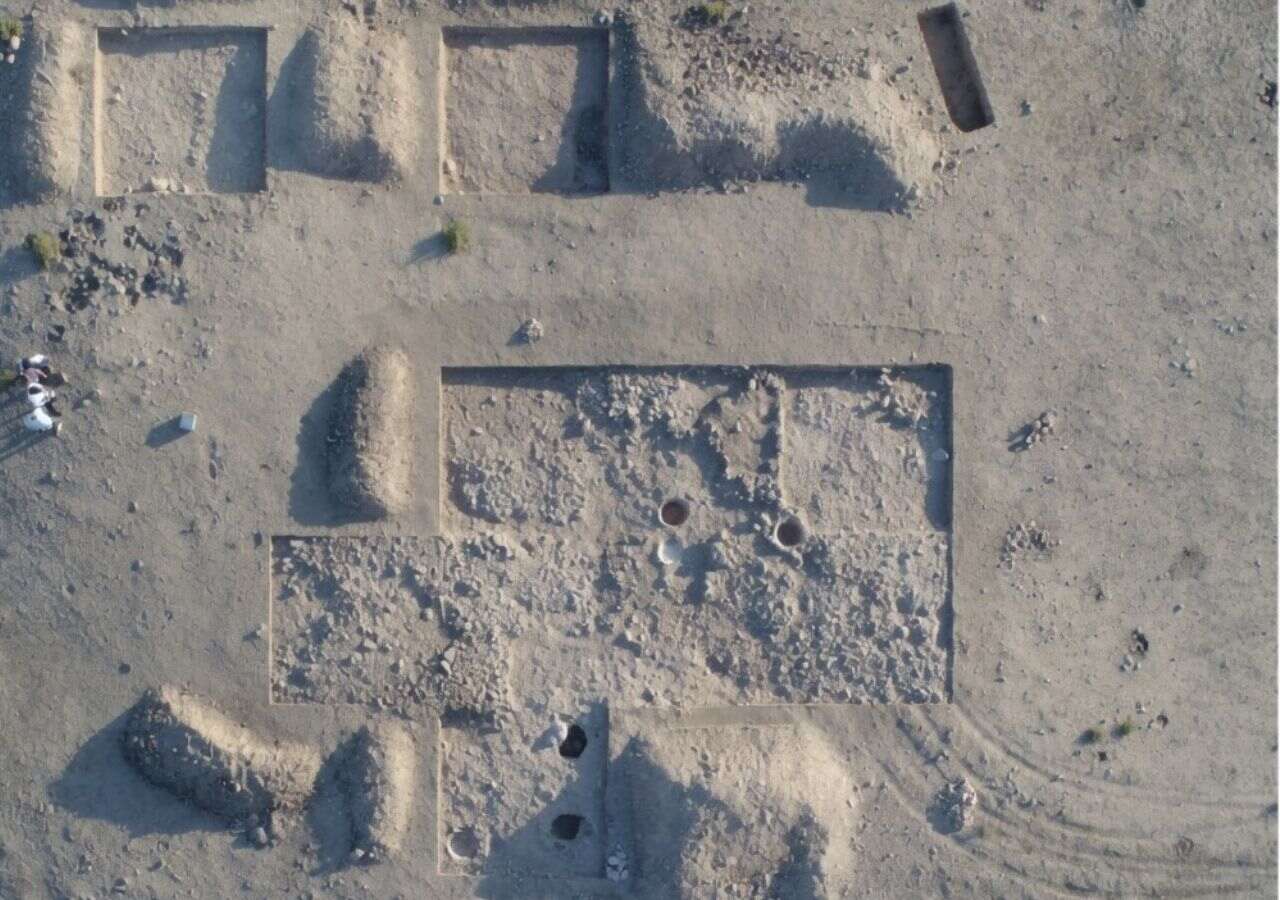
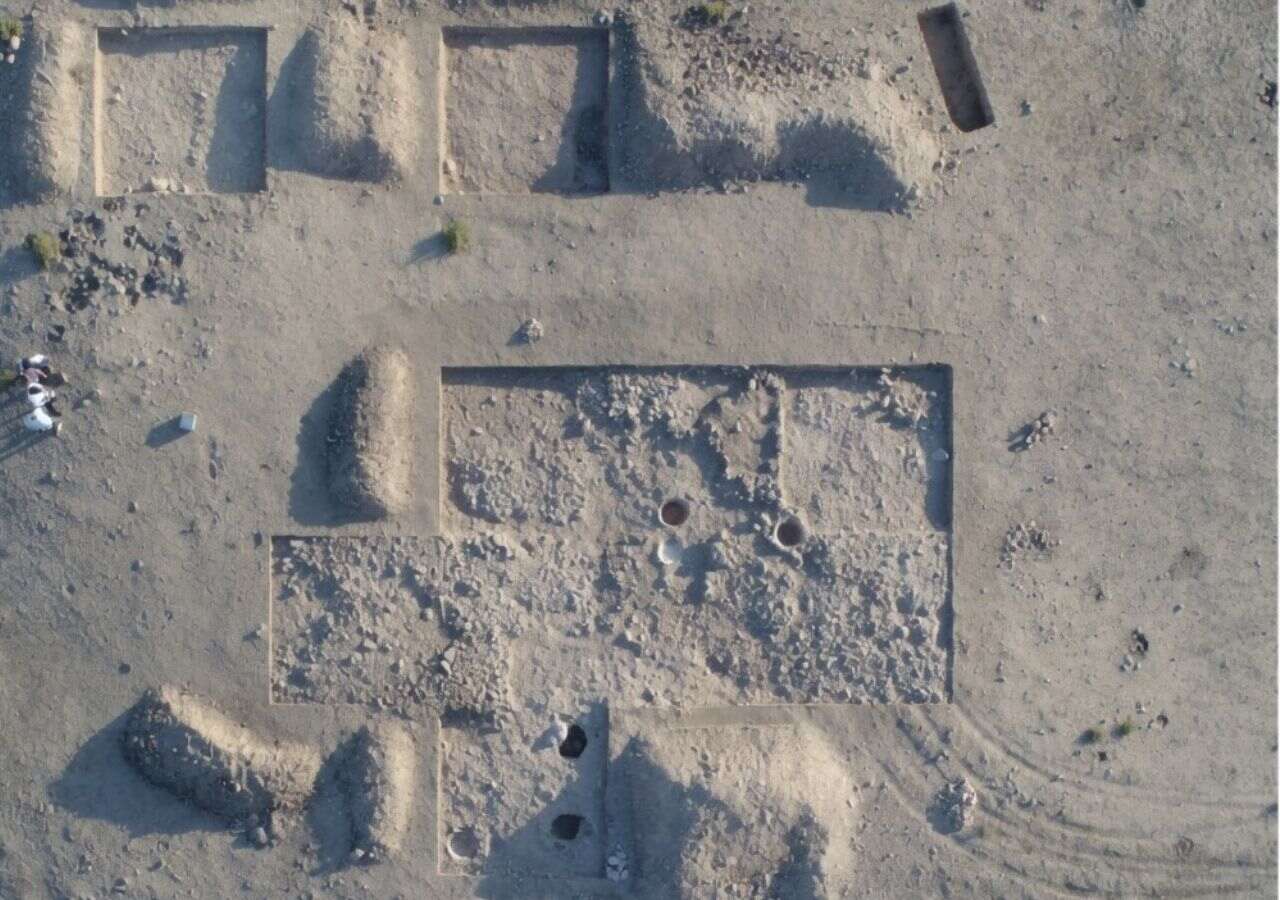
Archaeologists have identified Iskandar Tepa, a hilltop site in southern Uzbekistan, as a short-term Ancient Greek military camp. A new geophysical survey, followed by targeted excavations, uncovered a defensive ditch, dozens of burial pits, and a cluster of buried water jars.
The findings, published in the Journal of Archaeological Science: Reports, overturn earlier ideas about the small settlement and point instead to a temporary military outpost from the Hellenistic period.
The study was led by Ladislav Stančo of Charles University in Prague, working with a Czech-Uzbekistani archaeological team. The group first surveyed the site in 2017 and returned in 2021 with magnetometry and ground-penetrating radar equipment to map what lay beneath the surface.
The scans covered nearly six hectares and revealed a ditch stretching roughly 400 meters (1,312 feet) around the settlement, enclosing an area of about 1.2 hectares (2.97 acres).
Excavations later confirmed the ditch measured between four and seven meters wide (13 to 23 feet) and up to 85 centimeters deep (33.5 inches), with a stepped profile carved into the ground. Rows of postholes found just inside the ditch suggest wooden defenses once stood along its edge.
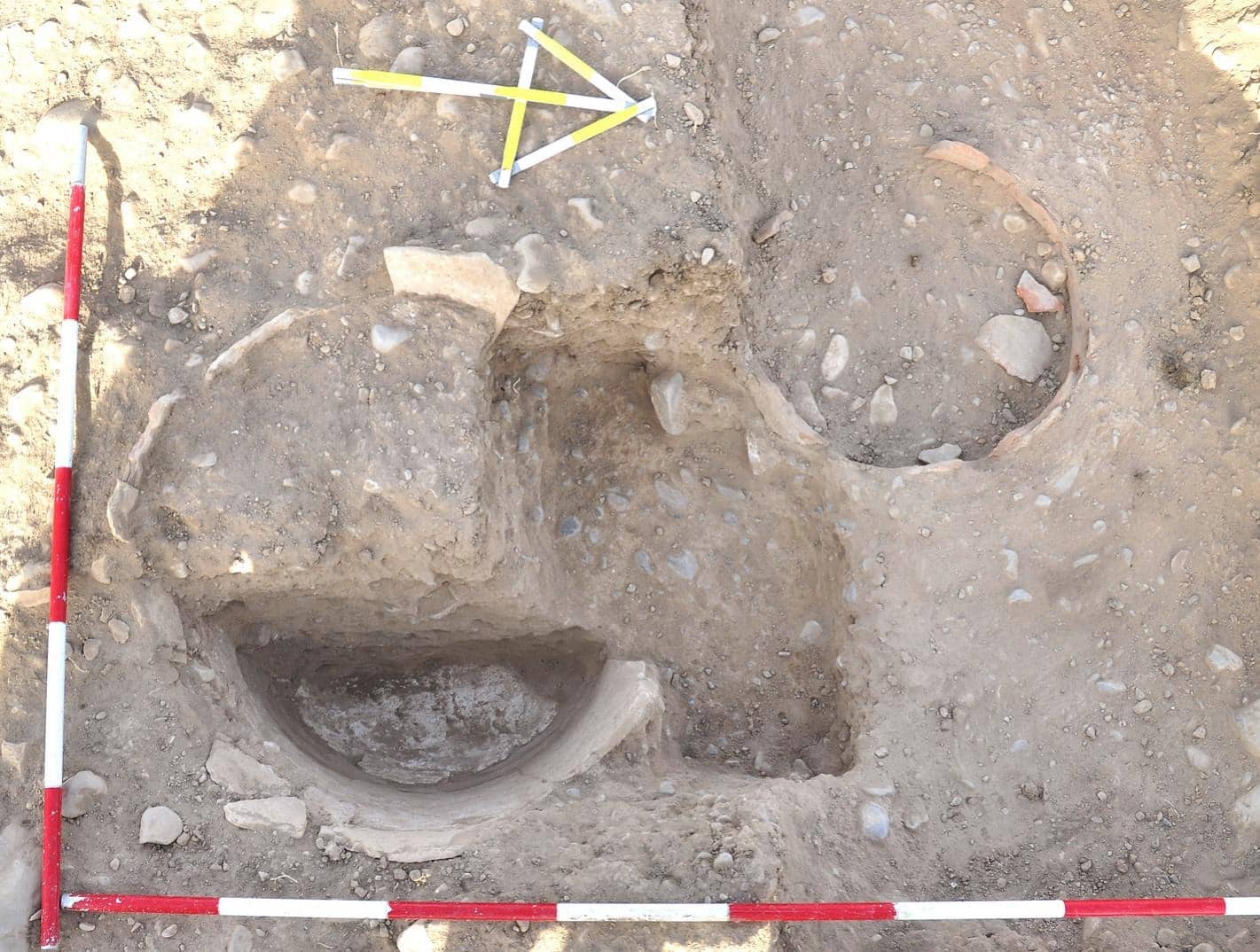
Inside the enclosed area, researchers found large ceramic storage jars, known locally as khums, buried directly into the ground. Three of the jars were fully excavated and showed traces of white mineral crusts, likely left behind by stored water rather than food or grain.
Researchers believe the jars held water hauled in from a nearby valley or collected from a canal identified during the survey, since no permanent buildings or water source existed at the site itself.
The survey also turned up close to 90 oval pits clustered along the eastern and western edges of the settlement. Excavations confirmed these as burial pits, some dating to the first century BC and later.
A handful of graves overlap with the settlement area itself, suggesting the burial ground was used after the camp fell out of use.
Coins found at the site, including issues from Greco-Bactrian rulers Euthydemus I and Demetrius I, point to occupation mainly in the second century BC.
Researchers compared the layout to Boysari Tepa, a similarly shaped hilltop site in Sogdiana, which shares a shallow surrounding ditch and simple wooden postholes rather than permanent architecture.
Stančo said the combination of an elevated location, a circular ditch, and the absence of solid buildings matches historical descriptions of Greek military camps, a type of site rarely documented in Central Asia.
He added that the survey shows how effective geophysical tools can be in dry, poorly preserved landscapes where surface remains leave few visible clues.