Researchers have uncovered new evidence showing that climate shifts in prehistoric Europe may have repeatedly split apart and reconnected Neanderthal populations across the continent.
The research was led by the Centro Nacional de Investigación sobre la Evolución Humana, known as CENIEH, together with scientists from France and Australia. The findings were published in the journal Archaeological and Anthropological Sciences.
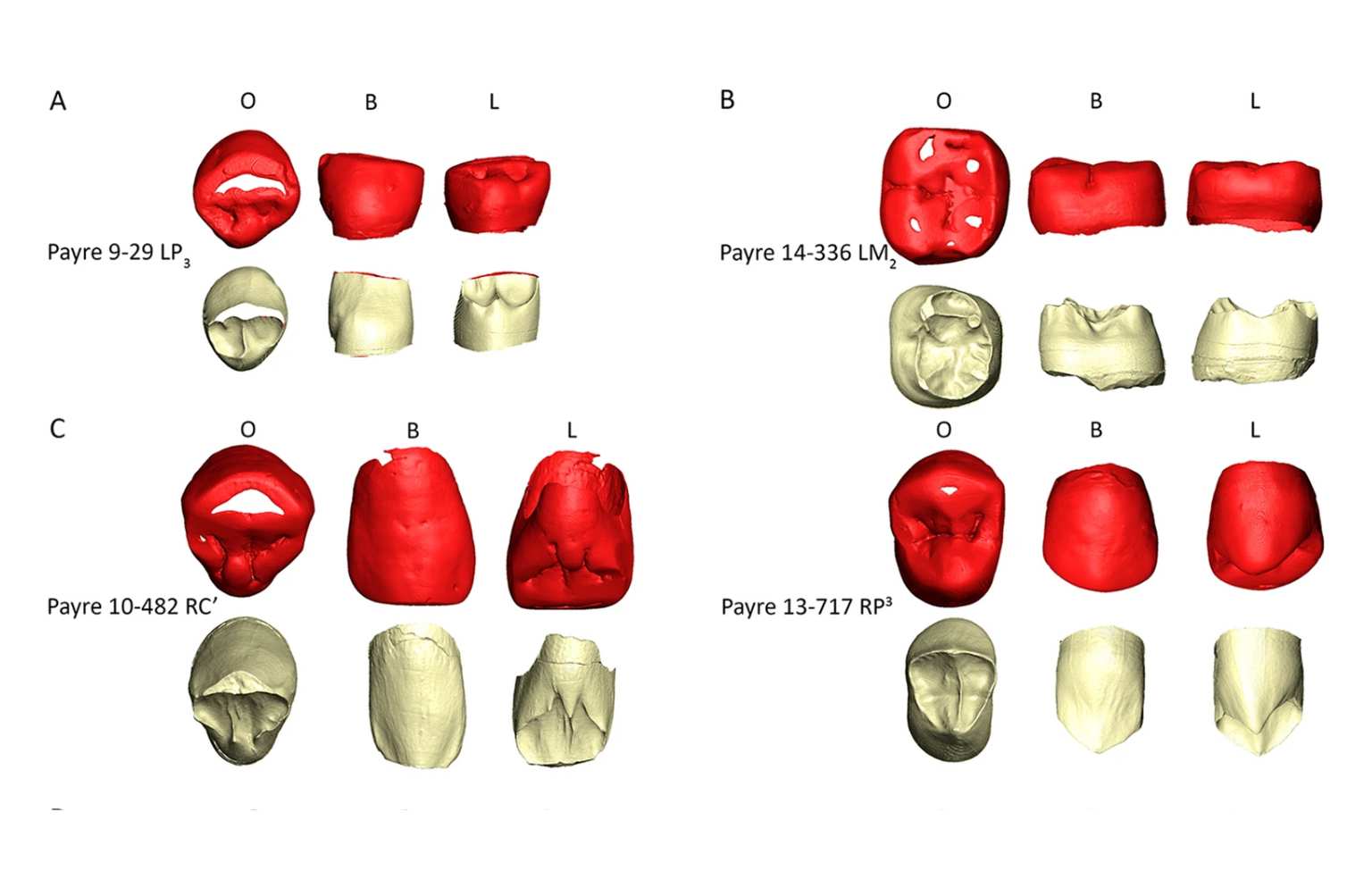
The study focused on nine fossil teeth recovered from different archaeological layers at the ancient site of Payre. Researchers said the remains date back about 250,000 years to the Middle Pleistocene period.
Scientists used advanced imaging methods to examine both the outer shape and internal structure of the teeth. The techniques included micro-computed tomography, geometric morphometrics, and analyses of dental tissue proportions.
“By combining micro-computed tomography (micro-CT), geometric morphometrics and analyses of dental tissue proportions, we were able to investigate both the external morphology and internal dental structure of the Payre teeth with an unprecedented level of detail,” said Laura Martín-Francés Martín de la Fuente, the study’s lead author.
The findings suggest Neanderthal evolution in Europe was far more dynamic and regionally diverse than previously believed.
Researchers said repeated climate shifts changed landscapes and migration routes across Europe during the Middle Pleistocene. These environmental changes likely caused some Neanderthal groups to become isolated for long periods before reconnecting with other populations.
Scientists have long debated whether populations living in Europe during Marine Isotope Stage 7, or MIS 7, already displayed the physical traits of “classic” Neanderthals or still retained features inherited from earlier human ancestors. The period dates from roughly 240,000 to 200,000 years ago.
Scientists studying 250,000-year-old fossil teeth from France say ancient climate shifts repeatedly split and reconnected Neanderthal populations across Europe.
The study suggests Neanderthal evolution was far more complex and regionally diverse than previously believed. pic.twitter.com/1EymyfYBJY
— Tom Marvolo Riddle (@tom_riddle2025) May 26, 2026
The study found that the Payre teeth share several anatomical similarities with other Middle Pleistocene populations linked to the Neanderthal lineage. These include fossils from Biache-Saint-Vaast, Montmaurin-La Niche, and the famous Sima de los Huesos site in Spain.
At the same time, researchers identified important internal differences within the Payre fossils themselves.
“This variability is one of the most interesting aspects of the study,” Martín-Francés said. “Rather than a simple and linear evolutionary process, our research supports the idea that Neanderthal evolution was shaped by regionally structured populations that were fragmented and, at times, isolated for long periods.”
Researchers also stressed the importance of re-examining older fossil collections using modern technology.
New imaging methods now allow scientists to study the enamel-dentine junction and internal tooth structures in much greater detail than before. Although the Payre fossils had already been studied in the past, the latest analysis revealed new information that earlier techniques could not detect.
“Revisiting historical collections is essential,” Martín-Francés said. “Many fossils discovered decades ago still hold enormous scientific potential, especially now that new technologies allow us to investigate their internal structure in extraordinary detail.”
According to the study’s authors, the Payre fossils provide an important glimpse into a poorly understood period of European prehistory and strengthen evidence that Neanderthals evolved through a complex network of interconnected regional populations.